
Got Questions?
What is Christianity all about?

By: Michael McQueen
HR is becoming less about administering employment and more about designing the conditions in which humans and machines work together well.

By: Adriana Wales
The good news is that being emotionally connected to your child isn’t about always being calm, perfectly patient or making kids happy all the time.

Do you ever feel the weight of life? Sometimes, despite our best intentions to rest and maintain a good work-life balance, the day-to-day can feel heavy.

How to really check in with your child.

By: Jeshua McPhail
As someone who was training to become a champion fighter, I thought I was tough. But it’s not until something you deeply care about is nearly taken from you that you realise how easily you can break.

By: Hope Media
New research quantifies community radio’s economic and cultural impact – but the deeper value goes beyond numbers.

By: Adriana Wales
There’s an art to building new friendships as a new mum, when the fog of endless feeding, changing, settling can dull your usual social skills.

By: Tony Davenport
A third of young people are now using an AI companion, according to new research.

By: Ken Robinson
Have you ever noticed how quickly your mood can change? You can be enjoying a wonderful day when, almost without warning, a single thought enters your mind. It might be about your finances, your health, your family or something happening at work.

By: Andrew Marsh
Australians are being encouraged to join millions of people around the world in spending time in the Bible every day this November as part of Global Bible Month.

By: Adriana Wales
Who will care for your kids if the worst happens? Discover how to choose a legal guardian and protect your children’s future with confidence.

By: Laura Bennett
The four-time World Champion cyclist, surfer and adventurer lost 95 per cent of his vision at the age of five, and he faces every challenge with one simple question.

By: International Justice Mission (IJM)
The Internet is always on. The online world is part of everyday life for our kids. It’s where they learn, play, connect with friends and explore their interests. But the same features that make those experiences possible can also expose children to people who want to exploit their trust.

By: Mariska Meldrum
A few months ago, 12-year-old Jonathan had no water to drink three days a week. In his remote village in Simanjiro, Tanzania, fetching water meant enduring a dangerous four-hour trek – often encountering wild animals along the way.

You’re doing the same thing everyday… And that’s good.

Rest can look different through the various stages of life, but is it something we can ever afford not to do?

By: Justin Rouillon
Loneliness and social isolation are serious public health threats, so Shed Happens started a men’s group in a truck yard.
Read more: Shed Happens: Building Connections And Support For Men
Shed Happens is an organisation that has been helping Aussie men find connection, encouragement and friendship for almost 25 years. Founded by the late Ian ‘Watto’ Watson, Shed Happens was built on Ian’s motto that he’d “never seen a bloke go backwards with encouragement”.
Vern Wilson- a committee member of Shed Happens- explains how this innovative program moves beyond conventional community group models by focusing on heartfelt conversations.
“ If you give men a safe environment, they generally will open up and talk more freely about things that they’re going through,” Vern said.
“ Instead of being like a woodwork shed, we’re a shed that actually interviews people. The topics cover the good, the bad, the sad and the ugly, and we have men involved across every age group.”
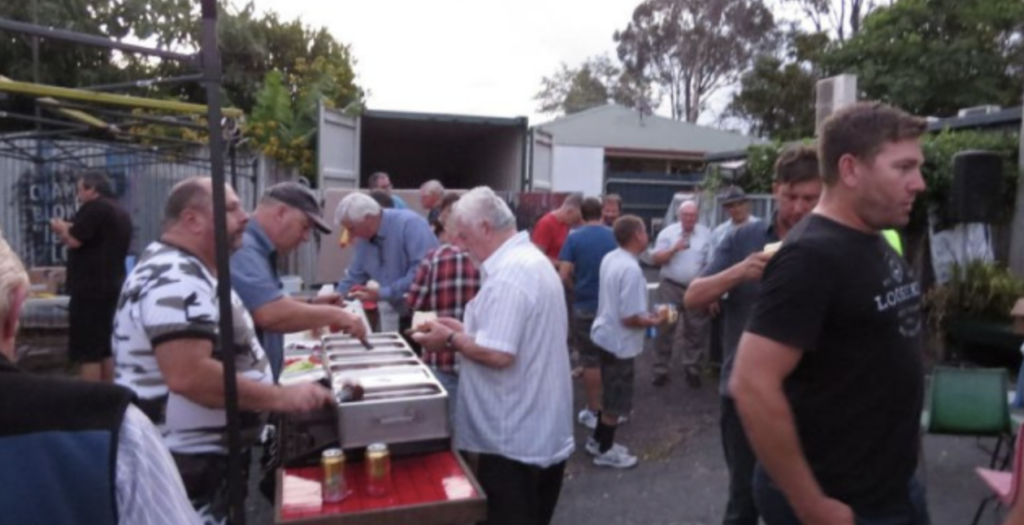
Shed Happens in full swing at Watto’s truck yard in Murrumba Downs. Image credit: Supplied
The initial idea for the ministry came after the loss of one of Watto’s good mates Greg Polinski to suicide in the late nineties.
Before his passing, Greg didn’t know how to share what he was going through with those around him.
“He sadly took his life because we couldn’t talk – we didn’t know how. So that has been a major driver behind Shed Happens. We want to help men tell their story in a supportive environment without judgement. We can’t be isolated from each other – connection touches people’s hearts.”
Vern shared how Watto noticed how men would open open up to him in the cab of a truck, while receiving lessons and training.
“Watto had a truck driver training business, and he would give lessons to men getting their truck licenses, and he found the one-on-one time was just so incredible with these guys.
“They would sit and talk about issues in their life that often you’d never get to hear about. And he thought, why couldn’t we bring men together with a format that actually allows a safe place for these men to come along and talk.”
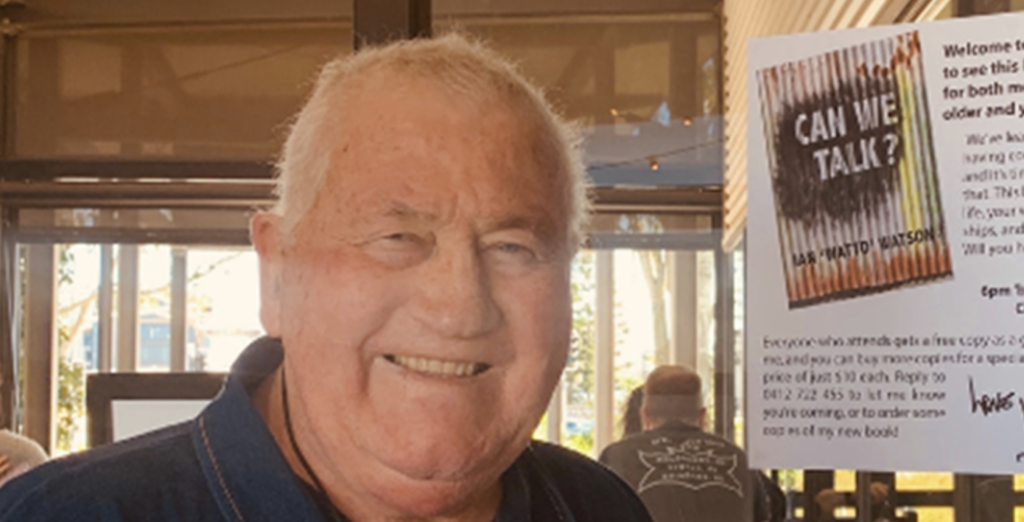
Founder of Shed Happens Ian ‘Watto’ Watson was also an author of four books. Image credit: Justin Rouillon
By offering a welcoming environment, Shed Happens enables men to discuss issues they face, including topics like relationships, health, and personal struggles.
Originally starting in a church setting, Watto moved the gathering to his Murrumba Downs truck yard, to help men who may have otherwise found it difficult to set foot inside a church.
“ Absolutely any bloke can come along irrespective of their background, their culture, whether they go to church or not,” said Vern. “The aim of these meetings is to draw people in that are needing a bit of help and needing somewhere to go for friendship – it’s all about connecting.”
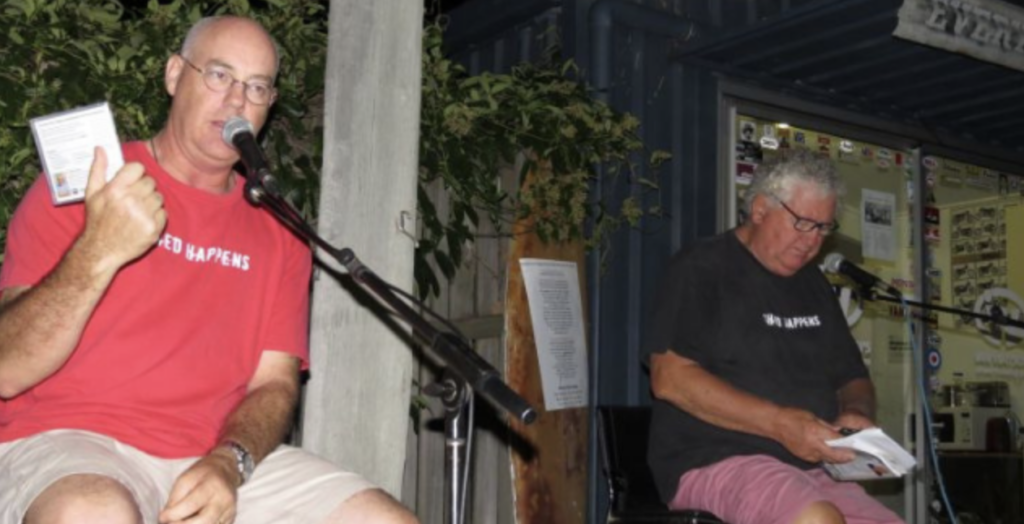
Watto (right) leads a Shed Happens gathering. Image credit: Supplied
Shed Happens has now spread all over Australia. For those looking at ways to support and encourage men, it’s an easy gathering to get up and running.
“ It doesn’t need to run in a shed. It doesn’t need to run under a church covering. It just needs a few good guys that say, ‘Hey, I’ve been through the battle of life. I’d like to support somebody else in the journey.’
“ A lot of our guys run sheds out of a coffee shop; they just ask if they can sit in the back corner with ten or twelve people around a table and just do a morning tea.”
Find out more about Shed Happens.
If anything in this story has affected you, contact Lifeline or Beyond Blue.

Have you ever hit a point where even resting feels exhausting? These Bible verses are an invitation to pause, breathe and actually stop.

By: Richelle Wenhem
Where there is great love, grief is often found close by. Grief is simply part of the cost of caring.
Read more: The Untold Story Of Grief: Our Friend
The doctor’s office was unusually quiet. It was a cool Monday morning. The fluorescent lights hummed softly overhead as I sat alone, waiting for answers about my unborn daughter.
In a matter of moments, everything I thought I knew about the future changed.
The words came gently enough. Down syndrome. Developmental concerns. Possible complications ahead.
Yet grief arrived like a truck travelling at full speed.
Not because there was anything wrong with my daughter.
Not because she was somehow less valuable, less precious, or less loved.
Quite the opposite.
The grief came because I suddenly realised I was letting go of the child I thought I was going to have. The future I had imagined. The expectations, dreams, and assumptions I didn’t even realise I was carrying.
All those expectations and ideals flew out the window like a sparrow on a hot summer’s day, gone in an instant.
I didn’t know it then, but this is one of the most common and human experiences for parents and carers. Before we can embrace a new reality, we often have to let go of the one we imagined.
So, when I sat down to write this for National Carers Week, I first thought about writing why I believe people living with disability are blessed, because they are. Then I thought about writing how churches can better support carers and parents of children with disability, because there’s always room for more understanding, prayer and practical support.
But every time I started writing, my thoughts returned to something else.
Grief.
I know, it sounds like a strange topic for National Carers Week.
Yet after eight years of caring, I’ve come to realise that grief may be one of the healthiest friends a carer can have.
The Cost Of Loving Deeply
In the first few years of my daughter’s life, I would often feel completely fine.

We did the appointments. The therapy sessions. The home programs. The specialist reviews. Then suddenly grief would rise within me like a rip current pulling me out to sea.
A difficult report. Another missed milestone. A new NDIS battle. After a few days, the waters would settle again and I’d be okay.
At first, I thought something was wrong with me. Why couldn’t I just move on? Why did grief keep returning?
But over time I realised grief wasn’t coming back because I was weak in my faith. It was returning because I loved deeply.
People often say to carers: “I don’t know how you do it.”
Yet the answer is actually very simple.
Love.
Whether you’re supporting a child through countless therapies and operations. Whether you’re helping someone who struggles to speak, eat, walk, see or remember. You do it because you love them.
Love compels us. Love shows up.
The Bible reminds us: “Above all, love each other deeply, because love covers over a multitude of sins.” 1 Peter 4:8
And where there is great love, grief is often found nearby.
Most people think grief arrives after a funeral.
But carers know differently. Grief often lives quietly alongside us. Because grief is simply part of the cost of caring.
The Companion I Didn’t Expect: Grief My Friend
Then a grief counsellor shared something that completely changed how I view grief. Instead of viewing grief as an annoyance that we constantly push away, what if we allowed ourselves to sit with it?
What if we treated grief like an old friend?
At first, I hated the idea.
Who wants grief as a friend?
Surely the goal is to get rid of it. But the more I reflected on those words, the more I realised how much energy I was spending fighting grief.
Every time it appeared, I tried to distract myself, stay positive or move on as quickly as possible. Yet grief would always come back.
Eventually, I stopped seeing grief as an enemy and started seeing it as a messenger. Not a permanent house guest, but someone worth listening to. Because grief often points us towards the places where healing is needed.
As carers, I think this is one of the greatest lessons God can teach us.
We need to spend time with our grief. Not as victims. Not to stay stuck. But to acknowledge what is real. Sometimes that may look like sitting quietly overlooking the beach.
Sometimes it could be journalling for fifteen minutes.
Sometimes it was simply letting grief in, while I prayed.
The Psalms are full of this kind of honesty.
David wrote: “The Lord is close to the brokenhearted and saves those who are crushed in spirit.” Psalm 34:18
God never asks us to pretend we are okay. He simply asks us to bring our hearts to Him.
The Grief Cycle Carers Know Well
If you are a carer, chances are grief doesn’t visit once. It comes in waves.
For me, it circles back again and again.
And even as I write this, we’re preparing for our daughter’s fifth eye operation.
However, this time, something has changed. Less than a year ago, I realised I had become stuck in survival mode. I remember telling a friend:
“I just can’t relax. I’m always waiting for the next phone call. The next piece of bad news.”
Living like that was stealing my joy.
But as I learned to sit with grief my friend, instead of fighting it, I found myself trusting Jesus more deeply.
Again and again, I handed my daughter back to Him.
Again and again, I admitted I wasn’t in control.
Again and again, I remembered that He loved her even more than I do.
The Peace I Never Expected
And recently, the thing I had been dreading finally happened.
Another eye surgery. But this time my response surprised me. The circumstances hadn’t changed. The risks hadn’t changed.
Yet my heart had.

For the first time, I truly experienced what Scripture describes as:
“The peace of God, which transcends all understanding, will guard your hearts and your minds in Christ Jesus.” Philippians 4:7
The peace didn’t come because everything was fixed. The peace came because I knew I didn’t have to carry everything myself.
God had not asked me to control the outcome. He had simply called me to walk faithfully beside my daughter through it.
So this National Carers Week, I want every carer to know this:
Your grief is real. It matters. It deserves attention.
But it is not something to fear.
It is not a problem to solve. It is not evidence of weak faith. It is not something to be ashamed of.
Sometimes, it is simply love revealing how deeply we care.
Like Job in the bible, we may find ourselves walking through seasons we would never have chosen. Yet God never abandons us in those places. Instead, He meets us there.
And when we allow ourselves to walk honestly through grief with Him, He can lead us somewhere unexpected.
Peace.
“You will keep in perfect peace those whose minds are steadfast, because they trust in You.” Isaiah 26:3
My prayer this National Carers Week is not that your caring journey becomes easier.
My prayer is that whatever grief you carry, you will discover the peace of Christ that surpasses all understanding. So that you can continue caring for your loved ones. One day at a time.
So, what next? This National Carers Week, my invitation is simple: make space for what you’re carrying. If you’re a carer, sit with your grief, pray through it, and allow God to meet you in it. You don’t have to carry it alone.
And for those supporting carers, let’s do more than say “thank you.” Take time to really see them. Ask how they’re coping. Listen without trying to fix. Pray without offering easy answers. Sometimes the greatest gift we can give a carer is the space to be honest about both their love and their grief.
Together, may we create communities where carers feel seen, supported, and reminded that they are never walking this journey alone.
Need Support? These Resources Can Help
Carer Gateway
Australia’s national support service for carers, offering free counselling, coaching, peer support groups, respite assistance, and practical resources. Call 1800 422 737 or visit carergateway.gov.au.
Carers Australia
Provides advocacy, information, and links to support services for carers across Australia, including guidance on navigating caring responsibilities and available assistance. carersaustralia.com.au
Your Local Church Community
Don’t underestimate the power of reaching out. A pastor, prayer group, trusted friend, or church family can provide encouragement, practical support, and a safe place to share honestly.
Luke14
Luke14 Australia exists to help churches become places where people with disability, their families, and carers belong and flourish. They offer practical resources, training, and encouragement for churches wanting to better support disability inclusion. Visit luke14.org.au.
Professional Christian Counselling
If grief feels overwhelming, consider speaking with a Christian counsellor through your local church network or a trusted Christian counselling service. Seeking support is a sign of wisdom, not weakness. Hopechristiancounselling.com.au
Lifeline Australia
If you’re feeling distressed and need immediate support, call 13 11 14 anytime, 24 hours a day. Carer Gateway also refers carers to crisis support services when needed.

By: Michael McQueen
How do we harness the power of technology, without allowing it to reshape young brains and change the way we learn?

By: Adriana Wales
Tasked with raising a generation of boy who will have to navigate a complex world of diversity and rapid change, here’s how to teach them to be great humans.

By: Mark McCrindle
AI has moved from the realm of science fiction into the everyday of Australian life. What was an emerging technology just a few years ago is now embedded in how we search, write, plan, shop and work.

Rest is discipline. That’s probably not what we think of when we think of rest. Still, it requires discipline, boundaries, and clarity about priorities.

By: Ben McEachen
The early church’s commitment to generosity can feel confronting in a culture that encourages people to build security through possessions and finances.

By: Helping Hands TV
The simple gift of being truly present with someone matters more than you think.

By: Tony Davenport
A third of young people are now using an AI companion, according to new research.

By: Michelle Nortje
Burnout doesn’t usually arrive as a single bad week. It builds — a slow erosion of energy, motivation and meaning that can leave even highly capable, high-performing people feeling like a shell of themselves at work.

By: Adriana Wales
Try these simple tips to stretch the household budget and minimise food wastage at your place.

By: Michael McQueen
For generations, the career advice seemed straightforward: get educated, learn to think, and try to make a living with your brain rather than your back.

By: Beth Rivers
How emoji trends have shifted from pandemic-era reactions to everyday laughter, and why Australians are still embracing these tiny digital expressions.

Have you ever wondered if God actually cares about your Monday morning inbox?

By: Sabrina Peters
There’s a quiet lie many of us believe: happiness means not having to do anything hard.

By: Alex Cook
Wanting to save for retirement is not a sin. Refusing to plan is called foolish.

By: Adriana Wales
It’s not Insta-worthy styling and curated birthday themes, but rather the feeling of being the main character who’s visibly, publicly acknowledged.

By: Annonymous
Every relationship consists of two people, but the hard truth was the most consistent factor in my failed relationship, was me.

By: Helping Hands TV
Forgiveness isn’t about excusing wrongdoing or forgetting pain – it’s about freeing ourselves to move forward.

By: YiQin Houston
Many of life’s heaviest burdens are the ones we can’t see, as the constant cycle of remembering, planning, organising and caring quietly shapes each day.

By: Brian Harris
While we live in an increasingly competitive, uncaring world, compassion and care are often found in unexpected places.

By: Audrey Waugh
One thing that’s made an enormous difference in my life: learning to listen to God.

By: Monica Jacob – The Centre for Effective Living
There’s something about the shift in season that makes starting fresh feel possible again. What if we applied that same instinct to our minds?

By: Telana Sladen
Chores aren’t just about cleaning the house.

By: Adriana Wales
Real financial literacy is about helping kids develop the skills to make good money choices throughout life.

By: Hope Media
It’s never too late to invest in your marriage.

By: Alex Cook
Five considerations to help calculate a real retirement number based on your actual life.

By: Helping Hands TV
Simple ways to put compassion into action.

By: Mark McCrindle
Australians are using AI, but many still don’t trust it.

By: Madonna King
In a world proliferated by the use of AI, what do parents need to know to keep their children safe from the unspoken dangers?

What it means to give thanks in all circumstances

By: International Justice Mission (IJM)
A rescue from modern slavery.

By: Hope Media
Four Warning Signs to Watch For and How Parents Can Respond

By: Brian Harris
Because perspective matters when it comes to success, opportunities and the difficulties of of life.

What Joseph’s story reveals to us, and how God speaks through His Word in places we would least expect.

By: Tosh Sturgess
Masculinity has had a pretty bad rap from the media recently, but good men add incredible value to their families, friends, colleagues, community and broader society.

By: International Justice Mission (IJM)
Online sexual exploitation is one of the fastest-growing forms of child exploitation, and it is not a distant problem.

By: Bec Harris
What’s really behind a child who says, “I hate school”?

By: Russ Matthews
A warm, funny story of faith, grief and community

You have more influence than you think.

By: Hope Media
New McCrindle research reveals Australian parents value updates about their child’s social and emotional wellbeing just as much as academic results.

By: Convoy of Hope
More than 90,000 people are impacted after flash flooding and a 5.2-magnitude seismic event struck communities in Nepal on August 26.

Why do people who do wrong seem to prosper while I struggle?

By: Ben McEachen
Ian Barnett’s level of preparation for being a grandparent was “absolutely nothing”.

By: Adriana Wales
Small changes to make family life feel easier.

By: Convoy of Hope
A 5.2 magnitude landslide, paired with flash flooding, has devastated communities in the region.

By: Brian Harris
Three Common Habits that Lead to Self-Sabotage.

By: Stephen McAlpine
Why young men need older men to lean on.

By: Tania Harris
Why journaling your God conversations can change everything.

How a workout group became a pathway to faith.

God wasn’t tired. So why did He rest?

By: Laura Bennett
‘The Chosen in the Wild’ revealed the surprising impact The Chosen has had on its cast, leading to honest conversations about faith and life.

By: Bec Harris
The benefits of getting back to basics and focusing on what truly matters.

Or what happens to a voice artist if their voice is cloned and used without their permission?

By: Joel A’Bell
Imagine walking for 7 hours each day in the scorching heat just to collect water.

By: Michelle McKune – The Centre for Effective Living
Why being heard matters more than we realise.

By: Helping Hands TV
5 keys to growing – or rebuilding – your self-worth

By: YiQin Houston
Uncovering the invisible mental load

By: Chris Jolly
Scripture Union NSW CEO Jim Wackett shares practical advice for understanding God’s Word and growing in faith.

Why two Christians can read the same Bible and disagree

By: Bec Harris
How parents can keep children safe online

By: Isabelle Colla
Australia’s Modern Slavery Act will be strengthened with a new criminal offence and civil penalties.

By: Jennifer Chu – The Centre for Effective Living
Connection is a fundamental part of being human

By: Edwina Baily
In this time of global unrest, is there room for the return of hope?

By: International Justice Mission (IJM)
His story is a testimony to his resilience, courage and the power of survivor-led advocacy.

By: Helping Hands TV
Ending the epidemic of isolation

Their purpose and how to use them

By: Helping Hands TV
It starts with a listening ear.

By: Bec Harris
How to beat the mid-year slump.

What makes a marriage last?

By: Mariska Meldrum
How having access to clean, safe water changed Kikama’s whole future.

By: International Justice Mission (IJM)
International Justice Mission Warns of Growing Forced Scamming Crisis.


By: Sabrina Peters
Why people become compulsive overachievers (and how to break the cycle)

By: Chris Jolly
How can you know you truly belong to Christ and have eternal life?

By: Sabrina Peters
And how to finally solve it…

By: Telana Sladen
How to keep your teen talking without pushing them away

How do you know what’s real anymore?

By: Helping Hands TV
How finding the right community can help you thrive.

By: Laura Bennett
Behind the spectacle of Nolan’s ancient world lies a story about faith, suffering and showing kindness to strangers

For many Australians right now, financial pressure is hard to ignore.

Between work, family and endless distractions, life can feel louder than ever.

By: Audrey Waugh
Why your spouse (and your marriage) shouldn’t get the leftovers.

By: Bec Harris
The skill most of us get wrong

By: Laura Bennett
Data tells us that in Australia, more than 20 percent of us have no close friends.

Why every child deserves clean access to water.

By: Sabrina Peters
Most couples struggle because love is getting lost in translation.

By: Dr Ken Long
What if financial peace had nothing to do with how much you earn?

A proper night’s sleep can be hard to find, but good sleep hygiene habits can go a long way to giving you a restful night.

By: Adriana Wales
Here’s the science behind how many people you can realistically maintain meaningful relationships with, without draining all your energy.

By: Helping Hands TV
What domestic and family violence survivors need most is a friend who will listen, believe them, and support them.

By: Brian Harris
Here’s three simple questions that can help to get things into perspective when you’re facing a difficult situation.

By: Beth Rivers
As AI delivers increasingly personal and affirming responses, mathematician and apologist John Lennox warns it can’t replicate human consciousness, identity or true connection.

By: Ben McEachen
Rosedale isn’t the kind of place you’d expect to find a rapidly growing church, but God’s moving in regional Australia.

By: Thomas Cheeseman
Why a 5-minute task can feel impossible

By: Russ Matthews
The Toys are Back and We’re Glad to Have Them Again.

By: Sabrina Peters
Is the never-ending desire for perfection stealing your peace?

Starting something new can feel like opening a flat-pack box without the instructions, but the Bible reminds us we can always rely on God for help.

By: Lauren Chee – The Centre for Effective Living
Motherhood changes far more than the daily routine. The good news is, you’re not losing yourself, you’re becoming someone new.

By: Convoy of Hope
As lives are thrown into chaos amongst the devastation, kindness and care matters more than ever.

By: Steff Willis
This documentary reveals the struggles behind the success

The parent trap of wanting to be liked

By: Bridget Hadfield
Every day, the headlines remind us that the world is hurting.

By: Mark McCrindle
Is multi-generational living Australia’s new normal?

By: Helping Hands TV
Turning up the volume on positivity

By: CMAA
The People’s Choice Awards are here, and now it’s your chance to have your say.
Read more: Have Your Say in the People’s Choice Awards
This year’s Australian categories celebrate the artists and songs that have connected with listeners, encouraged communities and helped shape the sound of Christian music across the country.
The People’s Choice Awards include three Australian categories: Australian Artist of the Year, Australian Emerging Artist of the Year and Australian Song of the Year.
Your vote helps shine a light on the artists you love and gives you the opportunity to get behind the music being made right here in Australia.
CLICK HERE TO CAST YOUR VOTE TODAY


Explore the nominees below, listen on Spotify and cast your vote for your favourites.
Australian Song of the Year
→ WORLD ON FIRE – for KING + COUNTRY
→ Hallelujah (If Not For Your Love) – Aodhán King
→ Rubies & Gold – Tarryn Stokes
Australian Artist of the Year
Australian Emerging Artist of the Year
→ LILLI
The People’s Choice Awards are made possible thanks to your vote and the support of local Christian Radio and TV stations across Australia and New Zealand.
VOTING CLOSES AT MIDNIGHT ON THE 31st OF JULY.
Congratulations to all of this year’s Australian nominees. Now it’s time to get behind your local artists, celebrate the songs and music they’re creating, and cast your vote in the People’s Choice Awards.

By: Hope Media
A new study finds young adults are increasingly interested in faith, but with little change in core beliefs.

By: CMAA
Every five years, the Census gives Australia a shared moment to reflect on who we are and how we live.
Read more: Why the Census matters to Christians in Australia
It is more than a statistical exercise. The Census helps governments, institutions and communities understand how Australia is changing, and how to plan funding, services and support for the years ahead.
For Christians in Australia, this matters.
Our faith is not simply a private belief. It shapes how we worship, serve, gather, raise families, care for others, build community and contribute to public life.
When the Census asks about religion, it is asking a question that connects directly with identity, belonging and the role faith continues to play in Australian society.
More Than a Box to Tick
For many Christians, answering the religion question may feel straightforward.
If Christian faith is part of your life, your worship, your community and your understanding of who you are, then the Census is one way that identity is recognised in the national picture.
But the question still matters.
The Census does not measure the depth of anyone’s faith. It cannot capture prayer, discipleship, service, church life, generosity, conviction or devotion.
What it can do is record how many people in Australia identify with Christianity.
That makes the question important, because what is recorded helps shape how Australia understands its communities.
Faith Has a Public Presence
Christianity in Australia is lived out in many visible ways.
It is seen in churches, schools, hospitals, aged care, charities, chaplaincy, community services, crisis support, family life and everyday acts of service.
It is present when Christians gather for worship, care for neighbours, support the vulnerable, educate children, visit the lonely, pray in times of hardship and serve their local communities.
The Census helps show that faith is not absent from Australian life. It remains part of the story of who we are.
Why Visibility Matters
Census data informs how governments, organisations and communities understand the nation.
Religious identification data contributes to the broader picture used in planning services, understanding community needs, supporting cultural and social research, and recognising the role different communities play in public life.
If Christian identity is under-recognised in the data, the contribution and presence of Christian communities can become less visible in the national conversation.
This is not about seeking special treatment.
It is about truthful representation.
Answering With Clarity
For Christians, the Census is an opportunity to answer clearly and thoughtfully.
The religion question is not asking how often you attend church, how strong your faith feels, or whether you meet someone else’s standard of religious commitment.
It is asking how you identify.
For those who identify as Christian, the answer matters because it contributes to a fuller and more accurate picture of Australia.
Helping Others Understand the Question
Many Christians also have family members, friends or neighbours who may have a connection to Christianity, even if they are unsure how to answer the religion question.
Some may have been shaped by Christian family, schooling, community, prayer, tradition or values, but may not immediately think of themselves as “religious”.
This is not something to force or assume.
But it may be something worth discussing gently and honestly.
The aim is not to persuade people to choose an answer that does not feel true. It is to help people understand the question and respond in a way that reflects their own story.
A Moment for Reflection
The Census gives each person a simple but meaningful opportunity to reflect.
What is my faith?
How do I identify?
What story does my answer tell?
For Christians, this is a chance to be counted clearly as part of the national picture.
Not defensively. Not politically. Not to make a point.
Simply truthfully.
A Broader Picture of National Identity
Australia is changing, and so is how people understand belief and identity.
The Census doesn’t resolve these complexities, but it does record them. Those records shape how Australia understands itself over time.
For Christians, this isn’t about defending a position. It’s about being clear on how our identity is communicated in the public square.
Because in the end, the Census is not just about categories.
It is about people, stories, and how a nation learns to understand itself.
And that is something worth getting right.

By: Jennifer Chu – The Centre for Effective Living
Must we be endlessly available, universally liked, and perpetually busy?

Is it riskier to be Christian in Australia today?

What your attitude to money reveals about your heart

By: Hope Media
Danniebelle shares a heartfelt glimpse into holding onto a lifelong dream

By: Bec Harris
The dangerous rise of AI beauty rankings

Wherever the pain is, that’s where Jesus goes

By: Ben McEachen
For someone in navigating infertility, grief and longing, being in church can feel almost unbearable at times.

By: Sabrina Peters
When the mind is pointed inward, on a loop, it can quietly become its own kind of prison.

By: Tania Harris
Why are we afraid to hear to God?

By: Audrey Waugh & Rhema 99.7
Is That a Problem?

By: Bec Harris
The healing power of music

Many people quietly carry the same heavy question: Am I actually good for anything?

By: Hope Media
Global Christianity is growing and shifting, with new challenges and opportunities shaping how believers live out their faith today.

By: Adriana Wales
Manage some of the mental load with tools that save time instead of wasting it.

By: Edwina Baily
Tiny habit changes that grow your savings without you even feeling it.

By: Helping Hands TV
What healthy friendships really look like at every stage of life

By: Caroline Spencer
What does it look like and is it necessarily a bad thing?

By: Stephen McAlpine
What a simple prayer in a tough moment reminds us about coming back to God.

Why do we fear being judged online?

Have you ever had a dream that God has given you that you have given up on?

By: Telana Sladen
Children learn through risky play, but how much danger is just enough but not too much?

By: Hope Media
How to recognise when someone is struggling with mental health challenges and respond with practical, compassionate support.

By: Sabrina Peters
Common thought traps and how to challenge them

By: Alex Cook
Is debt sinful? Does the Bible allow borrowing in certain situations?

By: Brianna Watson
Jesus’ life shows us that who we are matters far more than what we do, and that God can use us in any profession.

By: Sabrina Peters
“Why can’t my child sit still anymore?”

By: Adriana Wales
What makes some families bend while others break?

By: Telana Sladen
Choosing to forgive triggers the healing of our heart and emotions.

Many of the toughest battles are fought quietly in the mind.

Worship begins long before the music starts

By: Laura Bennett
Swedish-born songwriter Jonas Myrin reflects on his own full circle moment as Delta Goodrem’s Eurovision entry Eclipse reached the world stage.

By: Hope Media
More than a year on, Australia’s first Anti-Racism National Framework is still waiting for a federal response. So what happens now?


Born without arms and legs, Nick Vujicic shares the faith that’s carried him through life without limits in a new documentary.

By: Dr Tash Ching
Every parent gets it wrong sometimes. What matters is what happens next

By: Michelle Nortje
If humans are wired for connection, why do relationships often feel like hard work or confusing?

By: Tony Davenport
Miranda Riddington would describe herself as ‘just an ordinary mum‘.

By: Bruce Manners
Getting outside is better for us than we realise. Research proves it.

By: Michael Crooks
The Albanese Government’s new budget aims to ease pressure on Australians

By: Richelle Wenhem
I can still remember the moment. I was in the schoolyard when I heard the words: ‘Don’t play with her. She’s too fat’.

By: Helping Hands TV
Remaining grounded when our first instinct is to panic!

By: Alex Cook
It’s possible to build a financial plan that’s both resilient and biblical. True wealth is built over time.

By: Caroline Spencer
When approval becomes a trap.

What’s the real cost when screen time is taking over at home?

By: Salt
NDIS funding changes are increasing pressure on families. Here are practical ways churches can support people with disability and their families.

By: Russ Matthews & Russ Matthews – Rise 96.5
‘Michael’ explores the rise of a music icon, the pull of family, and the personal cost behind a life shaped by fame.

By: CMAA
As humans, we’re part of something vast and meaningful, even if we can’t fully understand it yet.

By: Bec Harris
When parents hear the word testing, it often brings anxiety. Will my child fall behind? Are they being judged? Does this affect their future?

By: Edwina Baily
The most useful device in your life is also most likely your biggest real life distraction.

Many believe building wealth or thinking about finances is somehow selfish or unspiritual, which can lead to avoidance, instead of wise stewardship.

By: Helping Hands TV
Why showing up matters more than having the answers.

By: Michelle McKune – The Centre for Effective Living
Decision-making is not only guided by practical considerations but also by our values, spiritual beliefs, and cultural background.

By: Melinda McCredie
When we run into trials in life, sometimes we stop using our God-given gift.

By: Telana Sladen
Love expert Pastor Phil Ayres explains the impact our words, tone of voice and body language have on the way we speak and show love to others.

By: Telana Sladen
Common wisdom has always been that fresh air and sunshine are good for us. But what impact does spending time outside really have?

By: Laura Bennett
Hundreds of school chaplaincy roles remain vacant across Australia, as demand grows for relational support in student wellbeing.

By: Kourtney Smith
Sometimes, everything goes smoothly in life. But can there be beauty in the waiting, when God asks us to stop, wait and pause?

By: Mark McCrindle
Younger Australians are building portfolios instead of looking at property as the key to a secure financial future.

By: Miki Sinfield – The Centre for Effective Living
How to wrestle with the questions that come when your role in a ministry changes.

By: Helping Hands TV
As humans, we share the common desire to be known and loved. But what happens when those expectations aren’t fulfilled?

By: Sheridan Voysey
From failure to unexpected hope

By: Bec Harris
Dr. Charlotte Rowley from Diabetes WA looks at how elite athletes with Type 1 diabetes – like Alexander Zverev who competed in the Australian Open – prepare for competition at the highest levels.

Ever feel like you can’t pray because you don’t feel ‘good enough’? Spoiler alert: God knows we don’t have it all together and welcomes our messy imperfection.

Every manager wants to get the best out of people. But managing staff can be hard work, even for a Christian boss.

By: Sabrina Peters
Raising boys is an exhilarating adventure that often resembles a thrilling rollercoaster ride, filled with ups, downs, and unexpected twists.

By: Brian Harris
What transforming conversations I’d have if I could see the world with the eyes of Jesus.

By: CMAA
Dear Australians, I would like to share the faith lessons I’ve learnt from leaving everything I knew behind. I hope you can also hold onto hope in these uncertain times.

By: Alex Cook
Buying a home is one of the biggest financial decisions most people make, and in 2026, it’s also one of the most confusing.

By: Helping Hands TV
The NDIS support that helps a Paralympian live independently, on and off the sporting field.

By: Bec Harris
From pokies to sports betting, Australians are losing billions, and the consequences are devastating.

By: Bec Harris
The teen years bring big changes. For girls, those changes often include hormones, periods and powerful emotions.
Read more: Tackling the Tough Teen Girl Hormone Years
While this season can feel overwhelming for teens and parents alike, experts say knowledge, reassurance and gentle support make all the difference. Naturopath Mel, from Natmed talks about teenage hormones, period pain and how families can better support young women through this important stage of life.
Talking About Periods Without Shame
First and foremost, Mel says it’s time to normalise the conversation. “Periods are a normal biological function that happens to around half the population,” she explains. “There’s no shame in talking about them, and knowledge is power.”
Today, girls are starting their periods earlier than previous generations. In some cases, periods can begin as young as nine. However, irregular cycles in the early years are usually normal.
“For example, a girl might have one period and then not have another for many months,” Mel says. “That doesn’t automatically mean something is wrong.”
Hormones fluctuate significantly during puberty. Emotional changes, mild PMS, and occasional skin breakouts are all common. What matters most is perspective.
When to Seek Medical Advice
While many symptoms are normal, there are times when parents should seek professional help. Mel encourages families to look out for red flags, including:
- Period pain that stops normal activities or requires time off school
- Bleeding that lasts longer than seven days
- Severe pain that doesn’t improve with pain relief
- No period by age 15 or 16
- A strong family history of hormonal or reproductive issues
“If period pain is relentless or debilitating every month, that’s when it’s time to speak to a healthcare professional,” Mel says.
How to Start Healthy Conversations With Teen Girls
For many parents – especially dads – talking about periods can feel awkward. However, Mel says open, gentle conversations are essential. “Choose the right time,” she advises. “If your teen is tired, stressed or in public, it’s probably not the moment.”
Instead, start with simple check-ins like “Are you okay?” or “You seem uncomfortable – can I help?” These small steps help teens feel supported and safe to speak up. Importantly, conversations don’t need to happen all at once. Sometimes it takes several gentle attempts before a teenager opens up.
Natural Ways to Ease Period Pain
Mild cramps, bloating and discomfort are common during periods. Thankfully, there are many natural ways to help reduce period pain and support hormone balance.
Magnesium
Magnesium helps relax muscles, including the uterus. Mel recommends magnesium glycinate, around 300mg per day, to ease cramping.
Omega-3 fatty acids
Found in fish oil, omega-3s reduce inflammation and can help with PMS and menstrual pain.
Calcium
Calcium supports muscle function and may reduce bloating and cramping. It’s best taken separately from magnesium for better absorption.
Vitamin D
Vitamin D plays a role in hormone regulation, mood and muscle health, making it especially helpful during puberty.
Iron
Because periods involve blood loss, many teenage girls need extra iron – particularly those who are vegetarian or vegan. Iron glycinate is a well-tolerated option.
B-group vitamins
Vitamin B1 (thiamine) has been shown in studies to reduce period pain. Mel recommends a B-complex supplement rather than a single B vitamin.
Food Choices Matter Too
Diet plays a significant role in inflammation and hormone health. Highly processed foods and fast food can increase inflammation, which may worsen cramps and skin issues. “Do the best you can,” Mel says. “Even simple swaps help.”
For example, choosing a roast chicken and salad over deep-fried options provides protein and nutrients while still being convenient. Hydration is also important, even though getting teenagers to drink enough water can be a challenge.
Drug-Free Pain Relief Options
In addition to supplements and diet, several physical therapies can help relieve menstrual pain:
- Heat packs or hot water bottles relax the uterine muscles and reduce cramping
- TENS machines use gentle electrical pulses to block pain signals
- Castor oil packs may improve circulation and reduce muscular tension
- Ginger supplements (1,000–2,000mg daily) can reduce pain, nausea and inflammation
“Ginger helps reduce prostaglandins, which are responsible for uterine spasms,” Mel explains. Often, a combination of rest, heat, magnesium and ginger can make a noticeable difference.
Supporting Teen Mental Health
Normalising period conversations also supports mental health. When girls feel comfortable talking about their bodies, they’re less likely to suffer in silence. “Be emotionally intelligent,” Mel says. “Read the room. Keep things private and supportive.”
She also encourages parents to explore modern options like period underwear or menstrual cups, which can make periods feel more manageable for teens.
You’re Not Alone
Puberty and periods are a normal part of growing up, but no family has to navigate them alone. With the right information, gentle conversations and practical support, parents can help their daughters move through the teen season with confidence.
And if symptoms are severe or impacting daily life, seeking professional advice is always the right next step.

By: Bec Harris
According to veterinarian Dr Ewen Blaikie, dental disease, weight gain, and skin or ear issues are among the top reasons pets visit the clinic – yet simple lifestyle changes can make a significant difference.

By: Kourtney Smith
While church and youth group helps, the biggest influence on a child’s faith comes from home.

By: Dave Adamson
Holy Week marks the highest Bible engagement days in YouVersion history for Australia, as new data reveals deeper spiritual curiosity.

By: Tony Davenport
Kingdomcity megachurch in Perth is claiming the largest mass baptism in Australian history after around 1,000 new Christians were baptised on the South Perth foreshore on Good Friday afternoon.

By: Helping Hands TV
The ripple effect of responsibility impacts the people around us, one way or another.

By: Ryan Stanton
For those who know the story of Elizabeth Holmes and Theranos, it may seem hard to remember a time when the company was unstoppable.
Read more: AI Promised the World. It’s Not Delivering.
While her name is now permanently associated with fraud and deception, the truth of the matter is that for a time, the company founded by a 19-year-old Holmes in 2003 seemed poised to change the world. Their promise to revolutionise the healthcare industry by providing fast, accurate and painless blood tests caught the attention of many and led to the company’s peak valuation of nine billion dollars in 2014. Combining the potentially paradigm-shifting technology with Holmes’ captivating public persona, the company seemed poised to change the world.
Despite claims that they could do a full range of blood tests from a pinprick of blood, the company never developed the technology and instead engaged in a variety of deceptive practices to hide this fact. Of course, as is often the case, Theranos’s secret eventually broke and led to the downfall for a company which had once been praised for its “phenomenal rebooting of laboratory medicine”.1 Indeed, Theranos and Holmes now serve as a prime example of a company both overpromising and underdelivering—or in this case, failing to deliver at all.
There was only one problem. It was all a lie.
One of the most interesting facts about Holmes and Theranos comes not from their downfall, but from the origin of the company. While Holmes may have lied about plenty regarding the company, her stated motivation for creating Theranos seems noble on its face: their attempts to create a blood testing process which used minimal amounts of blood stemmed from Holmes fear of needles—a fear which many can relate to. Unfortunately, at the beginning of the venture, Holmes was told by multiple experts in the field that her hope of creating a full suite of tests which worked from a pinprick of blood was not viable2—advice she ignored, and which would later be proven correct. This, I think, is the most interesting part of the Theranos story: despite knowing that the reality of their dream was impossible, the company continued to sell an impossible promise.
Another Impossible Promise
On August 8, 2025, OpenAI unveiled the long-awaited next-generation version of their large language model chatbot GPT-5 to the public, claiming it could provide “PhD-level” abilities.3 The world’s richest and most controversial man, Elon Musk, took the claim a step further, hyping up his company’s AI Grok as being “better than PhD level in everything”. In May of the same year, Mark Zuckerberg touted the ability for AI chatbots to replace human relationships and friendships.4 Zuckerberg has also made similarly lofty claims about Meta’s other technologies, arguing that in the future, anybody who doesn’t own and use AI glasses will “be at a disadvantage”.5
Increasingly, AI is being integrated into every aspect of our daily lives, with its loudest proponents claiming that it will solve all our problems. In the fast-food industry, the owners of KFC, Pizza Hut and Taco Bell claimed that they were adopting an “AI-first mentality”6(though the company is reportedly rethinking the approach after a customer used the AI to order 18,000 glasses of water).7 Interested in learning a new language? Duolingo believes that AI can help the process, with the CEO claiming AI can make employees “four or five times” as productive8 (though once again, their adoption of the technology has led to a significant backlash from customers who doubt its effectiveness9). Keen to play some games to relax? EA—the publisher of a wealth of large franchises including EA FC(formerly FIFA) and Battlefield—recently announced a 50-billion-dollar sale, relying heavily on the promise of AI to streamline development costs (though gamers and developers alike are less than thrilled). Everywhere you look, AI promises the world. But promises aren’t reality—and there are plenty of good reasons to be suspicious of those with a vested interest in the success of AI.
The Unfortunate Truth
As a media scholar (and one of the PhD-level people that OpenAI is aiming to replace), I am deeply sceptical of AI. Many of my doubts stem from fundamental issues with how the technology works. While the title “artificial intelligence” implies a level of thought, and the term “large language model” (LLM) seems to indicate an understanding of language, the reality is that these tools neither think nor understand the meaning of words.
A full explanation of the ways they work is beyond the scope of this article, but on the most basic level, the ways that LLMs and generative AI view language is more akin to a complex math equation. Your prompt is one side of the equals sign and the technology attempts to “solve” for the most likely response. In addition to this process being extremely power intensive (and having negative environmental impacts10), it is also the reason that despite the hyped improvements in more recent models, AI continues to suffer from widespread “hallucinations”11—where the chatbot either regurgitates inaccurate information or invents entire falsehoods. Indeed, CEO of Open AI Sam Altman has admitted that hallucinations are not an engineering flaw for LLMs but a “mathematically inevitable”.12
Is AI Making Us Dumber?
The issues caused by these hallucinations are significant and may further exacerbate societal issues rather than solve them. A recent report indicated that 45 per cent of AI responses based on news articles contained “significant” errors—with a whopping 81 per cent of responses having some form of issue.13 In this age of misinformation, relying on AI seems like a recipe for disaster. More importantly, current research points towards AI having a negative effect on its users, “eroding critical thinking skills”.14 Furthermore, while it is often thought of as neutral, numerous studies15 have exposed biases in AI models16—an unsurprising reality when one acknowledges the potential biases of their creators which may filter in.
I could go on and on about the issues with AI (and indeed, some of my poor friends have had to endure my rants on the topic in the past). Ultimately however, all these criticisms can be summed up in one sentence. That is, the reality of AI falls drastically short of the promise its creators espouse.
With all this in mind, I should acknowledge that I am sympathetic to those that want to believe the promise of AI. The world we live in is fundamentally broken in so many ways with political polarisation, environmental destruction and unspeakable injustice occurring daily. And that’s not even acknowledging the more mundane tasks that it could help with. The promise of a “magic bullet” technology that can ease any of the issues we face—just like the promise of a needle-free blood test—is enticing. And it is true that this technology can help in certain situations. As a tutor to international students, machine learning can be a helpful tool in translating complex ideas discussed in our courses (though it still has imperfections that need correcting). My friends who work in software engineering are adamant that it can help make the tedium of coding less strenuous (which is understandable considering coding, like LLMs, also treats language as a sort of math). AI-assisted live transcription is also potentially revolutionary for the hard of hearing. But these are individual solutions for individual problems—and we should not be forced to swallow all the issues with these AI models in order to benefit from them.
No Silver Bullet?
The reality is, there is no one solution that will solve all our problems. AI cannot create. Every response it gives is based on the existing work of talented artists, writers and experts who it often fails to properly credit. Working as a tutor, I have seen firsthand its negative effects—seeing students inadvertently turn in assignments with invented information and incorrect sources. In seeing AI as the solution to their problems, they have only created more—and greater—problems.
This, more than anything, is the danger of AI. Proponents like Zuckerberg and Altman want you to believe that it can enhance—or even replace—human connection, but the opposite is true. If you want to learn, create or connect, you can’t do so through AI. You should go to the source, read what others are saying and listen to the experts who have dedicated their lives to solving these problems. Step outside the tech bubble these companies want to trap you in and connect with the real world.
The truth is, no one machine can save the world, nor can any one individual. So don’t give in to the promise of the technology. Connect with reality. Connect with others.

By: Chris Jolly
Psychologist Anna Ponnudurai reflects on how Scripture and neuroscience intersect.

By: Brian Harris
Last week I looked at the journey from loneliness to solitude, the first of the three movements towards spiritual growth outlined in Henri Nouwen’s inspiring book Reaching Out.

By: Mark McCrindle
As we look to the future of marketing and the future consumer, the task is to adapt the tools, not truths. By elevating timeless human needs in timely ways, organisations can navigate disruption with a proactive disposition that energises others.

By: Telana Sladen
Susan Woodworth from Walk and Talk Psychology shares why kids lie and how parents should respond and proceed with the situation.

God’s Church has a vital role to play in ending the isolation of financial struggle

By: Sabrina Peters
Have you ever sat with a friend or colleague and thought, ‘How are they still standing?‘

By: Bec Harris
If you’ve ever wondered “what is Pilates?” and whether it’s right for you, you’re not alone. For many people, getting fit can feel intimidating.
Read more: Pilates: What It Really Is and Why It Might Be What You Need
Movement isn’t always about chasing personal bests or pushing through intense workouts. Instead, it’s about feeling comfortable and confident in your body again – especially after injury, chronic pain, busy seasons, or long breaks from exercise.
That’s why Pilates for beginners, injury recovery, and gentle strength training so often come up in conversation. However, despite its popularity, Pilates is still widely misunderstood.
Physiotherapist Melanie Cauliffe explains what Pilates really is, where it came from, and how it can support people returning to movement – not just elite athletes or dancers. “Pilates was originally designed for people recovering from injury” says Mel.
It Didn’t Start as a Fitness Trend
Although Pilates is often associated with boutique studios and reformer classes, it didn’t begin as a trendy workout.
Joseph Pilates developed the method in the early 20th century. Originally, he used controlled, repetitive movements to help people rehabilitate from injury. He even designed spring-based resistance systems so bed-bound patients could strengthen their bodies safely.
That early equipment later evolved into what we now know as the Pilates reformer.
From there, Pilates moved into the dance community and eventually into mainstream fitness. Yet at its core, it has always focused on:
- Controlled movement
- Core strength
- Alignment and posture
- Functional, everyday movement
In other words, Pilates builds strength without encouraging you to push through pain or burn out.
Classical, Contemporary and Clinical: What’s the Difference?
One reason Pilates can feel confusing is that not all classes are the same.
Classical Pilates
This follows the original sequence of exercises created by Joseph Pilates. Instructors stick closely to the traditional order and structure.
Contemporary Pilates
This version allows instructors more flexibility. They design classes with flow, variation and modern movement science in mind.
Clinical Pilates
Clinical Pilates, however, integrates physiotherapy principles. This approach often suits people recovering from injury or managing pain.
Mel highlighted an important difference in how instructors treat the spine. Instead of flattening the lower back into the floor – a cue many of us grew up hearing – clinical Pilates encourages a neutral spine.
Why does that matter?
Because strengthening your body in its natural alignment helps translate that strength into daily life. Standing, lifting, walking and sitting all rely on neutral positioning. Therefore, training this way supports real-world movement, not just mat exercises.
Mat vs Reformer: Which Is Better?
Another common question is whether mat Pilates or reformer Pilates is better.
The honest answer? They serve different purposes.
Mat Pilates
Mat Pilates uses your body weight and gravity for resistance. As a result, your core, posture and control remain constantly engaged.
Although it looks simple, mat work can be surprisingly challenging. You can’t rely on equipment for support, which makes it highly effective for building stability and strength.
Reformer Pilates
Reformer Pilates uses a spring-loaded carriage that guides movement. The adjustable resistance supports the body while still providing challenge.
Because of this support, reformer classes often suit people:
- Returning after injury
- Managing joint limitations
- Experiencing back or hip pain
- Rebuilding strength gradually
Ultimately, it’s not about which option is “better.” Instead, you need to ask yourself: What does my body need right now?
It Isn’t About Competition
One of the most reassuring takeaways from the conversation was this simple truth:
Pilates is you against you.
You don’t need to keep up with the person next to you. You don’t need to prove anything. And you definitely shouldn’t ignore pain.
In fact, Mel offered this important reminder: if something feels wrong, don’t do it. Even self-imposed pressure can lead to injury if you override your body’s signals.
That’s why proper guidance matters, especially when returning to exercise after injury. Learning safe posture, recognising what “good effort” feels like, and progressing gradually can protect your body long-term.
Movement Doesn’t Have to Be Extreme to Be Effective
Whether you choose Pilates, walking, swimming or another low-impact exercise, remember this: fitness is not one-size-fits-all.
Strength, endurance and cardiovascular health are different aspects of overall wellbeing. However, you can build all three through consistent, sustainable movement. In fact, consistency matters more than intensity.
As Mel says “Turning up is the hardest thing – and it’s already a big win.”
If 2026 is the year you want to move again, Pilates may not be about doing more. Instead, it might be about learning how to move better – with control, confidence and kindness toward your body.

By: Thomas Cheeseman
Depression doesn’t always appear like a crisis. Sometimes it’s quieter, longer-lasting, and easier to overlook.

I was listening to a podcast recently, and the speaker shared about a near-death experience they had been through. One of the things she mentioned was that we live life in the small moments, the ups and downs, the mundane.
Read more: Finding Contentment in Life’s Mundane Moments
Live in The Present
That line really stayed with me. As someone who has struggled to find contentment over the years, always coming up with the next big plan, it rings true. I think her perspective may be the key to fully embracing rest. I have at times led our family down paths we can’t afford, both financially and mentally, due to my desire to chase the next exciting dream. Living in the present, slowing down to find joy in the everyday moments, could be a key to feeling rested even when life is busy. Continually chasing the high moments in search of meaning can’t lead to lasting peace. It leads to hustle culture and an inability to slow down.
We Don’t Just Live Life On The Mountaintops
If we live for the highs, we never see the beauty in the tiny steps along the way. Life isn’t lived just on the mountaintops. We don’t just live it in the big occasions and grand celebrations. We live life in the laughter of a toddler and the smile of a stranger as you pass them by in the street. It’s in having a great cup of coffee in the morning and waking up thankful for all you have. Life is lived in the day-to-day, when you catch up with a friend or complete a project at work. It’s lived in the fight with your spouse, but then remembering why you still choose them every day. Every single day is made up of a thousand small moments, some good and some bad.
Contentment can be found in the day-to-day, the mundane. There can be joy in the good and the bad, not just the highs of life. It’s in learning to slow down and truly live in the small moments that we can embrace rest.

By: Sam Chan
I live in a house with too much stuff. That means when friends come over, my wife and I move the stuff from our living room into our bedroom. But when the friends leave, we have to move the stuff off our bed back into the living room.
We never get rid of the stuff. We keep shuffling it around. Nothing changes.
Is that how life feels? Like we don’t get anywhere?
Every year at New Year’s Eve, there’s the promise of a fresh start. But by Easter time, the world is back to where it was. Worse, I’m back to where I was. I’m the same person. My life hasn’t gone anywhere.
Why can’t I be better? Sometimes I blame the universe. The universe itself isn’t getting any better. The universe is like my 20 year old car, which leaks oil onto my driveway. It creaks and groans when I drive it. That’s because its parts are grinding away and falling apart.
If this universe isn’t getting any better, then what chance do I have of getting better? But what if there’s another way?
If you ever have any computer problems, then what you need is a 14 year old in the family. Whenever my wife has problems with her computer she calls our son, who simply turns off her computer, counts to 10, and then turns it on. Taaa-Daaaah! In other words, our son reboots the computer, and it works again.
That’s exactly what Easter offers us. A reboot. Because something in us — and in our world — is deeply broken, and we can’t fix it on our own.
The Easter Reboot
Maybe we know some of the facts of the Easter story? Jesus Christ, God himself, becomes one of us. He dies on a cross on Easter Friday. But he also rises back to life again on Easter Sunday.
What we might not know is that, when Jesus rose from the dead, it also rebooted the universe.
You see, when Jesus died on Easter Friday, it shut down the universe. Jesus, the Giver of Life, gives up his own life for us. God, the Maker of the Universe is dead. The lights are turned off. But when Jesus rises from the dead, back to life, on Easter Sunday, it reboots the universe. The lights are turned on again but … brighter than they were before.
It’s a reboot!
Recently, as a doctor, I did a refresher course on Cardiac Pulmonary Resuscitation (CPR). So much has changed in CPR since I was a junior doctor many years ago. The biggest change is the invention of the Automated External Defibrillator (AED) pads. Now, almost anyone can place AED pads on the heart attack victim, and the pads shock their heart back to life.
We Can Reboot the Heart!
But Jesus does something even better than this. When Jesus rises from the dead, he kickstarts a new life for us and the world. Yes, Jesus rises from the dead with a new and better body. But he also begins the project of restoring this universe into a better universe – his Kingdom, which will be filled with his love, mercy, peace, and justice. And there’s the promise of a new life for us – which Jesus calls Eternal Life – which begins now and continues into the life-to-come.
Christians believe we need this supercharged reboot because our chief problem isn’t only that we’re ageing and crumbling. It’s that we’ve cut ourselves off from God, the source of life and all goodness. Being cut off from God shapes us on the inside and means that our hearts don’t naturally move toward what is true, good, and beautiful on their own.
But when Jesus rises from the dead, it kickstarts the universe back into the direction of what’s true, good, and beautiful. And if we put our trust in him, Jesus also kickstarts our “hearts” back into the right direction.
So how can we receive this supercharged rebooted life? The Bible tells us to respond to Jesus’ call.
Take the Call
Whenever I receive a phone call from a number that I don’t recognise, I ignore it. But recently I took a call from a number I didn’t recognise. I’m glad I did. It was a person reaching out to me who I hadn’t been in touch with for a while. By taking his call, I got connected with him, and received an unexpected boost.
In a similar way, Easter is God’s way of reaching out to us, offering us a reboot. God is initiating a connection with us. We can respond by accepting God’s Easter call, maybe in a prayer, and connecting with him. We can ask Jesus to kickstart our heart in the right direction.
For a long time, I’ve found New Year’s Eves to be depressing. My family and I watch the fireworks on our screens. But it’s never impressive. I’ve also been too lazy to go to the city, to fight the crowds, to see the fireworks in person. I’m locked in a cycle of being a victim of my own apathy.
Last New Year’s Eve, friends offered us free tickets to see the world famous fireworks at The Sydney Opera House and Harbour Bridge. At first I said no because I didn’t want to be in the crowds and heat.
But my family snapped me out of my cycle of half-heartedness and said “What are you thinking? Someone is offering us free tickets to see the fireworks. We have to go!” So we went. And I’m so glad we did. Imagine missing out on the fireworks when all I had to do was accept the tickets?
Every year we can stay locked in our cycle of apathy and sometimes even despair. How can we ever break out of this and become a better person?
Easter offers us the chance of a supercharged reboot. We can be filled with Jesus’ Spirit of resurrection – his life and power. We can have a new life – Eternal Life – which empowers us to a new and better life, both now and in the life-to-come. All we have to do is take the call.

By: Telana Sladen
For many people, introducing themselves sounds something like this: “Hi, I’m Sarah. I’m a teacher,” or “I’m Mike, a builder.” Our work often becomes closely tied to who we believe we are. But is our job really meant to define our identity?

By: Helping Hands TV
With thousands of charities to choose from, how do you decide which one is right for you? Here’s what to look for and why it matters.
By: Helping Hands TV
With thousands of charities to choose from, how do you decide which one is right for you? Here’s what to look for and why it matters.

By: Michael McQueen
For years, shopping online followed a predictable pattern. You searched, compared, skimmed reviews, opened too many tabs, got distracted, then either bought something or gave up.

By: Sheridan Voysey
Some of my most precious memories of my dad revolve around a car—like picking me up from roller skating when I was twelve, and driving me to my first job out of school, and. . . the night I called him at 1am to say I’d missed the last train home.

By: Telana Sladen
Burnout has become a familiar word in modern life. Many people describe themselves as constantly tired, overwhelmed, or emotionally drained. Yet while burnout may feel normal, it was never meant to define how we live.

By: Steff Willis
Not every love story is about a person. Some of our deepest and most enduring relationships are with places.

By: CMAA
In a world where disasters like bushfires, floods and storms can escalate quickly, timely warnings are vital. The Australian Government is rolling out a new national emergency alert system called AusAlert.

By: Rhema 99.7
There was a constant background noise in my head.
Quiet thoughts saying, “You don’t really believe.”
“You’re a fake.”

By: Bec Harris
When news breaks that a beloved celebrity has died, many people are surprised by how deeply it affects them. Even though we may never have met the person, the sadness can feel real and personal.

By: Tania Harris
God is up to something in our world. Have you noticed?

By: CMAA
As military strikes continue to rock Iran and surrounding countries, it can be difficult to know what’s going on – or how to pray. Open Doors Australia, who serve the persecuted church around the world, offers seven specific prayers.

By: Helping Hands TV
When floodwaters reached a catastrophic 14.5 metres in Lismore in 2022, the city faced its worst natural disaster in recorded history. People woke in the night with water in their homes, forcing thousands to crawl onto roofs and wait to be rescued.

By: Michelle Nortje
Most of us would rather do anything than sit with painful feelings. We scroll, snack, overthink, or keep busy, because sitting with sadness, anger, or shame can often feel unbearable.

By: Jenifer Chu
We’ve all heard it: we are currently living through a “loneliness pandemic.” It sounds heavy, and it feels heavy. Even if your phone is blowing up with notifications, it’s still possible to feel like you’re drifting on an island.
We talk to people every day who feel that quiet ache of isolation. Usually, the advice is to “call your mom” or “go on a date.” But there is a massive, underrated secret to feeling connected that doesn’t involve a three-hour heart-to-heart: The Power of Weak Ties.
What’s a “Weak Tie”?
In the 1970s, a sociologist named Mark Granovetter realized that our social lives aren’t just made of “BFFs” and “Family.” We also have “Weak Ties”—the people in the lobby, the dog park, or the office kitchen.
Think of your Weak Ties as your “Casual Cast of Characters”:
- The barista who knows your “usual” coffee order.
- The neighbor who waves while you’re both struggling with grocery bags.
- That one person at the gym who always wears the cool leggings.
- The “work friend” you only talk to near the microwave.
They aren’t the people you’d call to help you move a couch at 6 AM, but they are the people who make you feel like you belong to the world.
The Surprising Value of Casual Conversation
You might think these 30-second interactions are “pointless,” but they are actually micro-doses of social caffeine. Here’s why they kick loneliness in the teeth:
- The “I’m Not Invisible” Factor: A shared laugh with a stranger or a “Good morning!” from a neighbor reminds your brain that you exist and that you’re part of a community.
- Expanding Your World: Our best friends usually agree with us. Weak ties are “bridges.” They introduce you to new music, different perspectives, and local news you’d never find in your own social circle.
- The Low-Pressure Zone: If social anxiety feels heavy, these casual interactions are a safe, low-pressure way to build confidence, one “hello” at a time.
- Community Vibes: When you’re a “regular” somewhere, you’re part of an ecosystem. It’s the difference between being a ghost in your city and being a neighbor.
- They Create a “Social Safety Net”: There’s a concept called Social Capital. Having 50 weak ties means you have 50 sets of eyes and ears in your community. If you lose your dog, need a reliable mechanic, or want to know if the new Italian place is actually good, your weak ties are your best resource. Knowing you have a network to lean on—even for small things—makes the world feel like a friendlier, safer place.
- They Fight “Ambient Loneliness”: You can be in a room full of people and still feel lonely if you don’t feel part of the room. Weak ties turn “the public” into “my neighborhood.” When you recognize the mail carrier or the guy who walks the golden retriever, the physical space around you stops being a background and starts being a community. This shifts your mindset from “me against the world” to “me in the world.”
How to Collect “Weak Ties” (Without Being Weird)
You don’t need to be a social butterfly to do this. You just need to be 10% more present.
- Put the phone in your pocket: You can’t have a “micro-moment” if your eyes are glued to TikTok while waiting for your latte.
- The “Nice Weather, Huh?” Strategy: It’s a classic for a reason. One small comment opens the door.
- The “Compliment Cannon”: See someone with a cool hat? Tell them. It takes three seconds and leaves both of you feeling better.
- Show up twice: Go to the same coffee shop at the same time two days in a row. Boom—you’re now a “regular.”
- Join “Low-Bar” Communities: Look for groups where the focus is on a task, not just “socialising.” A local run club, a community garden, or volunteer for an hour for a cause of your passion.
- Practice “Micro-Recognition”: If you see someone in your building or neighborhood for the second or third time, upgrade from a “nod” to a verbal acknowledgment. “Morning! Busy day for the building, huh?”
The Bottom Line
At Centre for Effective Living, we know that deep relationships are the bedrock of a happy life. But don’t sleep on the “little guys.” Those small, casual “hellos” weave a safety net that keeps us from falling into the gap of loneliness. So, next time you’re at the checkout, skip the self-scan. Talk to the human. Your brain will thank you.

By: Melody Tan
Yelling at children—especially younger kids—appears to be effective. They stop whatever they’re doing (or not meant to be doing) and start obeying you.

By: Alex Cook
It often surprises Christians when they discover just how much the Bible talks about money.

By: Tania Harris
Melanie’s parents divorced when she was 8 years old and her father moved out. Six years later, her mum was diagnosed with brain cancer. The cancer was aggressive and had already spread through her body. Over the coming year, Melanie’s mum was in and out of hospital, being treated with different therapies but with little success. The cancer was progressing fast and the prognosis was dismal.
Questions now turned to Melanie’s future. She was 14 years old and unable to fend for herself. Living with her father was not an option so the decision was made for Melanie to move in with her Aunt Anni.
Hurting, Angry and Finished with God
From then on, Melanie started visiting her aunt’s home regularly. Aunt Anni was a Christian and took her to church where she heard about God, but it had little – if any – impact on her. She does remember one Sunday though.
On this occasion, an older woman testified to being miraculously healed of breast cancer. While everyone in the congregation celebrated, Melanie was enraged. What kind of God would heal an old woman while leaving a young mother to die and abandon her daughter? God became the ultimate enemy. Every night, Melanie cried into her pillow saturating it with tears of anger and hatred.
That summer, Melanie was sent away to a Christian camp. A day after she arrived, her mother’s condition deteriorated, and she was placed in an induced coma. Knowing that her mother could die at any moment and unable to reach her, the camp was the last place she wanted to be.
The Night God Showed Up
One night at the camp, Melanie couldn’t sleep. Thoughts of her mother’s impending death plagued her. Would she even be able to say goodbye? She stepped outside her tent and began to unleash her pain to God. She had so many questions. “Are you even real? I really hate you for doing this!”
Suddenly through her tears, Melanie had a vision. She saw her mother’s hospital room and knew that Jesus was standing beside her. Written across the scene of the vision like a subtitle was a bible reference: “Luke 23:43.”
Melanie didn’t know the Bible; nor did she know what the verse meant. Afterwards, she returned to the the tent and woke up the girl beside her: “Can you help me find Luke 23:43 in your Bible?”
There they read Luke’s words describing the scene of the two thieves on the cross next to Jesus – and then Jesus’ words to one of them: “Today you will be with me in Paradise.”
Melanie looked at her watch. It was 1:45am. With the vision came a surge of hope. A deep sense of peace and security settled over her whole being. She was not alone. Even though she might be losing her mother, her home and friends, everything was going to be okay. For the first time in a long while, Melanie tucked herself into her sleeping bag and fell soundlessly asleep.
Hope After Goodbye

Next morning, Melanie was woken by one of the camp leaders. Melanie’s dad was on the phone. Her mum had passed away. Melanie had only one question; “What time did she die?” Her dad answered, “1:45am.”
In that moment, Melanie knew God had met her mum. But she also knew that God had met her.
When she arrived home, Melanie’s aunt Anni took her aside and shared her story. At 1.45am the morning her mother had died, Anni had woken to hear God say the same words as Melanie; “Today you will be with me in Paradise.”
It was a turning point for Melanie’s life. All her questions fell away. Her anger dissolved. In the months to come, as she mourned the loss of her mother and faced all the adjustments that had to be made, Melanie was sustained by a deep sense of hope. She had lost her mother, but she had also found faith. She knew that God held both her mother and her in his hands.

By: Melody Tan
In 1997, Dr Gary Chapman released the book The 5 Love Languages of Children as a follow-up to his bestseller, The Five Love Languages.
The concepts that Dr Chapman shares in his book are essentially about how to increase a child’s sense of self-worth, love, belonging and role in the family. He narrowed down the ways children feel loved to five key ones (not dissimilar from the original).
While many parents have reported the book has helped children feel more deeply understood, valued and, most of all, loved, Dr Chapman’s work is not without controversy. Critics have pointed out a lack of scientific evidence to support the theory, its vagueness and potential oversimplification of the categories, and the potential for misuse.
There is however, still merit in the ideas behind love languages in that focusing on them can help you strengthen your relationship with your child. The key is to remember, and as pointed out by Dr Chapman himself, even if your child has a dominant love language, they will benefit from all five ways of receiving love.
It is crucial that parents still practice all five love languages. Show them love in all the languages and then teach them how to use these for themselves. The value is not only for your children but for the people with whom they will live and associate with.
Here’s a bit more about the five love languages for kids:
1. Words of Affirmation
Compliment them or their work. Have interactive conversations with them, both sharing your thoughts. These kids may love a good book, thoughtful gifts which include words, and heartfelt messages (think a note in the lunch box).
2. Acts of Service
Allow them to help you and offer your help whenever appropriate. Thoughtful acts and unexpected assistance can make them feel like you appreciate them. There are lots of practical ways you can show your child you love them without saying a word.
3. Gifts
Give them something tangible that lets them know you were thinking about them. Something in their favourite colour, animal they love or food they enjoy to show you know what they like. Gifts don’t have to be expensive or even cost at all. Be creative!
4. Quality Time
Every child wants to connect with their primary caregiver. Quality time doesn’t necessarily look like hours on end of uninterrupted play, but it does require genuine undivided interest to make it count.
5. Physical Touch
All children thrive on physical contact. This could be a pat on the back, a hug, holding hands while going on a walk or a game of tickles.
Ultimately, whether or not you fully embrace Dr Chapman’s theory, intentionally expressing love in a variety of meaningful ways can only deepen your connection with your child and help them grow into secure, compassionate individuals who both recognise and generously give love.

By: Laura Bennett
Valentine’s Day comes and goes with very little fanfare for the unmarried, uncoupled or uninterested, but without fail it fills our feeds with content about the reality of modern relationships and what you’re up against if you want a healthy one.
This week a book landed on my desk: a Christian approach to “bringing your romance fantasies into the real world”. Then, I was sent an article on “heterofatalism” (we’ll get to that), got a link to podcaster’s theories on declining birth rates, was reminded having a boyfriend is embarrassing now, and suffered through ads for whatever they’re doing on the new season of Married at First Sight.
The dating world these days really is a complex one. Even in the Christian sphere, agreed upon boundaries of what we’re looking for, how to behave, views on intimacy and the value of marriage itself are seemingly dissolving.
After overcoming the hurdle of meeting someone online or in person, you have to assess whether their framework for dating and relationships is the same as yours: are they a Christian who’s dismissed “traumatic purity culture” or do they still see sex as “sacred”? What gender roles do they support? Do they value monogamy in dating? Are they interested in marriage or is it too traditional for them? Can we just have fun hanging out? You cannot assume anything.
As a church-raised teen, marriage was painted as the pathway to greater purpose, family, sex and experiencing God’s ideal relational framework. If you weren’t married, the implication was you should prepare yourself for an unfinished form of life: childless, untouched and alone.
However, once you reach 25 and don’t have a husband and four kids, there’s a world beyond the one you were told was coming that you can’t ignore and have to figure out how to handle. You find joy in singleness. You find some God-fearing women chose solo IVF, adoption or fostering to have kids. That not all “Christian” men and women are nice people who make ideal partners. That independence isn’t horrible, and that in our Western society a spouse may help in having financial security but isn’t a necessity. We haven’t even touched on the variety of views on sex.
It’s a newfound awareness that can work against us: if we don’t “have to” have marriage anymore, do we still want it?
Yes, there’s still the predominant norm of school, study, job, partner, kids, holiday but there’s a growing “rebellion” against that and less judgement allowed of those who defect. We can be lazy in dating because, well, what does it matter if it goes nowhere?
Which brings me to “heterofatalism” – a phenomenon contributing to aforementioned defection.
The term expands on scholar Asa Sersin’s original definition of “heteropessimism” reflecting the resigned experience of – largely women – dealing with their coexisting desire for a male partner and disappointment in the process of finding one.
A few things need to be addressed here:
Can we ditch the idea that wanting a relationship is “embarrassing”?
You don’t need to overcome your very human, very God-given need for connection, community and companionship. It doesn’t have to be found in a romantic context, but it’s OK if you want it to be found there. Total self-sufficiency is not our end goal.
In “heterofatalism” there’s a read-between-the-lines suggestion that men are dropping the ball in the relationship equation.
I don’t want to exacerbate that narrative. For many reasons men – especially young ones – are having their roles in society redefined which, at its best, opens up space for inclusion and reflection but, at its worst, destabilises confidence and identity. Some guys do get things wrong in relationships. But us women do too.
As much as we’d like to believe these attitudes don’t affect the church and dating in Christianity is different, sadly they do and it isn’t.
Our feeds are filled with the same commentary, users on our apps ghost just as much, and we’re dating people who hear the same stories everyone else does about the changing relational landscape.
While we have the benefit of hope in a God who “ordained all our days before one of them came to be”, it also means we have bigger questions about why we haven’t met someone yet.
Unlike our “defeated secular counterparts” we can’t just blame “a terrible dating scene” for the husband we pray for still not being in our lives, or why one friend can meet their partner online in months and you can’t. Our answer to the (dumb, unnecessary and backhanded compliment) question of, “How are you still single?” feels dramatically existential.
We have to balance the fight in our minds between knowing it’s OK to be single, given some of the greatest biblical figures were – including Jesus himself – with the fact that God tells us He’ll grant us the desires of our heart and that for many that’s still marriage.
We live in a wait we don’t know will end: will our story be one of finding someone, or of accepting that not all prayers are answered in the way we want?
There’s no way of knowing for sure, and if you don’t see an end date to when you have to find this person by – first weddings happen at 50 friends – our hope only expires when we choose to let it.
What we do have control over is how we wait.
Will you engage in the life you currently have while you press forward in building another one?
Will you delight in the coupling of friends while you’re still single?
Will you commit to seeing purpose in what’s in your hands without wishing for what could be?
Don’t believe the lie that a single life isn’t fulfilling or rich with God’s goodness, but don’t also fall into the trap of idolising self-sufficiency. You have God-given inherent value just as you are, but it is OK to want someone romantically to share your life with.

By: Simon Matthews
It’s 9pm. You’ve had a long day and you’re standing in front of your open refrigerator. You know you’re not hungry. You know you said you’d stop late-night snacking. But somehow, you watch your hand reach out for the ice cream or leftover pizza.
Later, lying in bed, you get mad at yourself. “What is wrong with me? Why don’t I have more willpower?”
Here’s the truth that might surprise you—willpower isn’t your problem. In fact, willpower as we understand it might not even be real—or at least, not in the way we think.
The Story We Tell About Willpower
For most of us, willpower feels real. It’s the thing we’re supposed to call upon when temptation strikes—the thing that separates people who achieve their goals from those who don’t. When we succeed at something difficult, we credit our determination. When we fail, we blame our weak will.
This story is deeply embedded in Western culture. Ancient Greek philosophers talked about self-control. Medieval scholars linked willpower to moral character. Victorian thinkers saw it as the foundation of discipline and virtue. Even today, we admire people with an “iron will” and shame ourselves for lacking it.
The concept is appealing because it seems to match our subjective experience. When you don’t eat that second slice of cake, it feels like you’re flexing some internal strength. When you give in, it feels like that strength has failed.
But what if that feeling is misleading? And what if the whole framework is wrong?
It’s Too Vague to Be Useful
Ask 10 people what willpower means, and you’ll get 10 different answers. Is it resisting temptation? Persevering through difficulty? Following through on a commitment? Possessing a good character?
This vagueness makes willpower a useless concept for change. When something can mean almost anything, it explains almost nothing.
Recent research suggests that what we call “willpower” is actually a collection of different mental processes—impulse control, persistence, emotional regulation, habit strength and more. There’s no single “willpower switch” to flip.
The “Limited Tank” Theory
You may have heard willpower described like a muscle—it gets tired with overuse, so after a day of resisting temptations, you simply run out. This “ego depletion” theory was popular for a while, but studies have found little evidence for it.
What does seem to matter is what you believe about willpower. People who think willpower is unlimited show better self-regulation than those who think it runs out. In other words, believing your willpower is depleted can become a self-fulfilling prophecy.
And the opposite is also true—believing you have bucketloads of willpower can help you. But it’s not willpower doing the heavy lifting; it’s what you believe about yourself.
The Blame Game
The thing I most dislike about the willpower story is that it places all the responsibility on you as an individual, while ignoring all the other things that influence behavioural change.
I’ve been a psychologist for the better part of 30 years and one thing I’ve come to appreciate is how much the things around you matter—where you live, who you live with, the opportunities you have and the resources you have at your disposal. It all makes a difference.
Is it easier to avoid eating biscuits when they’re in a jar on your kitchen counter or when they’re still on the supermarket shelf? Is it easier to go to the gym when it’s two minutes from home or half an hour’s drive? Is it easier to change a habit when your friends are doing the same, or when they’re still doing what you’re trying to stop?
Your environment matters enormously. So do your skills and knowledge. So does whether the change aligns with what you truly value, not just what you think you should want.
When we frame everything as a willpower problem, we overlook these other factors. Worse, when we struggle—as we almost always do at some stage—we conclude that we’re weak or flawed, rather than recognising that the conditions for change weren’t in place.
This self-blame creates shame. And shame is one of the biggest barriers to meaningful change because it makes us less likely to seek help or be honest about our struggles.
It Doesn’t Explain How We Keep Things Going
Most successful behaviour change doesn’t feel like an act of will after a while.
When you first start exercising, it might require significant mental effort to get yourself to the gym. But after several months, it usually becomes automatic. That’s not because your willpower got stronger—it’s because you built a habit that matters to you.
Think about brushing your teeth. I’m certain you don’t use willpower for that. It’s become a stable routine, most likely paired with another routine—like what you do after breakfast or before you go to bed—and it communicates important information about who you are. Ie, I’m someone who looks after my teeth).
So if willpower isn’t the answer, what is? Modern psychology offers far more useful frameworks.
Understand Your Emotions
Many behaviours we might see as willpower failures are actually “emotional regulation” challenges. You’re not eating because you’re weak-willed; you’re eating because you’re stressed and haven’t learned other ways to comfort yourself. You’re not avoiding the gym because you’re lazy; you’re avoiding it because exercise triggers anxiety about your body, feelings of physical discomfort or because you worry about all the things you’re not doing while you’re at the gym.
When you learn to identify and work with your emotions—rather than ignoring them and trying to “will” yourself to act—change becomes much easier.
Redesign Your Environment
Make the healthy choice the easy choice. This is the principle behind “nudging”—making small changes to your environment that guide you toward better decisions.
Want to eat more vegetables? Put them at eye level in your fridge and pre-chop them so they’re ready to go. Want to read more? Put your phone in another room and leave a book on your coffee table or pillow. Want to save money? Set up automatic transfers on pay day so you just don’t see the money in your account. Small changes like this make new behaviours much easier.
Build Skill, Not Will
Sometimes what we call a willpower gap is actually a skill gap. You don’t lack the will to eat healthily—you lack the skill to cook or meal plan. You don’t lack the will to manage your money; you lack the skill to budget, or simply financial literacy.
Seeing change in this way gives you something to act on. Skills can be learned. But you can’t simply “will” yourself to have more will.
A More Compassionate Way Forward
The willpower story is seductive because it’s simple and because it aligns with a lot of societal, cultural and even religious messages we’ve been raised with. But it makes change feel like a moral test you’re always failing. It keeps you stuck in cycles of self-blame instead of solving problems.
The good news is you don’t need more willpower. Here’s what you need to do:
- Address the emotions driving unwanted behaviours
- Design environments that support your goals
- Build habits that make good choices easier
- Develop specific skills for specific challenges
- Connect your actions to values that matter to you
This approach treats yourself as a whole person navigating complex circumstances, not as a moral failure who just needs to “try harder.”
So next next time you find yourself standing at the refrigerator at 9pm, instead of asking, “Why don’t I have more willpower?” ask, “What emotion am I trying to manage right now?”
Once you’ve answered that, then ask, “How else can I satisfy that need?”
Those questions will lead you somewhere useful—to greater understanding of yourself and your needs. The willpower question just leads to shame. And you know you deserve better than that.
Want To Know More?
If you’re interested in exploring these ideas further, here are some great books that challenge the willpower myth and offer practical alternatives to managing change in your life:
Atomic Habits by James Clear
Tiny Habits by BJ Fogg
Switch: How to Change When Change Is Hard by Chip and Dan Heath
The Willpower Instinct by Kelly McGonigal
Mindset by Carol Dweck

By: Michelle Nortje
Chronic pain can be a debilitating and arduous experience. However, I have a few clients who have been inspirational to me, in how they have faced up to these challenges with awareness, curiosity and grace. Despite what can feel like never-ending discomfort, mental well-being and hope can still be possible.
What Do We Mean by Chronic Pain?
Chronic pain is pain that lasts for longer than three months, or beyond the usual time it takes for tissues or injuries to heal. It might begin after an injury, illness, or surgery, or sometimes with no clear starting point at all.
Importantly, chronic pain is not just a signal of tissue damage. Over time, the nervous system itself can become more sensitive, meaning the brain and body stay on “high alert,” even when there is no ongoing injury. Pain, in this sense, becomes a learned and reinforced experience within the nervous system.
This doesn’t mean the pain is “imaginary”! Chronic pain is very real, and it reflects changes in how the brain, nerves, muscles, and stress systems interact.
How Chronic Pain and Mental Health Affect Each Other
Chronic pain doesn’t exist in isolation. It often becomes tightly linked with mood, energy, sleep, and motivation.
Many people notice that over time:
- Pain leads to reduced activity, social withdrawal, or avoidance
- Reduced activity can contribute to low mood, frustration, or hopelessness
- Depression and anxiety increase muscle tension, inflammation, and pain sensitivity
- The nervous system becomes caught in a pain–stress–fatigue cycle
This creates a loop:
Pain → less movement and pleasure → lower mood → heightened pain sensitivity
The encouraging news is that this loop can be interrupted. Gently supporting the nervous system can reduce pain intensity, increase confidence in the body, and improve quality of life.
Simple, Evidence-Based Practices to Support Chronic Pain
These practices are not about “getting rid” of pain or pushing through it. Instead, they aim to calm the nervous system, reduce reactivity, and help the body relearn safety.
Even a few minutes a day can make a difference.
1. Mindful Attention to the Body
Mindfulness for pain is not about ignoring pain or trying to make it disappear. It’s about noticing sensations with curiosity rather than fear.
How to practise:
- Choose a comfortable position
- Gently bring attention to your breath or body
- When pain shows up, notice its qualities (pressure, heat, movement) rather than judging it
- If the sensation feels overwhelming, shift attention to a neutral or pleasant area (e.g., hands, feet, or breath)
Why this helps:
Mindfulness reduces threat signalling in the brain and helps separate pain from suffering. Research shows it can reduce pain intensity, distress, and depressive symptoms.
2. Visualising Safety and Comfort
The brain responds to imagery in much the same way it responds to real experiences. Visualisation can be a powerful way to signal safety to the nervous system.
How to practise:
- Close your eyes and imagine a place where you feel safe or at ease
- Picture details: colours, textures, sounds
- If helpful, imagine warmth, softness, or gentle support around painful areas
Why this helps:
Visualisation can reduce muscle guarding and calm the stress response, which often amplifies pain signals.
3. Gentle, Paced Movement
When pain is persistent, it’s common to either avoid movement altogether or push too hard on “good days.” Both can increase flare-ups.
How to practise:
- Choose small, predictable amounts of movement (e.g., a short walk, stretching)
- Keep it consistent rather than reactive to pain levels
- Focus on what your body can do, not what it can’t
Why this helps:
Regular movement reassures the nervous system that the body is safe, reduces stiffness, and improves mood and confidence over time.
4. Compassionate Self-Talk During Pain Flares
How we speak to ourselves during pain matters. Threat-based thoughts (“This will never end,” “My body is broken”) increase nervous system arousal.
How to practise:
- Notice critical or catastrophic thoughts
- Gently replace them with supportive statements such as:
- “This is difficult, and I’m doing my best”
- “My body is trying to protect me”
- “This sensation can change”
Why this helps:
Self-compassion reduces stress hormones, lowers emotional distress, and supports emotional resilience, all of which influence pain processing.
A Hopeful Note
Living with chronic pain can be exhausting and isolating. But pain is not fixed, and the nervous system remains changeable throughout life. Small, consistent practices that support safety, awareness, and self-kindness can gradually reduce pain intensity, improve mood, and help you reconnect with your life, even if pain is still present.
Support from a psychologist, physiotherapist, GP, or pain-informed therapist can further tailor these approaches to your unique experience. Contact the Centre for Effective Living for further support or questions. Some other helpful websites include Pain Australia and PainHealth.
Feature image: Canva

By: Bec Harris
It’s easy to start the new year full of enthusiasm for change. But by this time of year, many resolutions have fizzled.

By: Sabrina Peters
If you’ve ever gone to bed replaying the day in your head, wondering if you were too harsh, too distracted, or just not enough, you are not alone.

By: Bridget Hadfield
During her fourth pregnancy, Adjowa feared that she and her baby wouldn’t survive.
Her husband was unable to work after a serious accident and the family was living in extreme poverty in Togo, often only eating a meal every three or four days.
With no income and no access to medical care, Adjowa was malnourished and desperate. As her due date approached, she feared giving birth at home, alone, with no trained support.
“I thought my life was doomed and I would not survive,” she says.
Everything changed when Adjowa was connected to a local Compassion centre running a Mums and Babies program. The staff stepped in immediately, providing food parcels, covering her medical costs and ensuring she had essential supplies for her baby.
When she went into labour, the staff rushed her to the hospital. Her baby girl was born silent and unresponsive, but because the costs were covered and trained help was available, she could receive life-saving care.
“My daughter and I would not have made it if the Compassion centre had not helped. I am sure I would be dead by this time and my baby too,” says Adjowa.
Adjowa’s story is confronting, yet sadly not rare. It reflects the challenges faced by millions of mothers living in poverty and highlights how much is at stake during pregnancy, birth and the earliest days of a child’s life.
The first 1,000 days: a critical window
The first 1,000 days, from conception to a child’s second birthday, are a time of incredible vulnerability and immense potential. During this period, rapid brain and physical development occur. A child’s survival, immune system and long-term health are shaped by the nutrition, care and support they receive.
For mothers living in poverty, limited access to healthcare, poor nutrition, harmful cultural beliefs and a lack of support can lead to serious consequences for maternal health.
In 2023, sub-Saharan Africa recorded 454 maternal deaths per 100,000 live births, compared with just 3 per 100,000 in Australia and New Zealand. According to UNICEF, sub-Saharan Africa alone accounted for 70 per cent of global maternal deaths, mostly from preventable causes.
The risks for babies are equally stark. Babies born in sub-Saharan Africa are 11 times more likely to die than those born in Australia, and nearly one-third of births occur without a skilled birth attendant, according to the World Health Organisation.
Yet early intervention for babies can change everything. With the right support, a child born in poverty has a far greater chance not only to survive, but to thrive.
Why investing in a child’s earliest years changes everything
Kate Naliaka, Compassion International’s Global Health Advisor based in Kenya, has seen the impact of early intervention firsthand.
“We understand the importance of starting early and investing in child survival and early childhood because it is the foundation of lifelong health,” she says. “If the foundation is strong, a child is more likely to withstand stress later in life. If we don’t start early, we don’t reduce the burden of poverty and allow these children to reach their God-given potential.”
Poverty is multidimensional, affecting far more than a family’s income. It shapes every part of life. Without enough food, mothers become malnourished and babies are born underweight. Without support, harmful beliefs can take hold. In some communities, for example, mothers are told that the first breastmilk is dirty, so they delay breastfeeding and miss a vital source of early nutrition and immunity.
These layers of physical, emotional and social barriers combine to make pregnancy, birth and early childhood even more vulnerable for families living in poverty.
As Kate explains, that’s why Compassion’s intervention is holistic, supporting a mother and her baby physically, socio-emotionally, cognitively and spiritually.
“An educated mother is an empowered mother, and an empowered mother translates to an empowered family, community and society at large.”
Children who are nurtured holistically in their earliest years can grow up believing that change is possible and that they can break the cycle of poverty.
How Compassion supports mothers and babies holistically
Compassion’s local church partners ensure mothers receive vital support during pregnancy and beyond, offering medical care, nutritional support, emotional and spiritual guidance, and a loving community.
Through home visits, peer group activities and community networks, new mums are not left to face the journey alone. When a mum joins the program, she receives:
- Home‑based care: Perinatal and postpartum support delivered in her own home, helping with health, nutrition and wellbeing.
- Advocacy and resources: Assistance to access skilled birth attendants, healthcare services and fair treatment.
- Community networks: Monthly group activities where mothers share, learn and encourage one another.
- Practical and life skills: Guidance in literacy, numeracy and small income-generating activities to build self-reliance.
Following the birth of her baby, the Compassion centre continues to be a place of refuge and joy for Adjowa. She has regained confidence and her faith has grown stronger.
“I still can’t believe the centre paid for all the medical expenses. I thought they would be tired of me as I am always in need,” Adjowa says.
“I will never forget what they have done for me. The centre workers and other mothers of the program have become my family. I’m so grateful to have them.”

It’s this kind of holistic support that inspires long-time Compassion supporters like Dr Virginia McPherson. A consultant radiologist based in Melbourne, Virginia has sponsored multiple children and funded entire Mums and Babies projects.
She has visited programs in the Philippines, Tanzania and Sri Lanka, seeing firsthand how they are transforming lives.

“I saw women receiving quality healthcare during pregnancy and guidance. They could go to hospital for safe deliveries, but it was more than that—each week, they gathered to connect, learn practical skills and build a community. They were no longer alone and their babies had regular check-ups.
“I was impressed by the care from the staff. They visited each mother regularly at home and supported them at the centre. I simply could not imagine raising my children in the conditions many of these women live in. The program provides rich, holistic care, lifting women above the poverty line while slowly healing the trauma they’ve endured. It was a privilege to see,” Virginia says.
A brighter future starts with survival
Every child, fearfully and wonderfully made, deserves the best possible start to life. As Psalm 139 reminds us, each of us is “knit together in our mother’s womb,” a reflection of God’s love from the very beginning.
Through the support of Compassion’s global neighbourhood, we continue to invest in the first 1,000 days, knowing how crucial they are to infant survival, early childhood development and lifelong health.
This is the measurable impact from the 2025 financial year:
- 37,841 babies and mums received care during pregnancy and the first year of life
- 14,228 babies were welcomed safely
- 93.2 per cent of babies were born at a healthy birthweight
- 80.3 per cent of women had a skilled birth attendant
- 90.6 per cent of mothers were able to breastfeed, helping prevent malnutrition

By: Laura Bennett
Dreams are so bizarre. Our minds have these entire experiences that are worked out while we sleep, consolidating memories, processing the day and sometimes, giving us what feels like divine insight into the challenges of our waking hours.
But how do we distinguish between regular brain function and spiritual revelation?
For most of her life, media entrepreneur and filmmaker Paige Collins thought her vivid dreams were just part of how her mind worked.
“I dream almost every night,” Paige said.
“That’s been a very normal thing for me my entire life.”
Everything shifted about eight years ago, when she woke from a dream to the sound of her own voice praying.
“I was asking God to give me an interpretation for what it was that I had just dreamed [and] that was the moment that I realised my dreams might not just be mind-clutter,” Paige said.
That moment marked the beginning of what Paige now calls being “a God dreamer.” Before then, she hadn’t considered dreams as spiritual.
“I grew up in the church, but I didn’t grow up in a church community that really emphasised the supernatural,” Paige said.
“He’s going to give people business [ideas in dreams], he’s going to give them creative works, he’s going to speak into our personal lives as well as our professional lives in this way.
“I feel very strongly about that. And if we’re not listening, we might miss some things.”
Since Paige began journalling her dreams and praying through them, “God just began to take me through a season of training in my own dream language” using scripture as an anchor.
“God speaks in dreams throughout scripture,” Paige said.
“He gives warnings [and] He gives really beautiful prophetic images.”
Having that Biblical grounding is vital, so you know it’s God shaping how you interpret the dream.
“We have to allow the Lord to bring the ultimate revelation and clarity,” Paige said.
“We don’t need to jump to conclusions.”
Over time, Paige believes God teaches each person how He communicates with them, revealing things about calling and destiny, but also personal wellbeing.
“There are very personal conversations happening between us and Him,” Paige said.
“Some of the most important dreams in my life, although they were a bit uncomfortable, brought about healing.
“They showed me unknown things I needed to deal with, and I think anything that’s going to lead me into intimacy with the Lord is something I want to say yes to.”
Paige Collins’ Awaken Dream Journal is out now.

I have been a step-parent for close to twenty years. It’s a unique journey, and no person’s experience will be the same.
No family has a recipe for successfully combining relationships with the other family, adding to the blended family, or navigating the myriad complicated circumstances that can occur with family breakdown. My husband and I both brought children into our relationship. Due to infertility, we were unable to add to our family. When we married, we both became step-parents. I am sharing from my experience things that worked in our house, as well as things we learned from our own family.
Give the Children Some Agency
If you are starting the blended family journey, something that worked really well for us was to work with our kids on the house rules and consequences. We included our children in the conversation, then made sure we had a couple of posters with the rules up. In a situation where both of them had very little control, it meant they could gain some buy-in. It also helped with different rules at different homes. Because the kids had a part in discussing our house rules, it removed ‘well, I can do it at the other house’ from the conversation.
The Kids Need Time
The kids need time to readjust when they come back from the other family’s house. Even in the most amicable of situations, there are likely to be some different rules and expectations between homes. It can be challenging, confusing, and frustrating for kids to come back, and it takes a minute to adjust. We used to find it took the kids at least a couple of days to acclimatise, which definitely led to some challenging behaviour.
Avoid Being the Disciplinarian
It may be a controversial take, but as much as humanly possible, for us, it worked to have discipline done by the primary parent. I am not talking about situations where the step-parent was the only one present; if my husband and I were both in the room and something happened with our respective children, we would try to discipline our own. Our role as step-parents was to build relationship. We didn’t always handle this well in our house, and it can quickly lead to resentment when the non-biological parent constantly steps in to discipline unnecessarily.
Communication Between Partners is Key
Communicate with your partner. I did not communicate some things that happened early on in our relationship. It was while we were adjusting to being a blended family, and I was afraid to upset everyone. I was trying to make things work, and I didn’t want to hurt my husband’s feelings. We had already both had a failed relationship, and I was terrified of messing up our marriage, so I kept quiet instead of working through things together. I carried a lot of anxiety in the early days, trying to hold it all together. My husband also struggled with this. It took a while to find a good balance, but communication is key.
Prioritise Your Marriage
Your relationship with your spouse is primary. My daughter is married now, and we have discussed this in detail a few times over the years. I did not put my husband first in the early days of our relationship. It had been my daughter and me against the world for a few years, and I jumped too quickly to her defense, often without hearing his side. Sometimes it was necessary, because I understood her unique perspective on life better than he did. But sometimes it wasn’t. When we blended the families, I just wanted everyone to be happy, and at times, that came at the expense of the relationship.
They Are Not Adults
We always tried to keep in mind that the children in our family were just that, children. Children hear everything, even when you don’t think they are listening. There is no place for any bad mouthing, gossip, or abuse of the other parent in front of them. Yours or your partner’s fight with the other parent is not their fight. They, as children, should be able to be children for as long as they can, and part of that is not being dragged into their parents’ adult situation. Doing this is not easy. Family breakdown comes with all sorts of tension and pain. As a step-parent, there is nothing to be gained by saying horrible things to a child about their other parent. All that will happen is they will resent you.
Blending a family is tricky. Not only are you bringing the scars from your previous relationship into the new one, even if you have done some healing, the kids can be deeply affected by what has happened in their home. Every situation is completely unique, and step-parenting itself is a unique journey. I have found in my own life and family, it has been a gift. I have learned things about myself that surprised me a good way, but also found some areas that really needed some work. We have developed a strong family bond over time, but it was the insights developed through the ups and downs of the journey that led to this.

By: Ruth Lewis-Jones
What if Schoolies wasn’t something young people had to recover from – but something that set them up for life? What if it could strengthen their faith, friendships and future?
That question sits at the heart of Schoolies for Jesus, a new Christ-centred Schoolies alternative launching in 2026, pioneered by Youth for Christ Australia.
For decades, Schoolies has been marketed as freedom, yet too often it leaves young people navigating pressure, regret, anxiety, and risk. After years of on-the-ground outreach at Schoolies hotspots, Youth for Christ leaders began asking a deeper question: Isn’t there a better way to celebrate this milestone?
“We’ve seen thousands of faith conversations, salvations, and baptisms during Schoolies,” says YFC National Director PJ Bedwell. “But we’ve also seen how many young people leave feeling empty. We believe this moment deserves something life-giving, not destructive. To celebrate with purpose, not regret.”
From that conviction, Schoolies for Jesus was born.
Rather than replacing traditional outreach, Schoolies for Jesus offers a new option: a week-long, joy-filled, Christ-centred getaway where school leavers can celebrate together with Jesus at the centre.
The inaugural Schoolies for Jesus Getaway will take place in 2026 at a beach-front holiday resort in Coffs Harbour, NSW, with capacity for hundreds of Year 12 graduates. The experience blends rest, fun, worship, community, and faith formation, all in a safe and supportive environment.
Event Director Ruth Lewis-Jones explains the heart behind the event:
“We want school leavers to celebrate well. To rest, have fun, and build memories together, while discovering who they are in Christ and that God’s way is better. Our prayer is that young people leave strengthened in their faith and excited about and equipped for the future God has for them.”
Throughout the week, participants will experience worship nights, clear and relevant Bible teaching, fun adventure, beach days, optional equipping workshops, prayer spaces, and faith-filled friendships- all intentionally designed to help young people encounter Jesus and step confidently into adulthood with Him.
Schoolies for Jesus exists to lead a generation out of destructive cultural patterns and into the presence, purpose, and freedom of Jesus. At a time when many young people walk away from faith between the ages of 17 and 21, the vision is bold: to see a generation ignited to live fully alive in Christ.
Participants can choose villas or camping, come with friends or meet new ones, and be surrounded by trusted leaders and ministries committed to championing the next generation.
Tickets for the 2026 Schoolies for Jesus Getaway are now available at schooliesforjesus.com.
Come away. Come alive. Come back changed and called in Christ.

By: Tania Harris
Many of us have a solid theological understanding of the difference between living “by law” and living “by the Spirit.” We know Paul’s words to the Galatians: “If you are led by the Spirit, you are not under the law” (Galatians 5:18, NIV).
But what does that look like in practice? Research suggests we are not entirely sure. From the perspective of those outside the church, Christian communities are often described as judgmental, shame-filled, and legalistic. For a faith that champions grace and the finished work of Christ, we need to be honest: we are not always doing this well.
So where do we get it wrong? And how do we cultivate churches that are genuinely led by the Spirit and facilitate true transformation?
To answer these questions, we start by looking more closely at the way the Spirit works in an individual’s life. Greg’s testimony provides a compelling example.
The Painful Grip of Pornography
Greg decided to follow Jesus as a young man. His life changed dramatically, yet one area remained untouched: pornography. The addiction began at thirteen, when his father left Playboy and Penthouse magazines openly around the house- on the coffee table, the kitchen bench, always within reach. Curiosity became habit, and by sixteen there was no turning back. In a pre-internet age, Greg’s home became a popular hangout for hormone-fuelled teenage friends.
After becoming a Christian, Greg resolved to stop. Each morning he tried to avert his eyes. After school he focused on textbooks instead of glossy centrefolds. But every Sunday night he found himself at the altar in shame-filled repentance. His church emphasised strict rule-keeping; one failure meant you needed to be “saved” all over again.
“I’m sorry, God. I’ll never do it again.”
Prayer brought brief relief and renewed resolve. But by midweek Greg’s willpower weakened. A “sin binge” followed, escalating toward the weekend, until he returned once more to the altar the following Sunday. Back and forth. Week after week. Greg was exhausted, saturated with guilt and shame.
After two years, Greg finally gave up. One Sunday night, he refused to go forward.
In the church carpark afterward, he erupted in anger toward God. “I can’t do this anymore! You gave me these hormones. You gave me this father. And now you’re going to condemn me because I can’t live by your rules? I’m done.”
His friend tried to calm him. “We must be missing something.”
In frustration, Greg grabbed his Bible and tossed it onto the boot of his car. It fell open to Romans. One verse caught his eye: “Therefore, there is now no condemnation for those who are in Christ Jesus” (Romans 8:1).
Greg froze. Is that what we’re missing?
But if there is no condemnation, why do I feel buried under it?
A Different Kind of Centrefold
Weeks later, God spoke again through a vivid inner vision. Greg saw a Penthouse centrefold with two women posed provocatively. As he watched, the image distorted. Their bodies became covered in filth, decay, and sores. Maggots crawled across their skin and their faces twisted in terror. In the background he heard a girl screaming.
In an instant, the image lost its appeal.
Greg was confronted with the reality of an industry that dehumanises women and profits from exploitation, often involving children. He realised that every “yes” to porn was a silent consent to that system. When he objectified women, he participated in their degradation.
From that moment on, porn lost its grip. When temptation arose, the imagery repulsed him. The lust faded, and then disappeared.
Greg was free.
Failure of the Law
Greg’s story reveals two approaches to change. Can you see the difference?
We understand where Greg’s church was coming from. We want lives transformed. We know God is holy and we are called to be holy. So we establish rules and reinforce them. We preach sermons that set the bar high and equate holiness with moral compliance.
And for a time, it appears to work. Sheer willpower motivated by law got Greg as far as Wednesday before he collapsed back into shame.
Yet Paul tells us that living by the law leads to death. Greg experienced its fruit every Sunday night.
Though well intentioned, the church had created a culture that produced the opposite effect of what they desired. Rather than setting Greg free, it bound him up more with its guilt and shame, spiralling him into a sin binge he couldn’t break free of. The only way to preserve his mental health was to walk away.
A Shift from the Inside Out
Thank God for the intervention of the Spirit!
It was the Spirit who reassured Greg that there was no condemnation. No threats. No punishment. Grace alone was on offer.
Then the Spirit led him to a higher way- the way of love. Instead of focusing on behaviour, the Spirit addressed Greg’s heart. Love became the appeal to change. There was no shaming, only revelation. Greg saw the destructive reality behind the sin and was moved to run from it. Condemnation had driven him backward; love propelled him forward.
The difference lies in the motivation. Law relies on external factors- shame and the avoidance of punishment. Fear becomes the key driver. In contrast, the Spirit relies on internal drivers- love and freedom. As Ezekiel promised, the Spirit gives us a new heart and moves us to follow God’s ways (Ezekiel 36:27). One produces behaviour modification; the other produces heart transformation.
The Spirit-Led Church
Greg’s story illustrates the difference between living under the law and living by the Spirit. The law produced striving, shame, and condemnation. The Spirit brought truth, transformation, and freedom. The law can modify behaviour for a time, but it cannot produce lasting change. The Spirit alone transforms from the inside out.
This understanding reorients our role as ministry leaders. Our task is not to police behaviour, but to facilitate the work of the Spirit in people’s lives. We create space for the Spirit to speak. We encourage people to listen and respond. We pray for conviction and guidance—and then we watch as the Spirit does the work only God can do.

By: Michael McQueen
Not long ago, humanoid robots sat firmly in the category of “cool demo, wildly impractical.” They dazzled on conference stages, tripped over their own feet on YouTube, and then quietly disappeared back into research labs. That phase is ending fast.
Humanoid robots are moving from spectacle to systems. From factories and hospitals to aged care facilities and, eventually, our homes, they are inching closer to everyday life. Goldman Sachs estimates there could be more than 13 million humanoid robots in use globally by 2035. That’s less than a decade away. While most of these robots will appear in workplaces first, the ripple effects will be felt across households, cities and entire industries.
The drivers are converging rapidly. Advances in AI vision, balance and hand dexterity are accelerating. Labour shortages are intensifying as populations age and fewer people enter physically demanding roles. Cultural expectations are shifting around convenience, care and the value of time. And younger generations are far more comfortable sharing space with machines than any before them.
For leaders and professionals, the question is no longer whether humanoid robots will matter, but how quietly and quickly they will reshape expectations.
1. From Sci‑Fi Spectacle to Quiet Utility
The first major shift is psychological. Humanoid robots are not arriving with dramatic flair or cinematic ambition. They’re slipping in through side doors, doing the dull jobs no one wants to talk about at dinner parties.
We already live with robots, even if we don’t think of them that way. They vacuum our floors, mow our lawns and assist surgeons. In fact, more than 80 percent of prostate surgeries are now performed using robotic systems. COVID accelerated this trend, particularly in agriculture and logistics, where closed borders and labour shortages forced rapid adoption.
Humanoid robots represent the next logical step because they fit into environments built for humans. Factories, warehouses and hospitals don’t need to be redesigned when the robot has two legs, two arms and can use existing tools. That’s why companies like BMW, Hyundai and Tesla are already trialling humanoid robots on factory floors for repetitive and physically demanding tasks. Hyundai has publicly stated it plans to deploy humanoid robots in US factories from 2028.
China offers a glimpse of what early adoption looks like at scale. Humanoid robots are already working as tour guides, retail assistants, warehouse staff and service workers, with some even assisting in policing and security roles. Dedicated robot training centres allow machines to learn by observing humans rather than being painstakingly programmed line by line.
The implication is clear. Early adoption will be quiet and practical rather than flashy. Organisations that treat humanoid robots as boring infrastructure rather than futuristic mascots will extract far more value from them.
2. Cobots, Not Job Stealers
It’s impossible to discuss humanoid robots without confronting workforce anxiety. Elon Musk has said Tesla aims to build up to 100,000 humanoid robots per month within five years. Numbers like that naturally raise concerns about job losses.
But the reality is more nuanced. Humanoid robots are particularly good at jobs humans increasingly struggle to fill. Dirty, dangerous and repetitive work. Heavy lifting. Night shifts. Tasks that lead to injury, burnout or high turnover.
Robots are already being used for warehouse picking, post‑surgery rehabilitation support and repetitive assembly. Deloitte predicts physical AI and humanoid robots will play a major role in addressing labour shortages, especially as populations age and healthcare demand grows.
Rather than replacing humans, most experts expect robots to change the nature of work. This is where the idea of “cobots” becomes critical. Collaborative robots that work alongside humans, taking on physical or repetitive tasks while people move into supervision, creativity, problem‑solving and decision‑making roles.
For organisations, the real opportunity lies in redesigning jobs, not eliminating them. Professionals who focus on skills like judgement, empathy, oversight and systems thinking will become more valuable, not less.
3. Impressive, Fallible and Still Learning
The technology behind humanoid robots has advanced rapidly, particularly in vision systems, balance and hand dexterity. Some recent demonstrations have been so realistic that audiences questioned whether they were watching a robot or a human in disguise.
At the same time, viral clips of robots face‑planting, freezing mid‑task or dropping objects are not anomalies. They are part of the learning curve. This is what early‑stage intelligence looks like in physical form.
Robots perform best in controlled environments like factories and warehouses. Homes are far more challenging. Pets move unpredictably. Children run. Objects shift. Lighting changes. Most humanoid robots today still rely on some level of human supervision or remote assistance for complex tasks.
This phase closely mirrors the early days of self‑driving cars. Highly impressive in certain contexts, unreliable in others. The risk is not that robots will fail, but that humans will assume they won’t.
Organisations that succeed will design systems that assume occasional failure and build safeguards accordingly.
4. The Home Robot Will Sell Time, Not Wow
When humanoid robots enter homes, affordability and accessibility will dominate the conversation. Today, a humanoid robot like Neo costs around $20,000. By 2035, that figure is expected to fall closer to $10,000 as manufacturing scales and components become cheaper.
But ownership won’t be the starting point for most people. Early home robots will be aimed at wealthy households, aged care facilities and people with mobility needs. LG has already demonstrated prototype home robots capable of folding laundry and preparing simple meals, while projects like Tombot, a robotic puppy designed to support people with dementia, show how emotionally intelligent design can support care settings.
For most households, the first exposure will likely be shared robots in apartment buildings, hotels or assisted living environments rather than owning one outright. Leasing models and robot‑as‑a‑service offerings will play a significant role in improving accessibility.
The real appeal is not novelty. It’s time. Even saving 30 to 60 minutes a day by offloading repetitive tasks changes how people live, work and rest.
5. Trust Will Matter More Than Life-like Design
Safety, privacy and psychological trust will ultimately determine whether humanoid robots are accepted into daily life. Most are designed to be lightweight, slow and compliant, stopping when they encounter resistance.
Privacy is a genuine concern. Robots rely on cameras and sensors to navigate spaces, raising questions about data storage, access and ownership. There is also the risk of over‑trust. Robots that look human can trigger emotional responses even when people know they are machines.
Experts agree humans will remain in the loop for a long time, particularly in homes and healthcare settings. Acceptance will depend less on realism and more on whether people feel in control of the technology.
There is also a genuine fear response to consider. An estimated 20 percent of the population experiences some degree of robophobia. Ignoring that reality would be a mistake.
What This All Adds Up To
Humanoid robots are not coming to replace us, impress us or entertain us. They’re coming to quietly reshape how work gets done, how care is delivered and how time is reclaimed.
The trends are clear. Practical utility over spectacle. Collaboration over replacement. Rapid progress with real limitations. Time as the killer feature at home. Trust as the deciding factor everywhere.
The future won’t arrive with a dramatic unveiling. It will arrive task by task, shift by shift, home by home. The robots are learning fast. We should too.

By: Kemy Ogendi
If your mind was a home, would you choose to live there? If your thoughts were visitors, would you let them in? Who would you ignore? Who would never make it through the door?
Our brains are great at telling stories, again and again. Not all of them are helpful or true. We tend to stress over tomorrow or ruminate on yesterday, rehashing old arguments, fearing the hypothetical, obsessing over things that are out of our control. But it does not have to be this way. You can make your mind a better place in which to live.
Recently, a friend of mine sent me a song by Ellie Holcomb. The words hit me like a flood of light into a dark, lonely room:
“Where can I go from Your Spirit?
Where can I go from Your presence?
If I go up to the heavens, You are there
If I make my bed in the depths, You are there!”
These lyrics come straight from the Psalms, a book of songs and poetry in the Bible. This one says that God is everywhere, all the time. His presence is not restricted to a single place or state of mind. He is with me at church; He is with me at soccer training; He is with me on the drive to work. God is here when I am at my best, when I am my worst- and He is everywhere in between. He does not change and He never leaves. I knew this, cognitively, but my body had forgotten how close and how kind God really is. So, He used a song to remind me.
There is a song in the Psalms for every situation: grief, joy, anger, gratitude, confusion—you name it.
Several months ago, I sat down at the piano, feeling rejected after an awkward conversation. I opened my Bible to Psalm 57 and started singing the words.
“Be merciful to me, O God!
Be merciful
For in You my soul takes refuge
In the shadow of Your wings
I will take refuge
‘Til the storms of destruction pass by.”
Within minutes, my heart was soothed.
Another night, I found myself in a panic: tight chest, anxious mind. I picked up my guitar and started to sing Psalm 27:
“The Lord is my light and my salvation:
whom shall I fear?
The Lord is the stronghold of my life;
Of whom shall I be afraid?”
That night, I sang and sang and sang and each word drove the fear further away.
Another day, a Psalm caught me mid-spiral. I was feeling frustrated when a song from the Psalms started playing in the back of my mind. It felt like an invisible hand slowly turned up the music until my anger subsided.
When we feel frozen, frazzled or frightened, music cuts through the fog in a way that words alone cannot. It is tempting to turn to temporary fixes when life becomes unbearable. We can numb ourselves by scrolling through our phones, swallowing whatever the algorithm offers. Some of us overwork, others overeat, others oversleep or rely on other vices. We have a cornucopia of distractions at our fingertips, ready to alleviate our suffering. But where do we go when the numbness fades and the ache returns?
The Bible is not an anesthetic. The Psalms do not shy away from pain. These songs cut right into the human heart, their words full of questions, complaints and desperate cries. They are also full of gratitude and beauty. There is no shallow comfort here, only rich, hard-earned hope and tear-stained cheeks. God gives us joy through the ache, instead of an escape.
Some of my dearest friendships have been deepened through conflict and hard conversations. The Psalms constantly teach me how to talk with God like a friend. They give me words to pray when I do not have any of my own. Many were written to be sung, not read. I love reading the Psalms but singing them weaves each word right into the fabric of my mind.
The first chapter in the Psalms promises a blessing to anyone who delights in God’s instruction, thinking about it “day and night”. That person will become like a tree planted by rivers of water that produces fruit in its season. Its leaves will not wither and whatever he does will prosper. That is a bold claim to make right at the start of the book—one worth testing out.
Does your life feel dry? Fruitless? Like you are withering away? Get a Bible, choose a section and chew on it for a while. Let it run through your mind, again and again. The Psalms are a great place to start, they are honest and hopeful, rich in comfort. I cannot think of anything better to have stuck in my head.

By: Alex Cook
As a person of faith, I have always been intrigued by the biblical perspective on wealth and prosperity. It is a topic that often sparks debates and misunderstandings. However, by delving into the pages of the Bible, we can uncover a profound understanding of God’s intentions for money and how it relates to our lives. In this article, we will explore the role of money in the Bible, God’s intentions for wealth and prosperity, and address common misconceptions about money.
The Role of Money in the Bible
Money has always played a significant role in human society, and it is no different in the Bible. In fact, the Bible contains numerous references to money, wealth, and financial matters. From the Old Testament to the New Testament, we find stories and teachings that illustrate the importance of money in the lives of God’s people.
One of the most well-known passages regarding money is found in 1 Timothy 6:10, which states, “For the love of money is a root of all kinds of evil.” This verse highlights the potential dangers of money when it becomes an object of obsession and greed. However, it is crucial to understand that money itself is not inherently evil. It is the love and pursuit of money at the expense of one’s relationship with God and others that can lead to harmful consequences.
God’s Intentions for Wealth and Prosperity
Contrary to popular belief, God does not condemn wealth and prosperity. In fact, throughout the Bible, we see instances where God blesses His people with abundance and prosperity. However, it is essential to recognize that God’s intentions for wealth go beyond mere accumulation and personal gain.
God desires that His children use their wealth and prosperity to bring about positive change in the world. He calls us to be good stewards of the resources He has entrusted to us, using them to bless others and advance His kingdom on Earth. This means that wealth should never be viewed as an end in itself but rather as a means to fulfill God’s purposes and impact the lives of those around us.
Misconceptions About Money in the Bible
Unfortunately, there are many misconceptions about money in the Bible that have led to misunderstandings and even misinterpretations of scripture. One common misconception is the belief that poverty is a sign of godliness and that wealth is a sign of sinfulness. However, this view fails to consider the full counsel of the Bible.
While the Bible warns against the dangers of greed and the love of money, it also affirms the blessings that come from diligent work and wise stewardship. In Proverbs 10:4, we read, “Lazy hands make for poverty, but diligent hands bring wealth.” This verse highlights the importance of hard work and responsible financial management in achieving prosperity.
Key Biblical Principles for Managing Wealth
To effectively manage wealth and embrace God’s intentions for prosperity, we must adhere to key biblical principles. These principles provide a foundation for wise financial stewardship and guide us in making sound decisions regarding our money.
1. Seek God’s Kingdom First: In Matthew 6:33, Jesus instructs us to seek God’s kingdom and His righteousness above all else, and He promises that all our needs will be provided. This principle reminds us to prioritize our relationship with God and align our financial decisions with His will.
2. Practice Contentment: Contentment is a vital principle in managing wealth. In Philippians 4:11-12, the Apostle Paul writes, “I have learned to be content whatever the circumstances.” This verse encourages us to find satisfaction in God and be content with what we have, rather than constantly striving for more.
3. Be a Generous Giver: The Bible consistently teaches the importance of generosity and giving. In 2 Corinthians 9:7, we are reminded that “God loves a cheerful giver.” By generously giving to others, we reflect God’s heart and demonstrate our trust in His provision.
Examples of Biblical Figures who Experienced Prosperity
Throughout the Bible, we find examples of individuals who experienced prosperity as a result of their faithfulness and obedience to God. These stories serve as powerful reminders that God is not opposed to blessing His people with wealth.
One notable example is King Solomon, who was known for his wisdom and wealth. In 1 Kings 10:23, it is recorded that “King Solomon was greater in riches and wisdom than all the other kings of the earth.” However, Solomon’s prosperity was not solely for his own benefit but also to fulfill God’s purposes for Israel and bring glory to His name.
Another example is Joseph, who went from being a slave to becoming the second-in-command of Egypt. Through his wisdom and godly character, Joseph was able to navigate a season of abundance and a season of famine, ultimately bringing blessing to his family and the Egyptian people.
These stories remind us that prosperity is not an end in itself but rather a tool that God can use to accomplish His purposes in our lives and the lives of others.
Biblical Teachings on Generosity and Giving
Generosity and giving are recurring themes throughout the Bible. In fact, the Bible contains numerous teachings and principles regarding the importance of giving to those in need.
In Proverbs 11:24-25, we read, “One person gives freely, yet gains even more; another withholds unduly but comes to poverty. A generous person will prosper; whoever refreshes others will be refreshed.” These verses emphasize the principle of sowing and reaping, highlighting that as we give generously, we not only bless others but also open ourselves up to receive blessings from God.
Additionally, Jesus Himself taught about the significance of giving in Luke 6:38, saying, “Give, and it will be given to you. A good measure, pressed down, shaken together and running over, will be poured into your lap. For with the measure you use, it will be measured to you.” This verse emphasizes the principle of reciprocity, assuring us that our generosity will be rewarded.
Balancing Material Wealth and Spiritual Well-being
While wealth and prosperity are not inherently sinful, it is essential to maintain a healthy balance between material wealth and spiritual well-being. The pursuit of wealth should never take precedence over our relationship with God and our commitment to living according to His principles.
In Mark 8:36, Jesus poses a thought-provoking question, “What good is it for someone to gain the whole world, yet forfeit their soul?” This verse serves as a reminder that true fulfillment and lasting joy cannot be found solely in material possessions. Our ultimate satisfaction and well-being come from knowing and walking in obedience to God.
Maintaining a proper perspective on wealth requires regular self-examination and a willingness to surrender our desires and ambitions to God. By prioritizing our spiritual well-being above material gain, we can experience true abundance and live in alignment with God’s intentions for our lives.
Practical Steps for Applying Biblical Principles to Personal Finance
Understanding the biblical perspective on wealth and prosperity is just the beginning. To truly embrace God’s intentions for our finances, we must take practical steps to apply these principles to our personal lives. Here are some practical suggestions for managing our finances in a way that aligns with God’s Word:
1. Develop a budget: Creating a budget allows us to allocate our financial resources wisely and prioritize what is essential. By planning and tracking our expenses, we can ensure that our money is being used in alignment with God’s principles.
2. Give generously: Actively seek opportunities to give generously to those in need. This can be through financial contributions, volunteering time and skills, or supporting charitable organizations. By giving, we reflect God’s heart of generosity and allow Him to use our resources to bless others.
3. Seek godly wisdom: Surround yourself with wise and godly individuals who can provide guidance and accountability in financial matters. Proverbs 15:22 tells us, “Plans fail for lack of counsel, but with many advisers, they succeed.” Seeking wise counsel can help us make sound financial decisions and avoid unnecessary pitfalls.
Embracing God’s Intentions for Wealth and Prosperity
In conclusion, the biblical perspective on wealth and prosperity is a nuanced and multifaceted topic. While the Bible cautions against the love of money and the pursuit of wealth for selfish gain, it also affirms the blessings that come from diligent work, wise stewardship, and generous giving.
As followers of Christ, it is our responsibility to understand and embrace God’s intentions for wealth and prosperity. By aligning our financial decisions with biblical principles, we can experience the joy and fulfillment that come from living in alignment with God’s purposes.
Let us strive to be good stewards of the resources God has entrusted to us, using them to bring glory to His name and make a positive impact in the world. May we seek God’s kingdom first, practice contentment, and be generous givers, knowing that our true wealth lies not in material possessions, but in our relationship with Him.
For more articles and resources on managing wealth from a biblical perspective, sign up to our newsletter below and we’ll let you know as soon as we publish new content.
FAQs About Wealth and Prosperity in the Bible
Does the Bible say money is evil?
No, the Bible does not say that money itself is evil. It teaches that the love of money can lead to harm, but wealth on its own is not sinful. What matters most is how money is used and where a person’s heart is focused.
Can Christians be wealthy and still follow God?
Yes, the Bible shows that God can bless people with wealth. At the same time, Scripture makes it clear that wealth should never replace God as our highest priority and must be handled with wisdom and faithful stewardship.
What does wealth and prosperity mean from a biblical perspective?
In the Bible, prosperity is not limited to financial gain. It includes spiritual growth, wise living, meaningful work, and the ability to bless others. Biblical prosperity focuses on using resources for God’s purposes rather than personal comfort alone.
Does the Bible promise prosperity to everyone who follows God?
No, the Bible does not promise that every believer will become wealthy. It promises God’s provision and guidance, but not guaranteed financial success. Prosperity is never presented as proof of spiritual maturity or God’s favor.
What warnings does the Bible give about wealth?
The Bible warns that wealth can lead people to trust money instead of God, distract them from spiritual priorities, and create imbalance in life. Scripture consistently teaches that dependence on material gain can weaken a person’s faith.
How should Christians view wealth according to the Bible?
Christians are called to view wealth as a trust from God. This means working diligently, practicing contentment, giving generously, and using financial resources to serve others and advance God’s kingdom. Faithful stewardship, not prosperity itself, is the biblical goal.

By: Bec Harris
Reverend Tim Costello, Chief Advocate for the Alliance for Gambling Reform, reveals the staggering scale of gambling harm in Australia. From pokies to sports betting, Australians are losing billions, and the consequences are devastating.
The Scale of Gambling Losses
Australia loses $32 billion each year to gambling, the highest per capita in the world. Tim explained: “The nation that comes second in gambling losses is 30% less than us. The world looks at us and asks, how did we allow this?”
Pokies account for $17 billion, sports betting $6 billion, with horse racing and greyhounds adding more. Even more shocking: “We have 20% of all the world’s pokies, but 75% are in pubs and clubs. Everywhere else, pokies are only in casinos.”
Unlike casinos, pokies are everywhere: in pubs, clubs, and even shopping areas. Australians often gamble unintentionally, with machines designed for predatory addiction.
The Impact on Families and Young People
The reach of gambling goes beyond adults. Tim highlighted a growing problem among youth: “Influencers are paid by the pokies industry to show how fun it is to feed cash into machines.”
Combined with 900 gambling ads a day on free-to-air TV, many children are absorbing adult gambling behaviours. “Eighty per cent of ten-year-olds now know the odds on AFL and NRL games,” Tim said. “The normalisation is devastating.”
What Can Be Done?
Advocacy is key. Tim outlined practical steps:
- Pokies: Lobby state politicians. Each state has jurisdiction.
- Sports betting: Contact federal representatives, especially the Communications Minister.
“Get boots on the ground. Send letters. Touch base with your politicians,” Tim urged. Western Australia sets a strong example, with no pokies in pubs or clubs and much lower gambling losses.
A Call for National Reform
Despite bipartisan support for a national gambling regulator, recommendations remain ignored. “We need to treat gambling as a health issue, not a sports issue,” Tim said. “Where there’s gambling in a family, there’s four times more domestic violence.”
Public support is overwhelming: 80% of Australians want gambling ads banned, yet action is lagging. “Politicians need to listen. The public has spoken,” Tim added.

By: Michelle Nortje
Choosing Books That Meet You Where You Are…
As an avid reader, I often catch myself scrolling through articles suggesting what I should read next:
“Top 10 books everyone must read,”
“Classics you can’t miss,”
“Books that will change your life.”
However, I sometimes find myself struggling to get into the book at that time, or not quite connecting to the characters. I’m sure you’ve also had the experience of picking up a highly recommended book and finding it hard to read, emotionally flat, or even overwhelming. I have been reflecting on this process for a while now, and I don’t think this means the book is bad, and it doesn’t mean there’s something wrong with me or you! It may simply mean that the book doesn’t fit where we are right now.
Reading is definitely not a neutral activity. When we open a book, we enter into a relationship with it. Books ask things of us: attention, imagination, emotional openness, and sometimes the willingness to sit with complexity or pain. Choosing a book thoughtfully can be a gentle way of practising self-reflection and self-attunement.
So I have decided that this year, rather than asking “What’s a good book?”, it might be more helpful to ask: “What kind of book would support me at this current moment in my life?”
Reading with emotional awareness
Before choosing your next book, I would therefore like to suggest taking a moment to pause and reflect on a few simple questions first.
1. How much capacity do I have right now?
Some books require emotional stamina. While others are more restful.
You might ask yourself:
- Am I feeling overwhelmed or fairly resourced?
- Do I have space for emotional depth and complexity?
- Am I tired, grieving, stressed, or seeking comfort?
When our capacity is low, a demanding or emotionally heavy book can feel like too much, even if we would enjoy it at another time.
2. What emotional tone am I able to sit with?
Instead of focusing on genre or ratings, rather consider the feel of a book.
Do I want something that feels:
- Gentle or reassuring?
- Absorbing and immersive?
- Dark but meaningful?
- Hopeful or light?
- Reflective and slow?
The descriptions or reader tags (like those on Goodreads and The StoryGraph) are helpful here, but because they give a descriptive sense of the emotional weather of a book.
3. What do I need from reading right now?
Different books offer different kinds of nourishment and can help fill up our cup in different ways.
You might be looking for:
- Company — feeling less alone with your inner world
- Escape — a break from your own concerns
- Meaning — reflection, insight, or coherence
- Soothing — something calming and predictable
- Stretch — a gentle challenge or new perspective
There’s no “right” reason to read. Needs change, and so can reading choices. Attuning to your needs more intentionally can help you find a book that is a better fit.
4. Do I want familiarity or something new?
At times we long for:
- familiar themes
- a known author’s voice
- a sense of safety and predictability
At other times, we may feel ready for:
- new perspectives
- ambiguity and questions
- emotional or intellectual challenge
Both of these focuses are valid. Paying attention to this can prevent unnecessary frustration or self-criticism when you just can’t finish a book!
5. Permission to stop
One of the kindest things you can give yourself as a reader is permission to stop reading a book that no longer feels right. Putting a book down is not a failure. It may simply mean that this book doesn’t meet you where you are right now. You can always return to it later (or not at all!).
Reading as self-attunement
Choosing books in this more emotionally attuned way mirrors a broader emotional skill of noticing your internal state and responding with care. Just as we learn to pace ourselves emotionally, we can also learn to pace our reading lives. When we choose books with this kind of awareness, reading becomes less about achievement and more about our relationship with the story and with ourselves. In this way, reading becomes a quiet way of listening to ourselves.
In therapy, we often notice that the stories, books and poems people are drawn to can reflect emotional needs, unanswered questions, or a longing for understanding and connection. Bibliotherapy is one way of working with this process more intentionally, using books and stories to support self-awareness, emotional regulation, and meaning-making. If you’re curious about how therapy might help you better understand your inner world, develop greater self-attunement, or find steadier ways of caring for your wellbeing, you’re very welcome to enquire about seeing one of the psychologists here at The Centre for Effective Living. We’d be glad to explore what support might be most helpful for you.
Feature image: Canva

By: Joshua Newbegin
Recently I was at my friend Brendan’s house preparing for a camping trip. One of my favourite things is getting away for the weekend—escaping the hustle and bustle of modern life, immersing myself in nature and exploring new places with friends—with the boys!
We had a few jobs to do with the vehicles and equipment before we hit the road. As we headed out to the shed, Brendan said to his three-year-old son, “Jonty, do you want to come out to the shed with Josh and I to help us?” Without hesitation Jonty threw his arms in the air, sprinting flat-stick towards the shed, and shouted with delight, “Maaaan stuff!”
That memory brings a smile to my face as I think about Jonty’s joy. But it also makes me wonder—what exactly is “man stuff”? More importantly, what does it really mean to be a man?
Defining Masculinity
This question can seem somewhat provocative in our current cultural moment. What is a man? Is it merely the possession of an X and Y chromosome? And perhaps more importantly, what is it that makes a man great?
Sometimes it can help to define what something is by looking at what it’s not. It’s easy to recognise when men fall short of the mark, when they fail to meet society’s expectations. The term “toxic masculinity” is used to describe when a man sinks beneath the ideal. But are all forms of masculinity toxic? Is there an ideal version that’s missing from the world today?
First, Failure
How do we know when men have failed? Throughout history there have been numerous great men that we have looked up to as ideals. And yet, even the greatest among them were imperfect. Perhaps you can recall a public scandal—a presidential affair or an elite athlete brought down by substance abuse.
These are public examples, but many failures happen in private: fathers who abandon their families; boyfriends who physically or emotionally abuse their partner; men who use strength or power to dominate or manipulate.
At their core, these failings come down to a lack of self-control—abusing power and strength at the expense of others, typically the vulnerable. That’s what I mean when I use the term toxic masculinity: dominating those who can’t fight back.
But to be clear, it’s not just a male problem—it’s a human problem. Toxic humanity. The depravity of the human heart. Ultimately it boils down to self-centredness, self-preservation, anti-love—or as we Christians call it, sin. This problem plays out in our natural makeup of either masculine or feminine, but the root issue is the same.
To dig deeper would be beyond the scope of this article so I’m going to focus on the masculine side, which raises the question: why does this happen? What leads to the downfall of men?
Peter Pan Syndrome
One reason many men struggle is because of a lack of solid masculine role models in their lives. Psychologist Jordan Peterson refers to this as the “Peter Pan” syndrome. Peter Pan is an eternal child—full of potential—and that’s the problem. Peter Pan never grows up. You can hardly blame him, though. His model of manhood is none other than Captain Hook—a dangerous man, driven by fear of his impending demise, spiralling into chaotic and violent madness. Hook is hardly a role model worth aspiring to.
And so, Peter’s potential remains unrealised. Sure, he’s king of the Lost Boys, but that’s hardly something to strive for. He has the opportunity to connect with a real girl, Wendy, yet instead prefers the company of Tinkerbell, the fairy. Sadly, that’s not far from reality today—a generation of young men who’d rather stay home with the comforts of OnlyFans than take the risk of pursuing something meaningful—and risky—with a real woman. After all, a woman on OnlyFans is always available and won’t reject your advances.
Where Do I Look?
The best example I’ve found of healthy masculinity is none other than Jesus of Nazareth. This might surprise some, especially because of effeminate artistic depictions of Him throughout history. Despite this, I would argue that Jesus is the epitome of what it truly means to be a man.
Jesus was a first-century Middle Eastern tradesman, a countercultural revolutionary and a fearless man full of passion and empathy. He was a teacher, but also a voice for the voiceless and oppressed. He wasn’t petty. He was humble and patient, able to absorb cruelty without retaliation. Yet when it came to the oppressed, He was relentless—a defender of the defenceless and a liberator of the burdened.
Jesus was a man in the truest sense of the word. So, what empowered Him to be the man He was?
He Who Has A Why
One of the defining features of Jesus’ life was His purpose. Holocaust survivor Viktor Frankl once wrote, “He who has a why can push through any what.” In other words, having a clear purpose is vital for men to thrive—especially when navigating the inevitable obstacles and difficulties of life. Frankl observed that in the Nazi concentration camps, men who lost their sense of purpose were the first to crawl up in the corner and literally die.
You may not be immediately threatened with death but without purpose, you’ll likely pursue pleasure—pleasure to distract yourself from the pain that comes from a meaningless life. Without purpose, you remain a boy, attempting to avoid the challenges of becoming like the men you once admired or have come to despise.
Throughout history, men have taken a stand when they had a clear “why”. Purpose enabled and transformed boys into men. From that foundation of a clear purpose flow courage, bravery and service.
Power Under Control
Being a man isn’t just about strength—it’s about strength under control. In the words of author Ty Gibson, “True masculinity is power under (self) control. It can then flash forward when it’s needed to defend the defenceless, but always under the control of righteousness and love.”
That’s true masculinity. It takes far more strength to control our temper than to fly off the handle in a fit of rage. It takes far more strength to serve than to be served. True masculinity is power under control—power to protect, power to serve, power to empower. When that power becomes self-serving and self-centred, it crosses into the realm of toxicity.
In the words of 19th-century writer Ellen Write, “The greatest want of the world is the want of men—men who will not be bought or sold . . . men who will stand for the right though the heavens fall.”
Throughout history great men have stood against tyranny, liberated the oppressed, defended the powerless and sacrificed themselves for the good of others.
Strength in Numbers
One of the most detrimental misconceptions I held growing up was the belief that being a man meant going at it alone—suffering in silence. As I’ve matured, I’ve learned how detrimental that idea is. The truth is, it’s a sign of strength to ask for help. Motivational speaker Les Brown once said, “We ask for help, not because we are weak, but so that we can remain strong.”
In a world full of chaos, we need men who will stand—men willing to grow up, who will move on from Neverland and step into a life of purpose. The world needs men who not only live up to their potential but empower others to live up to theirs—not for their own glory, but for the greater good of everyone they encounter.
It’s time for men to become more like Jesus.

By: Laura Bennett
We know social and environmental factors can influence symptoms of depression, but what about genetics? Does our ancestry play into how we process life’s stressful events?

By: Bec Harris

At just 16 years old, Ryan Oosthuizen is doing something remarkable. He’s not just starting a business, he’s starting a ministry.
Ryan is the founder of BoTL – Blessings of the Lord, a Christian fragrance brand based in Perth. What began as a prayer, when he was just 15, has become a purpose-driven business designed to spread faith in a subtle but powerful way.
From Prayer to Purpose
Ryan didn’t wake up one day with a business plan. Instead, he started with a question.
“What am I meant to do with my life?”
Like many young people, he felt uncertain about the future. So he did something simple but bold. He prayed. He asked God for direction. According to Ryan, the answer was clear.
God gave him a vision. That vision became BoTL.
With support from his parents and a strong Christian upbringing, Ryan stepped out in faith. His goal was not profit alone, it was impact.
Turning Pain Into Purpose
Ryan Oosthuizen’s journey has not been easy. He lost his brother, and the grief was deep. The questions were heavy. Yet, instead of stopping, Ryan chose to move forward.
He decided to honour his brother by living with purpose. He committed to showing others that no matter what happens, faith can carry you through. With God at the centre, Ryan believes nothing is impossible.
That belief now fuels everything BoTL stands for.
What Does BoTL Mean?
BoTL stands for Blessings of the Lord. But it is more than a name.
Ryan describes BoTL as a message in a bottle. Each fragrance is designed to spark curiosity, start conversations, and gently introduce people to faith.
It is not about preaching, it’s about presence. “It’s a subtle way to help people encounter God,” Ryan says. “Even through something as simple as smelling good.”
Why Fragrance?
The answer is practical and personal. Ryan loves fragrance – he always has. He also knows that first impressions matter. People respond to scent – it opens doors. More importantly, Ryan believes God can use anything, even perfume.
By combining passion with purpose, Ryan found a way to grow God’s Kingdom through something he genuinely loves.
Building a Fragrance Brand at 15
Starting a fragrance business is no small task. Especially at 15. Ryan learned quickly. He researched online, watched videos, studied scent profiles and fragrance notes. Eventually, he partnered with a fragrance manufacturer in Dubai.
Ryan selected specific accords and notes. From 14 fragrance samples, he narrowed the range down to four signature scents. Those four are now in production, with 1,000 bottles arriving in Perth.
The BoTL Fragrance Range
Each BoTL fragrance carries its own identity:
- Aroma Day – A fresh, uplifting men’s scent with citrus notes
- The Chosen – A deeper men’s fragrance with sandalwood and vanilla
- Jubilation – A sweet women’s scent featuring rum and caramel
- Perfection – A youthful floral blend with grapefruit and spice
The fragrances were tested by more than 50 people. The favourites rose quickly and the choice was clear.
Marketing With Meaning
BoTL’s marketing strategy focuses on social media. Ryan uses TikTok, Instagram, and Facebook to share his story, his faith, and his fragrances. He shares short videos, honest conversations and has a clear purpose.
Some Christian influencers have already partnered with him. The goal is simple. Reach people where they are and let the story speak for itself.
Distribution From a Garage
Ryan Oosthuizen’s operation is hands-on – very hands-on. The stock is being stored in his family garage. Ryan packs every order himself. He labels the boxes. He even sprays fragrance inside so the package smells great on arrival.
Customers can choose local pickup in Mandurah or Australia Post shipping across Australia and New Zealand. International shipping is planned for the future.
A Business With an Eternal Vision
Ryan doesn’t see BoTL as just a brand – he sees it as a ministry.
His long-term vision is global. He hopes the business will fund mission work around the world, from the poorest communities to the wealthiest cities, Ryan wants to share the love of Jesus with anyone willing to listen.
A Message to Young Dreamers
Ryan Oosthuizen’s advice is simple. If God puts something on your heart, do it.
Don’t wait, don’t overthink it. Pray, talk to people, take the step. Ryan believes that if God is behind it, nothing can stop it.
Age doesn’t matter. Background doesn’t matter. Faith does.
Supporting Young Faith-Filled Entrepreneurs
Ryan’s story is a reminder that God can work through anyone, at any age, in any industry.
From loss came purpose. From prayer came vision. BoTL is more than perfume, it is proof that when faith leads, impact follows. Check out the BoTL range here.

By: Sabrina Peters
It’s one thing to drop your child off at school or daycare and see them wave goodbye. It’s another thing entirely when that goodbye comes with tears, clinging, and pleas not to leave.

By: Bec Harris
As we head into a new year, many parents are reflecting on family routines and goals for 2026. One common challenge is helping children take responsibility for everyday tasks – like putting away school bags, picking up towels, or tidying toys – without constant reminders. While it may seem like children are acting deliberately, understanding what’s happening in their brains can completely change how we respond.
Learning Intervention Specialist, Natalie Nicholls from PLECS Learning, shared insights about resilient kids and how parents can take a compassionate, brain-based approach to executive functioning as they head into the new year.
Understanding the “See and Do” Approach
Natalie explained that expecting children to automatically complete tasks often overlooks how their brains process information. For example, a child may ignore a school bag left in the hallway, not out of defiance, but because their brain is overwhelmed with other priorities or sensory input.
“When we delve into the why underneath, it helps us get more action and the results we’re actually looking for,” Natalie said.
As we start a new year, parents can shift their perception. Instead of assuming a child is being difficult, ask: What else is going on in their brain right now? Recognising that each child – and adult – is wired differently is a crucial first step toward effective, compassionate guidance.
How Brain Chemistry Influences Behaviour
Natalie highlighted the role of dopamine, a chemical that influences motivation, task initiation, and attention. Low dopamine levels, often seen in children with ADHD traits, can make it harder for kids to start tasks or notice what needs to be done.
Parents can support their children in the new year by:
- Exploring ways to increase dopamine naturally
- Using structured strategies to teach children how to see and act on tasks
“We cannot expect a child’s behaviour to exceed the brain’s capacity,” Natalie explained. “This applies to adults too – when expectations exceed capacity, we get stressed, anxious, and overwhelmed.”
Understanding this principle allows parents to approach children with more compassion and less frustration in 2026 and beyond.
Trauma and Neurodiversity: Seeing the Bigger Picture
Natalie also addressed the impact of trauma and neurodiversity. Children who have experienced trauma may react based on the age at which the trauma occurred. Similarly, children with ADHD or other neurodiverse traits may appear hyperactive or withdrawn.
“The brain will go into protective mode,” Natalie said. “When parents are stressed too, their child’s nervous system mirrors that stress.”
Recognising these patterns ensures that teaching moments occur when both parent and child have the capacity to engage, rather than in moments of heightened emotion – a crucial approach to begin the year with calm and clarity.
Practical Steps for “See and Do”
Natalie outlined practical ways to implement this approach as families start fresh in the new year:
- Check Your Capacity First – Ensure you’re calm before addressing tasks. Teaching when triggered is ineffective.
- Start Small – Use micro-moments in everyday life. Speak out loud about what you see, e.g., “I see the dishwasher is full. What could we do?”
- Ask Questions, Don’t Command – Invite participation rather than issuing orders. For example: “Can you help me with the groceries?” instead of “Put the groceries away.”
- Praise the Action, Not the Person – Focus feedback on specific behaviour rather than personal traits: “You noticed the gate needed opening and did it – great work!”
- Build Life Skills – These micro-moments teach children to notice and act on tasks independently, a skill that extends to school, work, and life beyond the home.
“This isn’t just about a tidy house,” Natalie emphasised. “It’s about equipping children with a skill for life.”
A Kinder Approach for a Fresh Start
By focusing on compassion, brain capacity, and micro-teaching moments, parents can reduce frustration and help children develop independence as we head into 2026. Natalie’s approach encourages parents to shift perception, ask questions, and provide structured support, rather than relying on repeated commands or criticism.
“The goal is not a perfect house, but resilient kids who can see, decide, and act,” Natalie concluded.
Key Takeaways for Parents This New Year
- Recognise your child’s brain capacity before setting expectations
- Use questions and observation instead of commands
- Praise specific actions, not personal traits
- Focus on micro-moments to teach life-long skills
Implementing these strategies can help families start the new year with calmer routines, stronger bonds, and resilient, capable children ready to face the year ahead.

By: Bec Harris
When you walk into a church service, chances are the first thing you’ll hear is music.

By: Silvan Wallner
When Swiss soccer player Silvan Wallner discovered the biblical Sabbath, he immediately knew he’d have to make the hardest decision of his life.

By: Alex Cook
Money can feel messy for many Christians. On one hand we want to be generous and focused on eternal things. On the other hand bills arrive, kids need schooling, and culture pushes us to upgrade everything.
By: Alex Cook
Money can feel messy for many Christians. On one hand we want to be generous and focused on eternal things. On the other hand bills arrive, kids need schooling, and culture pushes us to upgrade everything.

By: Bec Harris
If you’ve ever been told “Don’t swallow your gum – it’ll stay in your stomach for seven years!”, you’re not alone.

New year, new you, right? That’s the way it’s supposed to be in January. But what if you aimed for a new year, sustainable you?
New year, new you, right? That’s the way it’s supposed to be in January. But what if you aimed for a new year, sustainable you?

By: Sabrina Peters
There’s nothing quite like the moment you find out you’re expecting your first child. It’s thrilling. Surreal. Overwhelming. From picking out onesies to researching prams, the list of “things to do” seems endless.

By: Mark McCrindle
We are living in an era of increased scepticism. Amidst a sustained decline in institutional trust whether in government, media, or large corporations consumers are reconsidering where they place their confidence.

By: Brian Harris
Not all images work. I wasn’t at all sure that this one would. The speaker was likening life to an egg – not a hard boiled one, long dead and simply waiting to be eaten, but one of those with a fledgling chick inside.

By: CMAA
“It’s very helpful if you have an interest outside the normal run of things,” Ian Barnett of the National Grandparent Movement said. “I wished I’d kept some things going over my time so that my future self can say, well done, Ian.”
By: CMAA
“It’s very helpful if you have an interest outside the normal run of things,” Ian Barnett of the National Grandparent Movement said. “I wished I’d kept some things going over my time so that my future self can say, well done, Ian.”

By: Russ Matthews
⭐️ ⭐️ ⭐️ ⭐️ 1/2 (OUT OF 5 STARS)

By: Joni Boyd
Starting school can be overwhelming. Thankfully, there’s help available.

By: Laura Bennett
We know social and environmental factors can influence symptoms of depression, but what about genetics? Does our ancestry play into how we process life’s stressful events?

By: Russ Matthews
⭐️ ⭐️ ⭐️ (OUT OF 5 STARS)

By: Michael McQueen
When news broke that Disney had signed a landmark agreement with OpenAI, the reaction across the creative industries was mixed.

By: Kourtney Smith
I often wonder when people truly know they are Christians. Many recall a moment of conversion. But for me, it wasn’t obvious.

By: Sabrina Peters
They’re scrolling before school, snapping photos between classes, checking likes after dinner. For today’s teens, screens aren’t just part of life, they are life.

By: Russ Matthews
⭐️ ⭐️ ⭐️ (OUT OF 5 STARS)

By: Brian Harris
I don’t know what you think of the new fad of bringing old authors to life. It’s pretty widespread, and you can now read new Poirot or Miss Marple mysteries written not by Agatha Christie but by her fans, or dive into a new Ian Fleming novel (Anthony Horowitz of Foyle’s War fame is taking this on) or read a fresh take on Conan Doyle’s Sherlock Holmes.

By: Nicola Hodren
Let’s play 2025 Mental Health Bingo!

By: Russ Matthews
The cinematic landscape of 2025 has been a testament to Hollywood’s resilience. Following the aftermath of last year’s strikes, studios faced a noticeable hobbling in producing content, leading to some challenging seasons.
By: Russ Matthews
The cinematic landscape of 2025 has been a testament to Hollywood’s resilience. Following the aftermath of last year’s strikes, studios faced a noticeable hobbling in producing content, leading to some challenging seasons.

By: Brian Harris
I’ve always been intrigued by Jesus’ instruction, “Let your ‘Yes’ be ‘Yes,’ and your ‘No,’ ‘No’; anything beyond this comes from the evil one” (Matt 5:37).

By: Brian Harris
He had expressed his Christian faith simply: “I am trying to follow the words, the works and the way of Jesus.”

By: Telana Sladen
Pastor Phil Ayres lists the important aspects we should consider when we are looking for a partner later in life.

By: Mark McCrindle
The current environment marked by persistent cost-of-living pressures, heightened geopolitical volatility, and increasing social polarisation isn’t just a temporary market condition, it’s a psychological stress test on consumers.

By: Laura Bennett
The Australian Institute of Health and Welfare shared two in five Australians have felt lonely at least some of the time in the past week…

By: CMAA
What does Christmas look like around the world?

By: Bec Harris
Susan Woodworth from Walk and Talk Psychology discusses Child Psychology and what certain unresolved emotions look like in adulthood.

By: Mark McCrindle
As futurists we often look to the future and assess trends to determine what might be ahead.

By: Bec Harris
As Christmas approaches, many people feel a familiar mix of excitement and exhaustion. The end-of-year rush doesn’t magically disappear once work wraps up.

By: Bec Harris
Travel can be exciting, but it can also be stressful on the body. From long flights to new foods, your digestive system, sleep patterns, and immunity can all be challenged.

By: Audrey Waugh
The holiday season can be a joyful time filled with family, friends, and community events, but it can also feel a little overwhelming.

By: Stephen McAlpine
Never waste a good Advent season I say! Never waste the opportunity that this slim time in the church calendar gives us to offer our people – and the watching world – a fully orbed biblical picture of God’s plan to save the world through his covenant relationship with his people Israel.

By: Lauren Chee
Grief is an universal human experience – and yet it is commonly misunderstood. Many of my clients ask for help to move through or “fix” their grief.

By: Bec Harris
As Australians head into the festive season, many households are feeling the pressure to spend big.

By: Mark McCrindle
Every year we launch our research backed trends that will impact businesses and organisations in the year ahead. In this article we provide a summary of the trends.

By: Sharon Fitness
And how Three Wise Men and A Baby Breaks the Mould

By: Steff Willis
Tragic and violent events can leave many of us feeling shaken — even when they don’t directly affect our own lives.

By: Laura Bennett
When actor and writer Dan Widdowson saw a newspaper article declaring “humanity was dead” he rebelled against the idea that goodness had become extinct, embarking on a mission to reinvigorate kindness one small act at a time.

By: Bec Harris
Across Australia, many people are asking an unexpected question: Is the nation rediscovering the real meaning of Christmas?

By: Jesse Herford
Was the Pax Romana really a time of peace?

By: Bec Harris
School holidays often begin with tired kids and frazzled parents. Parenting educator, Michelle Mitchell, believes this “reset time” is vital for families.

By: CMAA
On Sunday evening, Sydney’s Bondi Beach was the scene of a devastating mass shooting that authorities have officially described as a terrorist attack targeting the Jewish community during Hanukkah celebrations.

By: Telana Sladen
Self-identity is how we see and understand ourselves—knowing who we are, what we believe in, and how we feel about ourselves.

By: Brian Harris
I don’t know if you enjoy the Peanuts cartoon characters but in one memorable sketch the ever philosophical Linus bursts out: “I love humanity – its people I can’t stand.”

By: Sisi Toro
The health world is having a protein moment. But dieticians warn our obsession may be starving us of other essentials such as fibre, minerals and phytonutrients.

By: Brittany Garcia
Romance? Check. Minimal drama? Check. Christmas? Check.

By: Michael McQueen
The future of privacy has arrived quietly, woven into our daily routines so seamlessly that most of us barely notice how much of ourselves we are giving away. Workplaces, cars, shops, neighbourhoods and even our own devices are now part of a growing ecosystem of surveillance reshaping how we live and work.

On Christmas Day, 1914, bitter enemies laid down their weapons and for a brief moment, gave peace a chance.

By: Edwina Baily
Building connection with your neighbours at Christmas is all about keeping it real.


By: Alex Cook
For many Christians, planning for retirement feels selfish or worldly. But neglecting it can actually burden families and limit Kingdom impact.

Rest and how to implement it in our lives consistently is a journey. The last few years have been simultaneously some of the most challenging and restful years of my life.

By: Susan Joy
Gingerbread Brownies are the perfect Christmas treat. They are rich, dense, and fudgy like a brownie but with the flavour of gingerbread.

By: Brian Harris
Have you heard the quip that people in customer services understand why Noah only let animals on the ark?

By: Thomas Cheeseman
Most of us think of sleep as something we “decide” to do — we go to bed, close our eyes, and hope sleep arrives.

By: Russ Matthews
Where life is flawless and the drama is low-calorie.

By: Bec Harris
As the December 10 social media changes draw closer, many Australian families are asking the same questions: Who will be affected? How strict will the rules be? And what does it all mean for our kids?

By: Sabrina Peters
Let’s be honest, every couple has those moments. You know the ones: the eye roll, the snappy comment, the awkward silence over dinner, or the late-night standoff where no one wants to be the first to speak.

By: CMAA
Australia’s aged care system is entering a new era with the rollout of the Support at Home program, designed to make it easier for older Australians to live independently, safely and confidently in their own homes.

By: Mark McCrindle
People of all ages love to play sport. It’s key for young people to get active, adults to stay socially connected, and excellent for mental health and wellbeing for people of all ages.

By: Bec Harris
When it comes to pain, not all aches are the same. Physiotherapist Melanie Mac breaks down the difference between acute and chronic pain, while sharing new insights on how our minds and bodies process discomfort.

By: Laura Bennett
When Beth Caulfield discovered she was pregnant in her mid-40s, it was the last thing she expected.

By: Sheridan Voysey
I’ve lived in the same street for thirteen years now. One of the nice outcomes of this is that, whenever I leave the house, there’s always someone to say hello to.

By: Bec Harris
As we leave winter behind and welcome warmer weather, it’s the perfect time to encourage children to spend more time outdoors.

By: Alex Cook
One of the biggest questions Christians ask:
“How do I tithe or give generously when I’m still struggling financially?”

By: Brian Harris
Colliding truths are always fascinating, and here is a striking example: we are not supposed to judge others, yet exercising good judgment is essential for living wisely. Should we act as moral watchdogs, scrutinising the behaviour and lifestyles of others?

By: CMAA
The 2025 Focus on Ability Short Film Festival Red Carpet Awards was hosted in Sydney recently and it shone a spotlight on short films and documentaries created by or featuring 286 finalists from 26 countries, each with disability, celebrating talent, creativity and inclusion from around the world.

By: Bec Harris
Obesity is a complex, chronic medical condition affecting many people in various ways, as Dr Stuart from Village Medical in Harrisdale explains.

By: The Centre for Effective Living
With the announcement of Man of Tomorrow, the sequel to Superman (2025), the internet continues to respond to what Superman represents in today’s world.

By: Ben McEachen
World Record ‘speedcuber’ Charlie Eggins from Brisbane uses the famous puzzle to show how God solves our biggest problem ever

By: Bec Harris
Ever look around and feel like chores never end? Child learning specialist Natalie Nicholls, from PLECs Learning, says the fix might only take one minute.

By: Russ Matthews
⭐️ ⭐️ ⭐️ ⭐️ (OUT OF 5)

By: Sabrina Peters
As a Christian (and a pastor), I hold a deep conviction that Jesus saves. I believe He is the source of ultimate healing, redemption, and hope. His love reaches into the darkest corners of our lives, offering forgiveness, freedom, and a future.

By: Laura Bennett
In a society that seems to be changing faster than ever, author and CPX Executive Director Simon Smart thinks these cultural shifts are eroding our sense of identity, leaving many people – especially men – looking for new anchor points to hold onto.

By: Dave Clark
So much of chronic illness and disability is invisible to those around us. I have lived with chronic fatigue syndrome (ME/CFS) for the past nineteen years and know the daily experience of having my body and brain’s capacity reduced, even though outwardly I might look like I am going okay.

By: Telana Sladen
Relationships Coach Pastor Phil Ayres, unpacks a topic that many singles wrestle with – how to create healthy, realistic expectations when dating.

By: Laura Bennett
Winning The Voice Australia hasn’t just been a dream come true for Sydney teenager Alyssa Delpopolo, it’s been a process of growth, overcoming anxiety and learning to believe in herself.

By: Brian Harris
It’s one of Jesus’ most popular claims, “I am come that you may have life, and life in all its fullness” (John 10:10). The implication is clear. Follow me, and you will find the life that is most truly life.

By: Alex Cook
Debt is one of the heaviest burdens Christians face today. It doesn’t just weigh on wallets it impacts marriages, generosity, and even spiritual peace. According to the Federal Reserve (2024), U.S. household debt reached $17.5 trillion, with credit card interest rates climbing above 21% on average.

By: Russ Matthews
⭐️ ⭐️ ⭐️ 1/2 (OUT OF 5)

By: Telana Sladen
Science Explainer, Rachel Rayner, unpacked how fridges work. She also revealed a cool new way to keep things cold – using salt!

By: Russ Matthews
⭐️ ⭐️ ⭐️ ⭐️ ⭐️ (OUT OF 5)
In the midst of the 2020 COVID-19 lockdown, a small, independent sci-fi film titled The Vast of Night was released quietly on Amazon Prime Video.


By: Sally-Anne Clark
Homelessness isn’t something that just happens to “other people”. It can touch any one of us, at any time—and in a country as wealthy as Australia, it’s a reality we can and must change.

By: CMAA
“It’s a great question, but I need to be honest up front and say, folks, I think the phrase is the horse has bolted. We live in a tech world,” said the National Grandparenthood Movement’s Ian Barnett.

By: Bec Harris
When it comes to exercise, it’s easy to wonder: am I doing too much or too little? Physio Mel, from Melanie Mac Physiotherapy, helps to answer that question.

By: Mark McCrindle
There is a dramatic shift occurring in society. You may not feel it, but this rising tide is lifting all ships.

By: Sheridan Voysey
It’s fair to say my wife and I have different tastes in television. When I’m settling down to watch Depeche Mode Live in Berlin, she’s flicking over to Rick Stein’s cooking show. When she wants the American crime drama, I want the moody European film with subtitles. Thankfully, there’s one genre we both enjoy—documentaries. And one recently moved us both.

By: Michael McQueen
How Agentic Commerce is about to Redefine Retail Forever

By: Robert Martin
Where can I find freedom?

I saw a social media post that got me thinking about how we frame rest. When we have downtime, we often talk about doing nothing or doing very little.

By: Yvette McDonald & Joni Boyd
Anthony Salame has done the seemingly impossible: he has found a way to create family friendly stand-up comedy.

By: Alex Cook
For many Christians, money creates tension. On one hand, they want to provide for their families and build security. On the other, they fear falling into greed or “prosperity gospel” distortions.

By: Sabrina Peters
When the kids move out or grow up, it can feel like both a relief and a reckoning.

By: Sabrina Peters
Low self-esteem isn’t just about lacking confidence. It’s deeper than that. It’s about carrying around a quiet ache that says, “I’m not enough.” It’s the internal narrative that keeps whispering that you don’t measure up, that you’re unworthy, unlovable, or destined to fail.

By: Russ Matthews
⭐️ ⭐️ ⭐️ ⭐️ ⭐️ (OUT OF 5)
We hold these truths to be self-evident that all men are created equal. – The Schuyler Sisters, Hamilton: An American Musical (Also, a quote from The Declaration of Independence)

By: Bec Harris
In today’s fast-paced world, it’s easy to overcomplicate life. But according to Adrian Munro, CEO of Richmind, the secret to well-being is simple: focus on the basics. “Fundamental truths haven’t changed over thousands of years,” Adrian explains. “It’s about doing the simple things right, day in and day out.”

By: Feranmi Taiwo
When you hear black moon, it sounds dramatic and almost apocalyptic. But as radio astronomer Dr. Laura Driessen explains, it’s not the end of the world. In fact, it’s a chance to see the stars more clearly.

By: Laura Bennett
Australia is facing what many describe as a loneliness epidemic, with a third of us reportedly feeling lonely and one in four of us experiencing chronic, severe loneliness.

By: Brian Harris
I think it’s Brené Brown who said that “no” is just an invitation to a different conversation. That’s a helpful reminder to dive into opportunity thinking, rather than to assume all is lost when faced with a rejection. But how might this look in practice?

By: Johanna McCarthy
As a psychologist, I often talk with clients about the different ways people process their emotions.

By: Sabrina Peters
You’re making dinner when your partner walks in and says, “Look at this funny video.” You nod vaguely but keep stirring the pot. You’re distracted, tired, thinking about what’s next.

By: Bec Harris
Dr Ewen Blaikie, local veterinarian and small animal orthopaedic surgeon, recently spoke about the challenges arthritis poses for pets and what owners should watch out for.

By: Ben McEachen
Diagnosing greed and seeking God’s help with replacing it is one of the most important things that we can do.

By: Bec Harris
With 31% of Australians now renting, the dream of home ownership is slipping out of reach for millions. Futurologist Professor Rocky Scopelliti says this shift isn’t just economic, it’s cultural.


By: Elizabeth Glasby
Marriage today can feel complicated and uncertain, with countless opinions about what makes a union successful.

By: Bec Harris
“Chile has everything,” says travel expert David Smyth from Forward Travel.

By: Alex Cook
Money stress is at an all-time high. According to the American Psychological Association (2024), 77% of Americans report financial stress as their #1 life concern. Inflation, rising housing costs, and overwhelming debt affect everyone, Christians included.

By: Justin Bone
My brush with the law taught me more than I expected about God’s plan for living.

By: Bec Harris
Extreme diets often spark debate. From carnivore eating to vegan lifestyles, people search for the best way to stay healthy.

By: Stephen McAlpine
So a Canadian pastor got in touch with me a few days ago to say that he’d discovered my blog (always nice), and that he liked what I wrote (even nicer), and that it rang true for the Canadian scene as well (nicest of all!).

By: CMAA
This National Bible Month, you are invited to be part of something truly inspiring: Christians all across Australia joining together to read God’s Word through the YouVersion Bible App.

By: CMAA
While there’s no confirmed mass breach of Gmail itself, Australians should still be alert.

By: Bec Harris
Selling a home is all about helping buyers picture themselves living there. Vance Thomson from Thomson Design, who shares five essential tips to ensure your property looks its best, boosting appeal, reducing time on the market, and maximising value.

By: Russ Matthews
⭐️ ⭐️ ⭐️ 1/2 (OUT OF 5)
In an age of endless remakes, a film that manages to honour its source material while carving out its own identity is a rare beast. Director Macon Blair’s take on Troma Entertainment’s 1984 splatter classic, The Toxic Avenger, is just that.

By: Mariska Meldrum
When Hurricane Melissa struck Jamaica this week, it unleashed the strongest winds ever recorded in the island’s history, tearing through homes, destroying vital infrastructure and leaving thousands in desperate need.

By: Laura Bennett
‘Interlude’ nods to the fragile state transition can leave us in, and the reassurance of God’s unchanging nature in the midst.

By: Bec Harris
If helicopter parents hover, lawnmower parents clear the path entirely.

By: Sabrina Peters
We’ve all been there, doing our best to show love, only to be met with confusion, frustration, or distance.

By: Jordana Brown
It’s a conversation that too often gets overlooked – men’s mental health.

By: Eliza Vlădescu
The internet is a world of non-stop information, available largely for free. On nearly any topic, we can access a full spectrum of viewpoints—though some resonate more than others. In general, the most viral are the most negative, alarmist and extreme.

By: Abigail Francis
Susan Woodworth, from Walk and Talk Psychology, shares about perfectionism and why it can be both a strength and a struggle.

By: Brian Harris
What do you think of the saying usually attributed to Swiss psychiatrist Carl Jung, “Hurry is not of the devil; Hurry is the Devil”?

By: Joni Boyd
After years of near-misses, the tawny frogmouth has finally claimed the crown as 2025 Australian Bird of the Year.

By: Kelli Kieselbach
Beyond Brain Chemistry: Understanding the Roots of Mental Health

By: Joni Boyd
The 36th Australian National Prayer Breakfast will be held on Monday, 3 November 2025, bringing together parliamentarians, community leaders, and everyday Australians in a morning of prayer, encouragement and reflection.

By: Bec Harris
If you’ve been keeping an eye on the markets lately, you might’ve noticed something glittering a little brighter than usual, gold. Right now, it’s sitting at about USD 4,017 an ounce, or roughly AUD 6,000 an ounce.

By: Sabrina Peters
Technology is everywhere, and for most teenagers, it’s practically stitched into the fabric of daily life.

I saw a social media post that got me thinking about how we frame rest. When we have downtime, we often talk about doing nothing or not doing much. Is it really that we are doing nothing?

By: Justin Rouillon
Aussie Bird Count is a nationwide citizen science event that invites everyday Australians to get outside, slow down, and take a closer look at the incredible birdlife in their own backyard.

By: Kourtney Smith
Every couple has moments where something small suddenly turns into a big argument. If this sounds familiar, you’re not alone.

By: Sabrina Peters
Have you ever achieved something—got the promotion, finished the degree, received the compliment—but deep down, it still didn’t feel like enough?

By: Joni Boyd
In a move toward greater inclusion, Guide Dogs Australia and Hallmark Australia have unveiled a new card range designed so people living with low vision or blindness can participate fully in the tradition of giving and receiving greeting cards.

By: Russ Matthews
⭐️ ⭐️ ⭐️ 1/2 (OUT OF 5 STARS)

By: Bec Harris
“You can’t pull from an empty cup,” says Deb Childs, CEO of Helping Minds. She speaks about the unique challenges of the sandwich generation. People caring for both aging parents and their own children.

By: David McGovern
These three pictures below show me in different places or contexts. In one, I am in the studio, in another, I am outside a public library, in the regional town of Singleton. The third and final picture places me outside a coffee shop (leaning into its name, and my own sense of faith and spirituality, I wanted to make a joke about me doing ‘the Lord’s work’!)

By: Jesse Herford
If you had to guess, how many Australians would you say die from suicide every day? A handful, maybe three or four? Try nine.


By: Laura Bennett
‘Isn’t It Nice We Both Hate the Same Things’ explores how we build, and rebuild, friendships with others later in life.

By: Akos Balogh
Could it be that Atheism and Science don’t mix, but God and science do?

By: Tony Parrish
I’m a dad. I have three children—all boys. Raising my boys is a responsibility I take seriously. But as I reflect on the ideals I hope to instil in my sons—respect, kindness, gentleness and strength—I am confronted by a pressing challenge.

By: Russ Matthews
⭐️ ⭐️ ⭐️ ⭐️ (OUT OF 5 STARS)

By: Mark McCrindle
Since the dawn of time, humans have told stories – painted on cave walls, passed down around campfires, written in books, performed on stage, brought to life on film, and now shared instantly through our screens. But why do we tell stories?

By: Justin Rouillon
The last decade has seen chaplains at both elite and grassroots levels become commonplace, helping athletes and support staff tackle life’s other challenges.

By: Helping Hands TV
“Operation Christmas Child is a really tangible, hands-on way that Australians can show love to kids in need around the world,” says Leanne Palmer from Samaritan’s Purse.

By: Nicola Hodreng
For many years, self-esteem was considered the holy grail of mental health. If we could just feel better about ourselves, we would be happier, healthier, and more resilient.

By: Bec Harris
Do you ever feel like some people are naturally more productive than others? Research suggests that productivity is influenced by personality traits like self-control, conscientiousness, and planning skills.

By: David Barker
Sing to the Lord a new song; sing to the Lord, all the earth. Sing to the Lord, praise his name; proclaim his salvation day after day. Declare his glory among the nations, his marvellous deeds among all peoples. PSALM 96:1–3 (NIV)

By: Bec Harris
“Look, for a little small country it packs a punch.” David Smyth, from Forward Travel, describes Sri Lanka as a destination full of surprises. Many travellers see it as India’s quieter cousin. Yet, Sri Lanka offers a completely unique experience.

By: Laura Bennett
When we learn about Australia’s history oftentimes it centers on notable political figures – the men statues are made of – and business folk who laid the foundations of colonised Australia.

By: Bec Harris
Blood pressure is something most of us rarely think about until a doctor mentions it. But should we care more? Dr. Stuart, from Village Medical Centre, explains why monitoring blood pressure is essential, even when we feel fine.

By: Brian Harris
It seemed a strange question at the time. “Chef or ingredient. Which are you?” The more I have pondered it, the more I appreciate its relevance. What’s it getting at?

By: The Centre for Effective Living
It’s almost a cliché that therapists want to ask about your childhood. But have you ever wondered why we’re so interested?

By: yesHEis
Are you stuck in a Christian bubble?

By: Bec Harris
Bullying in schools has changed over the years, but its impact remains serious. Craig Hunter, Principal of Kalamunda Christian School, sheds light on how parents and schools can work together to protect children.


By: Mark McCrindle
Think back a decade. Your shelves were likely lined with DVDs, your car’s glovebox full of CDs, and buying software meant purchasing a physical box with a disc inside. Today, that world feels distant.

By: Laura Bennett
Three decades on from her stage debut, Australian actor and singer Natalie Bassingthwaighte has a new coming-of-age in her return to theatre in one its most iconic one-woman plays, Shirley Valentine.

By: Akos Balogh
This story is told from the perspective of Maggie, a survivor of childhood sexual abuse. She describes what it is like to be part of a caring church community while carrying the weight of deep trauma. For those who have not lived through such experiences, the thoughts and responses of survivors can sometimes seem difficult to understand.

By: Bec Harris
We all know we have a liver, but few of us understand how vital it is.

By: Zanita Fletcher
In the late 1980s, Donald Trump was asked how much money it would take to make him happy. His answer? “Ten per cent more.”

By: Bec Harris
Artificial intelligence (AI) is no longer just a buzzword. It’s transforming workplaces across the globe.

By: Russ Matthews
⭐️ ⭐️ 1/2 (OUT OF 5)
Richard Osman’s novel, which inspired this film, is sure to prove a compelling adventure for anyone living in a retirement village or those with relatives residing in such communities.

By: Laura Bennett
For more than 30 years, Anthony “Harries” Carroll has been a familiar face on Bondi Beach, saving over 6000 lives as part of the Bondi Rescue team.

By: Bec Harris
Bread appears throughout the Bible. But what does it really mean? Pastor Rob Furlong. from Woodvale Baptist Church unpacks the symbolism.

By: Justin Rouillon
After taking a break from touring in 2025, Aussie brothers Joel and Luke Smallbone are stepping into what they’ve called a “new season of passion and purpose.”

By: The Centre for Effective Living
How do you rest when you feel too busy to rest? We all know that rest is essential for our wellbeing, but there are some seasons of life where you might feel too busy!

By: Bec Harris
We all love our smartphones. They keep us connected, entertained, and informed.

By: Russ Matthews
⭐️ ⭐️ ⭐️ 1/2 (OUT OF 5 STARS)

By: Richelle Wenham
Have you ever felt that awful pang when you say “no” to your kids? They look up at you with those big, hopeful eyes and ask “Mum, can I watch this?” And suddenly you feel like the villain.

By: yesHEis
You’ve got a friend. You care about them. And at some point, you’ve probably wondered:

By: Chris Jolly
In a world that feels increasingly uncertain, a quiet yet remarkable shift is taking place — and it’s being led by the youngest among us.

By: Russ Matthews
⭐️ ⭐️ ⭐️ (OUT OF 5 STARS)

By: Bec Harris
Chest pain can be frightening. Sometimes it’s nothing serious, but sometimes it signals a life-threatening problem. Dr. Stuart Arbuckle, explains why chest pain should never be ignored.

By: David Barker
Is it worth it to lie? How do lies build and impact relationships? Do you get what you want or does it all fall apart? Is truth the best way forward?

By: Bec Harris
David Beavis is no ordinary photographer. Ranked among the top ten in his field worldwide, his work doesn’t just showcase landscapes it reflects the beauty of God’s creation.

It isn’t in what Moses prays. It’s in what he doesn’t pray that makes the difference. Do you pray like Moses from a heart of sacrificial love?

By: Sabrina Peters
When people hear the term positive psychology, they often assume it’s about forcing optimism, ignoring struggles, or pretending everything is fine.

By: Russ Matthews
⭐️ ⭐️ ⭐️ 1/2 (OUT OF 5)
Darren Aronofsky is a director who is difficult to define by a style or genre. His filmography includes Academy Award-nominated films such as The Wrestler, Black Swan, and The Whale.

By: Bec Harris
Spring brings sunshine, flowers, and fresh energy. But for many Australians, it also brings hay fever and allergy struggles.

By: Russ Matthews
Another week, another movie sequel… People complain about them, but still line up to see these movies.

Sometimes life is crazy. It just is. No matter how much I implement rest into my schedule, no matter how carefully I plan, my job has intense seasons, and sometimes, it’s not always possible to get as much rest as I would like. The world won’t always stop, but sometimes I need to.

Have you heard about Joshua and Jesus?
Have you heard about Joshua and Jesus?

By: Bec Harris
Education assistants (EAs) are no longer just classroom helpers. Today, they play a vital role in supporting students’ learning, emotional wellbeing, and inclusion. Craig Hunter, Principal of Kalamunda Christian School, shares why their contribution is indispensable.

By: Russ Matthews
⭐️ ⭐️ ⭐️ ⭐️ 1/2 (OUT OF 5)

Roger was known as one of the most trusted faces in Australia, serving a lengthy career in both radio and television, as a journalist and reporter, announcer, newsreader, weather presenter and host. He started his career as an actor in radio, but also appeared in theatre and television productions.

By: Mark McCrindle
In an increasingly competitive and dynamic education landscape, school marketers are navigating more than just enrolment targets.

By: Brian Harris
It’s strange to think of humility as one of the markers of future success, but it is. Without it, we don’t realise how much we still have to learn, and we miss cues which could set us on a better path.

By: Bec Harris
With rising financial pressures, Jason Featherby, Head of Financial Advice at Leeuwin Wealth, gives advice on the importance of early planning and financial guidance to help Australians achieve a secure and comfortable retirement.

By: Russ Matthews
⭐️ ⭐️ ⭐️ (OUT OF 5)
Marriage can be hard at times, and admittedly, many end in divorce. Yet, when money, assets and children get added into the mix of these relational breakdowns, things can get ugly.

Have you ever noticed that social media can be a bit of a double-edged sword? We can find connection, encouragement, and even some laughs when we need it. If we aren’t careful, though, it can distract us, steal our focus, and negatively affect our mental health.

By: Bec Harris
Adopting a rescue dog is more than saving an animal; it’s a journey of patience, healing, and unconditional love. Orlando Dos Santos, from Results Dog Training, shares why adoption matters and how it transforms both dogs and their families.

By: Russ Matthews
⭐️ ⭐️ ⭐️ ⭐️ (OUT OF 5)

By: Mark McCrindle
We’re living in a time of paradoxes.

By: Justin Rouillon
Known for creating welcoming spaces that encourage open exploration of the Christian faith, Alpha has become a pivotal tool in fostering community and understanding among diverse groups of faith seekers.

By: Feranmi Taiwo
Pastor Phil Ayres, from Kingdomcity Church, believes that even separated couples can find a way forward. He offers some practical steps for those standing at the edge of a broken relationship.

By: Brian Harris
It seems counter-intuitive to say we need confident humility or humble confidence… but bear with me.

By: Yvette McDonnell
Looking after your brain has never been more critical, according to Dr. Helena Popovic.

By: Russ Matthews
Over the years, author Kate DiCamillo has written over 25 children’s novels, including Because of Winn-Dixie, Flora & Ulysses, and The Tale of Despereaux.

By: Bec Harris
Imagine walking on the beach, your dog by your side. A message flashes gently in your eyeglasses: “Can you organise the party?”

By: Sabrina Peters
Have you ever caught yourself thinking about your church or ministry in terms of “me and mine”? It’s a common trap.

By: Jenifer Chu
It’s not just you. Anxiety is on the rise, with many people feeling increasingly overwhelmed and unsure about the future. And the reasons are all around us.

By: Yvette Cherry
I’ve been thinking a lot lately about how God gets my attention. Like, when he really needs me to listen to a new direction, or when he wants me to know that he’s still right here.

By: Laura Bennett
When we arrive at adult life, it’s assumed we have the skills to handle it: emotional maturity, financial savvy, an understanding of good nutrition and time management, but sometimes we leave adolescence ill-prepared.

By: Justin Rouillon
I moved back to Queensland in December, 1987. For five years my family had been living on the mid-north coast of New South Wales, and we arrived back to a state in turmoil.

By: Helping Hands TV
“Change is necessary,” says psychologist, Collett Smart. “It’s what we all go through, whether it’s moving from adolescence, to middle age, to old age, to moving jobs, we’re all going to go through it.”

By: Robert Martin
Who was Jesus? He was a remarkable man—but His true identity has occupied thinkers for centuries.

By: Bec Harris
When it comes to child development, one of the biggest misconceptions is that all kids should hit milestones at the same time.

By: Brian Harris
Regardless of whether you are a Jordan Peterson fan or foe, you will surely agree that he is always interesting and gets you thinking. I am currently working my way through his latest tome, We who Wrestle with God, and will probably write more about it when I’m through.

By: Laura Bennett
In a world that idolises instant answers and fast results, author and pastor DawnChere Wilkerson offers a refreshing, grounded reminder: waiting isn’t a detour — it’s life.

By: yesHEis
Have you ever felt disappointed after sharing Jesus with someone? Maybe a conversation about faith didn’t go as you’d hoped, your testimony didn’t seem to resonate, or an invitation to church was turned down. Can we tell you something?

By: Bec Harris
We all know someone we’d describe as “cool.” Maybe it’s a celebrity, a friend, or even a character from a movie. But what really makes someone cool? Is it just a leather jacket and sunglasses, or is there something deeper?

By: Russ Matthews
As the years continue, some films get left behind in the memories of those who loved them.

By: Susan Joy
These Chocolate Brownie Muffins are among my favourite recipes; they are so yummy.

By: yesHEis
“I feel too nervous or unprepared to share Jesus because I don’t have all the right words or knowledge.”

By: Brittany Garcia
“I see for the first time that for all the mystery and luck in a game of cards, there are things that I can learn to increase my chances of winning. I realised Gami isn’t just lucky or talented. She’s trained her brain. And I can too.”

By: Kelli Kieselbach
Let’s talk about magnesium. This is a mineral that frequently finds its way into my prescriptions for people dealing with chronic pain and fatigue.

By: Melody Tan
Before the age of two, most children think the world revolves around them. From their point of view, what they think and how they feel must be what others think and feel, too.

By: Michelle Ong
What Do You Plan to Do With Your One Wild and Precious Life?

By: Ben Kiujian
As Father’s Day approaches this year I’m pausing to consider whether I’m being a good father and how that responsibility ranks alongside all the others I hold at work and in life.

By: Stephen McAlpine
Are we getting more Christians in the West? Or less? Is there a quiet revival? Or is that just noisy hope?

By: Joni Boyd
While heart disease is often seen as a man’s issue, the reality is that it affects women just as much.

By: Laura Bennett
With endless news about environmental issues, pollution and natural disasters linked to climate change, it’s no wonder many kids experience climate anxiety and question what the adults are doing to protect their future.

By: Rinet Van Lill
The habit of prioritising others’ needs over your own is often misunderstood as purely negative — as if it only means saying yes too often or avoiding disagreement at all costs.

By: Joni Boyd
In the past, phrases like “toughen up” were common.

By: Sabrina Peters
For many people, the word “mother” stirs up feelings of love, safety, and warmth. But for others, it carries a more complicated weight, marked by unmet needs, emotional distance, or even deep wounding.

By: Bec Harris
Christianity isn’t just history; it’s alive and influencing lives today. Glenn Scrivener, Anglican minister, author, and CEO of Speak Life, explores its global reach and impact on modern society.

By: Kelli Kieselbach
Food prep and cooking are often the first things to go out the window when you’re running on empty. Sound familiar?

By: Russ Matthews
I was recently asked about how Mission Impossible‘s Ethan Hunt was a Christ-like figure.

By: Laura Bennett
Hosting Sober Awkward, a comedy podcast following two former party animals as they navigate life without alcohol, Victoria’s laying out her life again in Mumming.

By: Sharon Fitness
There’s nothing quite like wrapping your hands around a steaming mug of hot chocolate on a chilly winter day.

By: Mark McCrindle
As the world of work rapidly evolves, forward-thinking leaders are turning their attention to one of the most powerful forces shaping organisational performance: the intergenerational workforce.

By: Tania Harris
A young man once told me about how God spoke to him about the share-market and whether his stocks were going to rise or fall. The outcome of his God conversation was that he made a lot of money!

By: Bec Harris
Uganda may not be the first country that comes to mind when you think of Africa, but it should be. David Smyth recently returned from exploring East Africa and shares why Uganda stood out.

By: Bryce Davis
Thank goodness God doesn’t hold grudges. That’s all I can say. Even in my years of rebellion—even when I was cursing His name and shouting at those who spoke about Him—God never gave up on me.

Something I have discovered as I have studied rest over the last few years is that it is counter cultural. We live in a society where the standard answer to ‘how are you?’ is ‘busy’, and exhaustion seems to be a badge of honour.

By: Russ Matthews
⭐️ ⭐️ ⭐️ ⭐️ (OUT OF 5 STARS)

By: Joni Boyd
Families can find themselves scattered across vast distances.

By: Andy Wells
This year, I had the privilege of returning to Uganda for the third time with Feed The Hungry, visiting the refugee settlement in the Kiryandongo district.

By: Sabrina Peters
Many Christians assume that spiritual growth and emotional maturity naturally go hand in hand. They believe that knowing the Bible, attending church, and praying regularly will automatically develop the emotional depth and wisdom needed to navigate life well.

By: Bec Harris
Australians love their pets, but sleeping with them could be stealing hours of precious rest every year.

By: Mark McCrindle
Tracking how your organisation’s brand is performing can seem either overly simplistic or tediously complex.

By: Joni Boyd
We recently sat down with powerhouse casting director Anousha Zarkesh, to discover how much things are really changing for women in film and TV.

By: Kourtney Smith
Channel Seven’s AFL commentator Abbey Holmes recently gave birth to a healthy baby boy. She returned to work seven weeks later, a decision that drew both praise and criticism.

By: Brian Harris
I recently wondered if it might be possible to navigate life part Amish, part 21st century. Of course a whole lot of qualifiers need to be thrown in, and I realise the thesis would never stand up to serious scrutiny, and those in the know will want to correct me on endless aspects of Amish life.

By: Bec Harris
Whether you’re hitting the gym daily or just staying active, choosing the right supplements can help your body perform at its best. Naturopath Mel breaks down the most popular fitness supplements and debunk some common myths along the way.

By: Sabrina Peters
You tell yourself you’ll do it tomorrow. But tomorrow keeps moving. You keep avoiding the email. The conversation. The decision. The feeling. Instead, you scroll.

By: Joni Boyd
Colin Buchanan’s diverse career—from country music to children’s entertainment—is a perfect example of how creativity doesn’t always need a rigid plan.

By: Justin Rouillon
Coober Pedy’s Catacomb Church is unlike most other churches in Australia, carved out of a hillside in the opal mining capital of the world.

By: Bec Harris
Have you ever wondered why you thrive in some situations but struggle in others?


By: Mark McCrindle
In 2025, we welcomed a new generation into the fold, Generation Beta.

By: Sharon Fitness
There are few moments in life as memorable – or nerve-wracking – as asking someone to marry you.

By: Michael McQueen
The pace of change in artificial intelligence is breathtaking. In just a few short years, AI has shifted from a novelty to an invisible layer in our daily lives.

By Dr Greg Clarke
Wednesday 13th August is International Armadillo Day. It hasn’t been a feature on the Australian calendar because there are no armadillos here outside of the zoo! And don’t we have enough official ‘Days’ already?

By: Feranmi Taiwo
Australia made space history last last month when a homemade rocket launched into the sky, only to come crashing back down seconds later.

By: Brian Harris
Sometimes it is better to think about conflict in a peaceful season, so that when the tide changes, you are prepared.

By: Bridget Hadfield
Every mother wants to give her baby the best start in life. But for many, especially in vulnerable communities, that desire is met with real challenges such as limited access to healthcare and postnatal support, the pressure to return to work and harmful myths about breastfeeding.

By: Laura Bennett
Levi Lusko has been a pastor since he was 20, but when his life spiraled at 38 it reset his approach to ministry and informed his latest book Blessed Are the Spiraling.

By: Bec Harris
Claire Cox, Director from Loving for Life, to unpacks the fascinating topic of brain development. From risk assessment to multiple intelligences, she explored what’s happening in our heads and how we can help it along.
By: Sharon Fitness
Season 12 of period drama When Calls The Heart is now available to ‘binge watch’ free and on-demand on GOOD.
But let’s take a look at what life on the Canadian Frontier in the early part of the 20th Century was really like. This is a glimpse into a time of struggle, resilience and great vision.

By: Laura Bennett
Becky Galli has faced more loss than most of us could imagine: a brother’s sudden death, a painful divorce, raising children with special needs, the loss of a son at just 15, and a rare illness that left her paralysed.

By: Alex Cook
Debt doesn’t just affect your bank account. It affects your peace, your sleep, your marriage, and even how you hear God.

By: Bec Harris
Artificial intelligence is no longer a futuristic dream, it’s becoming part of daily life. But could it ever truly replace the human touch in raising a child?

By: Russ Matthews
⭐️ ⭐️ ⭐️ ⭐️ (OUT OF 5 STARS)

By: Joni Boyd
What happens when life suddenly throws you into a situation you never expected — like finding out someone close to you has been arrested?

Oh, taste and see that the Lord is good; Blessed is the man who trusts in Him! (Psalm 34:8, NKJV.)

By: Bec Harris
Australia’s housing crisis is deepening, and for millions of renters, it’s starting to feel like there’s nowhere left to turn.

By: Brian Harris
Resentfully lamenting that our life dream has not come true can blind us to the new opportunities setbacks sometimes birth.

By: Steff Willis
When for KING + COUNTRY first penned the chorus to what would become ‘YES,’ they likely didn’t know the song would grow into a powerful genre-crossing anthem.

By: Michelle Nortje
Clients often come to therapy struggling with the weight of decisions. I’ve heard comments like, “What if I make the wrong choice?”, “I’m so tired of making decisions every day!”, or “There are just too many options, how can I possibly decide?”

By: Joni Boyd
Nearly 50 years after lending a Balinese family a small loan, Opportunity International cofounder David reunited with the family.

By: Russ Matthews
Romcoms can make many people shake their heads in disbelief at some of the premises that lead to two people meeting.

By: Chris Jolly
As a Christian community, we are called to meet people where they are—with gentleness, not judgement. Addiction can impact anyone.

By: Kourtney Smith
If you’ve been online lately, chances are you’ve seen it: the viral moment from a recent Coldplay concert where a couple was caught on the big screen… and what followed was an awkward, very public reveal of their affair.

By: Bec Harris
Let’s be honest – out-of-office auto replies are often the last thing we think about before heading out the door to go on leave. It’s usually a quick copy-paste from the last holiday, or something you remember to set about three days after you’ve already left.

By: Joni Boyd
“Last night I dreamt I went to Manderley again”.

By: Mark McCrindle
For decades, intergenerational discourse has been dominated by narratives of hardship and advantage.


By: Mark McCrindle
The educational landscape is continually evolving, and with each new generation, the dynamics of parent-school engagement shift.

By: Brian Harris
I recently floated the idea that regret should be a signpost not a home, and in this post I would like to explore the counsel to wear your failure like a flag.

This past year, I have made significant changes due to being depleted in almost every area of my life.


By Cam Want
The 2025 CMAA People’s Choice Awards are now in full swing, and this year, the spotlight is shining squarely on homegrown talent.

By: Sharon Fitness
As the temperatures drop and the nights grow longer, there’s no better way to embrace the cozy season than by hosting a winter movie night with some of your favourite people.

By: Michael McQueen
We’ve all felt it: the creeping sense that the workday never really ends anymore.

By: Sabrina Peters
Life can be messy. One moment you’re calm, and the next? You’re snapping at someone you love, spiralling in anxious thoughts, or shutting down completely. We’ve all been there.

By: Michael McQueen
Cybercrime is no longer a niche issue. It has grown into a staggering $9.5 trillion economy, making it the third-largest in the world, trailing only behind the United States and China.

By: Justin Rouillon
He redefined the sound of gospel music, racking up 20 Grammy Awards – and now Kirk Franklin has announced his Australasian tour this December.

By: Jordana Grace
For parents juggling homework battles and bedtime routines, the struggle to get children engaged with reading is all too familiar.

By: Sam Chan
Why do I bother weighing myself on the bathroom scales?

By: Bec Harris
Artificial intelligence (AI) is evolving rapidly, reshaping industries and transforming daily life. Professor Rocky Scopelliti, a futurologist, discusses the latest AI advancements and how AI is changing our lives.

By: Tania Harris
The question can quietly haunt even the most committed follower of Jesus.

By: Joni Boyd
The church’s view on divorce often leaves little room for the complexities of individual circumstances.

By: Joni Boyd
“Were I to fall in love, indeed, it would be a different thing; but I have never been in love; it is not my way, or my nature; and I do not think I ever shall.” ~Jane Austen

By: Justin Rouillon
In today’s world, anxiety has become a common issue that affects millions of people.

By: Helping Hands TV
“You don’t get to be the world’s oldest living continuing cultures without a great foundation of a system of law and living,” shares Education and Cultural Consultant, Brooke Prentis.

By: Jodie McEwen
When Jodie McEwen was given the chance to visit Uganda with Feed The Hungry, she didn’t hesitate. The Australian mum was already a supporter of Take Away Hunger Day, sponsoring meals for children. But what she saw when she arrived at the school wasn’t just eye-opening, it was life-altering.

By: Russ Matthews
Will you love the man of steel as he has been James Gunn-ed?
⭐ ⭐ ⭐ 1/2 (OUT OF 5 STARS)

By: Sabrina Peters
The spark gets things started, but shared values keep the fire burning. Let’s talk about what really matters in a relationship.

By: Brian Harris
I’m not certain where the obscure title of today’s post comes from (it’s often attributed to Jamie Anderson) but I’ve been pondering it ever since I heard it as a throwaway comment in the wonderful Three Pines mystery series. “Grief is love with no place to go“.

By: Joni Boyd
More and more women are discovering they are on the autism spectrum later in life—often after 40.


By: Michael McQueen
Applying for a job used to be simple. You’d polish your CV, fire off a few applications, and hope someone human read it.

In the 10,000m men’s finals at the 2020 Tokyo Olympics, unforgettable and dramatic scenes marked the end of the race.

By: Nikki Duthie
It feels like the year had only just begun, but here we are in July and I feel busier than ever.

Taya, Planet Boom, For King & Country, Aodhan King, Ethan Beer and Revolution Worship are among the finalists in the People’s Choice Award, and you have the power to influence the outcome.

By: Bec Harris
Raising confident children starts with the words we speak. According to Natalie Nicholls, founder of PLECS Learning, praise plays a key role.

By: Helping Hands TV
“Generally, the people who ask you to do a Welcome (to Country), the desire in their heart is to genuinely connect to Country,” shares Gundungurra man and Indigenous Education Facilitator, Uncle David King.

By: Ben McEachen
As we step into the new financial year, it’s the perfect time to start thinking about your tax return for 2025/26.

By: Russ Matthews
⭐️ ⭐️ ⭐ ⭐ (OUT OF 5 STARS)

By: Sonshine
The name might sound grim, but Swedish death cleaning is anything but. It’s a liberating approach to decluttering, one that benefits both you and your loved ones.

By: Yvette McDonnell
After losing their son Jaaden in a tragic e-bike crash, Pastors Ross and Kathy Abraham are turning their pain into purpose—helping families facing the unimaginable.

By: Michael McQueen
Healthcare is changing. Not gradually, but at breakneck speed. This isn’t just about new treatments or shinier tech.

By: Russ Matthews
⭐️ ⭐️ ⭐ 1/2 (OUT OF 5 STARS)

By: Bec Harris
Ever felt overwhelmed trying to cook something new at home? You’re not alone. New data shows a third of Aussies are clueless in the kitchen!

By: Brian Harris
I was listening to a podcast to pass the 15 minutes that lay ahead on the elliptical trainer. The sentiment expressed was simple, but I thought it worth developing.

By: Joni Boyd
If your adult kids are working fulltime and living at home, you have the perfect opportunity to help them learn some healthy financial habits.

By: Laura Bennett
Aubrey Sampson knows grief.

By: Michelle Nortje
Jonathan Haidt’s The Anxious Generation is a interesting exploration of the modern mental health crisis among young people.

By: Russ Matthews
⭐️ ⭐️ ⭐️ ⭐️ ⭐️ (out of 5 stars)

By: Bec Harris
When you book a physio session today, you’re tapping into a profession that goes back thousands of years. While it might seem modern, physiotherapy’s roots reach as far back as ancient Greece.

By: Russ Matthews
⭐️ ⭐️ ⭐️ ⭐ (OUT OF 5 STARS)

By: Joni Boyd
Planning a wedding can feel like a dream come true—but when the reality of the costs sets in, it can also be a bit of a financial nightmare.

By: Stephen McAlpine
Depending on how your social media algorithm is configured – mine is a bewildering mix of conservative theology, Forrest Frank songs, and cats singing K-Pop (thanks to my eldest daughter for that one) – you’re unlikely to have scrolled for long before coming across evidence of what is being termed ‘The Quiet Revival.’

By: Feranmi Taiwo
Letting go can be scary, but raising confident, capable kids starts earlier than you think. Susan Woodworth explores how parents can nurture independence, even in toddlers.

By: Russ Matthews
Would This Documentary Interest Those Inside And Outside The Christian Faith? Sing It Loud… Yes!

By: Rinet Van Lill
Many of us grew up believing a successful life means having it all: a fulfilling career, close relationships, personal growth, hobbies, and a healthy lifestyle — all effortlessly balanced.

By: Ben McEachen
Think back to a time when you were misunderstood.

By: Helping Hands TV
“Because people don’t have the experience walking alongside us, on Country, or in our daily lives … there are misconceptions and misunderstandings out there” says Rhanee Lester, Adnyamathanha woman and researcher at the University of Adelaide.

By: Mark McCrindle
Over the next 10 years, Australia will hit demographic milestones that point out how rapidly the nation, states and territories, and the cities are changing. Social shifts are occurring as Australians live longer, have children later and work longer.

By: Russ Matthews
We all need to head back to the Hawaiian islands for one more adventure.
⭐️ ⭐️ ⭐️ 1/2 (OUT OF 5 STARS)

By: Joni Boyd
Grandparents have always played an important role in the family, but today, their involvement in childcare is more significant than ever.

I recently had some time off work. One of the best things about it was not being chained to my phone for a week. I finished work, went on leave, and turned all my notifications off.

By: Helping Hands TV
Beyond Stereotypes – An invitation To Understand The Indigenous Peoples of Australia

By: Sabrina Peters
In a world that’s increasingly focused on grades, milestones, and achievements, it’s easy to overlook something as simple as play.

By: Akos Balogh
It feels like the world is on fire. Just look at Ukraine, Gaza, China and AI – there’s much to keep us up at night.

By: Thomas Cheeseman
Sleep hygiene is a term that I hear thrown around regularly. But what is sleep hygiene, and what are four elements that support sleep?

By: Brittany Garcia
“Sixteen years ago she was forced to give up her baby for adoption. Now she’s in a race to track her child down before it’s too late.”

By: Mark McCrindle
Education plays a pivotal role in society.

By: Tania Harris
Does fear of God help us hear the voice of the Holy Spirit? Some say it does… The concept is related to our obedience… that is, if God speaks, we should obey, and if we fear God, we’re more likely to do so.

By: Russ Matthews
⭐️ ⭐️ ⭐️ ⭐️ (OUT OF 5 STARS)

By: Laura Bennett
When George left Syria as a refugee, he wasn’t sure what to expect from Australia: would it look like the postcards with koalas, kangaroos and beaches?

By: Joni Boyd
Julie Goodwin’s ‘Dinner Club’ uses cooking to teach men in juvenile detention not only culinary skills but also social responsibility.

By: Bec Harris
Making friends at school isn’t always easy. Sometimes, kids come home feeling left out, upset, or even anxious. Parenting expert Michelle Mitchell unpacks what’s really going on and how parents can help.

By: Johanna McCarthy
Recently, a new term has popped up in the psychology social media space: the liking gap. I’m always a bit wary of psychological concepts gaining traction on social media, as they’re often simplified to fit into bite-sized content aimed at generating views.

By: Russ Matthews
⭐️ ⭐️ ⭐️ 1/2 (OUT OF 5 STARS)

By: Laura Bennett
As war-weary communities across Europe and Ukraine cling to hope, Australian missionary Rachael Wilcox is stepping out in faith—partnering with churches and believers from around the globe for Million Month, a gospel outreach effort aiming to reach one million people in just 14 days.

By: Bec Harris
Bringing a new baby or puppy into your home is a joyful time, but it can also be stressful for your dog. Without proper preparation, your pet may feel anxious, confused, or even threatened.

By: Sheridan Voysey
When I was a radio host, I used to have stress dreams about being locked out of the studio just as the song was fading out—I couldn’t get back in to talk!

By: Russ Matthews
⭐️ ⭐️ ⭐️ ⭐️ 1/2 (OUT OF 5 STARS)

By: Sabrina Peters
Have you ever sat with a friend or colleague and thought, “How are they still standing?” They’ve faced loss. Trauma. Disappointment. And yet somehow, they’re not bitter. They’re resilient.

By: Brian Harris
Some of you have asked how my 30 Proverbs Challenge is going. Others have asked what my next book will be.

Life doesn’t just happen. If we don’t budget our money, we don’t have any. If we don’t put petrol in the car, it doesn’t go.

By: Justin Rouillon
When music critics rate the best albums of all time, the top two positions are almost always taken out by two records – The Beatles with Sgt. Pepper’s Lonely Hearts Club Band from 1967, and Pet Sounds, the 1966 masterpiece from The Beach Boys.

By: Joni Boyd
“Obesity is where you have an excess amount of fat deposited in your body, it’s actually a disease of the fat cells,” says Dr Matthei

By: Russ Matthews
⭐️ ⭐️ ⭐️ ⭐️ (OUT OF 5 STARS)
Jessica Lange has had an enviable career on multiple levels. She has won an Academy Award, played opposite some of Hollywood’s incredible acting talent, and continues to deliver outstanding performances after decades of work.

By: Bec Harris
Imagine a world where doctors can rehearse surgeries before ever making a single incision. Or a technician in one country can guide a repair in another without ever setting foot there.

By: Life FM
Have you ever had dreams and plans for life, started down the path to achieving them, and then looked around you and wondered why where you are doesn’t seem to relate to the dreams and plans you started trying to achieve? Sometimes, that can be exciting – we can be further along than expected. Other times, it can be incredibly frustrating, with a side order of unmet expectations and unfulfilled dreams.

By: Chris Jolly
When the world slowed down during the COVID-19 pandemic, Ashton Wood’s life took a dramatic turn.

By: Sabrina Peters
We live in an age where it’s easier than ever to stay “connected.” With just a few taps, we can message a friend, join a Zoom meeting, or scroll through updates from hundreds of people. And yet, more and more people report feeling lonely, unseen, and emotionally distant.

By: Mark McCrindle
In a rapidly evolving world, the ability to shape and adapt the educational environment is crucial for educators, parents, and students alike.

By: Stephen McAlpine
Boys To Men?
The so-called whipping boys for our cultural sins these days are actual boys. We hear and read it all of the time. Boys are failing and men are wrong. So go the headlines. And there is much handwringing by the powers that be as they seek to address this.

By: Joni Boyd
While the Charter of Aged Care Rights gives seniors the right to demand quality care, there is a need for greater understanding.

By: Brian Harris
In his wonderful book, Reaching Out, Henri Nouwen suggests there are three key movements in the spiritual life. There is the movement from loneliness to solitude; from hostility to hospitality; and from illusion to prayer.

By: Russ Matthews
⭐️ ⭐️ ⭐️ ⭐️ (OUT OF 5 STARS)
As the previous story had us travel to China, writer Rob Lieber brings us back to America. He once again captures the intensity of migrating from one country to another.

By: Lauren Chee
How to let go of resentment is a question many people struggle with, especially when faced with deep emotional pain. The psychology of forgiveness is a growing field of research, offering hope to those who want to move forward without bitterness.

By: Joni Boyd
Being a grandparent is more than just a title—it’s a journey full of love, wisdom, and plenty of playful moments.

By: Stephen McAlpine
Have you seen or heard that warning on a train system, “Mind the Gap”?

By: Laura Bennett
It’s an accepted attitude that aging means getting tired, feeling mentally foggy or just flat, but health and fitness expert Michelle Bridges thinks a lack of understanding about perimenopause is leaving women with misguided beliefs about aging.

By: yesHEis
Brian is a regular guy who loves Jesus and has a heart to share him with the people he meets every day. A chance encounter at a gas station became an opportunity to share Jesus in a miraculous way.

By: Mark McCrindle
In the hushed corridors of maternity wards across the developed world, something remarkable is happening.

By: Russ Matthews
⭐️ ⭐️ ⭐️ (OUT OF 5 STARS)

By: Laura Bennett
As far as professions go, being a flying doctor and providing essential healthcare and emergency services to remote and rural patients is an incredibly unique one.

By: Bec Harris
In the age of smartphones, social media, and tracking apps, digital boundaries are more important than ever. But what are they, and how do we know if ours are healthy?

By: Steff Willis
While headlines often paint a picture of religious decline in Australia, new research is highlighting a different—and surprising—story: Australians are returning to Christianity in unexpected numbers.

By: Tania Harris
Pentecost Sunday is a Christian holiday celebrated each year on the 49th day after Easter Sunday. It marks the outpouring of the Holy Spirit on everyone, irrespective of their gender, age or status, and is the fulfilment of a promise given to the Ancient Hebrew prophets hundreds of years earlier and further told by Jesus before he left the earth. It was the moment everyone had been waiting for!

When I was growing up, I was not the most organised person. I had more detentions than any other year eight girl.

By: Sharon Fitness
If you’re on the lookout for a beautifully crafted animated series that blends heart, adventure, and deep meaning, THE WINGFEATHER SAGA, now streaming on GOOD, might just become your new favourite.

By: Sabrina Peters
The pursuer-distancer cycle is a familiar pattern in relationships that can lead to misunderstandings, frustration, and emotional fatigue.

By: Ben McEachen
Ian Barnett from The National Grandparent Movement encourages you to make the most of more time, involvement and intentional investment.

Have you ever had dreams and plans for life, started down the path to achieving them, and after a while you looked around and wondered, “How did I get here”?

By: Sharon Cooper
Do you ever feel sad or a sense of grief as you reach the end of a really good book? Or the final episode of a television series you’ve come to love?

By: Bec Harris
Boundaries in the workplace help protect your well-being while maintaining respect and efficiency.

By: Russ Matthews
⭐️ ⭐️ ⭐️ 1/2 (OUT OF 5 STARS)
The Salt Path: Searching for the Perfect Combination of Salty and Sweet of Survival

By: Joni Boyd
Parents of athletic kids know: supporting kids and teens’ emotional and psychological development can be challenging.

By: Kim Wilkinson
A $5,000 prize is up for grabs in this International event for Christian Choral groups.

By: Mark McCrindle
The educational landscape is shifting dramatically, driven by the entrance of a new generation of students and the next generation of parents.

By: Brian Harris
You might know the lovely Quaker saying, “Proceed as the way opens.” In a risk-averse era—one where we want absolute clarity and know that we are liable if we forget to read the small print—this is a gentle prompt to accept the ambiguity of life.

By: The Centre for Effective Living
A common myth about relationships is that not fighting is a good sign. Although not fighting may sound ideal, peaceful, easy, and drama-free, in reality, the absence of conflict can sometimes signal emotional distance, avoidance, or unspoken resentment.


By: Bec Harris
Renovating your home can be exciting. But if you’re considering taking on a project as an owner builder, there’s a lot to think about.
By: Michelle Nortje
I recently listened to a podcast by Being Well about changing our perspectives and was reminded about what a meaningful topic this is.

“When water came out, people were coming from different places, running to see what miracle had started. It was a great joy!” says Boaz, a local Compassion staff member in Tanzania. Find out how the provision of clean water transformed a family and community in the rural village of Karambandea, Tanzania.
By: Michael McQueen
In an era where artificial intelligence (AI) is evolving at speed, its influence across nearly every part of our lives is hard to ignore.
By: Russ Matthews
⭐️ ⭐️ ⭐️ ⭐️ (OUT OF 5 STARS)

By: Mark McCrindle
The number one rule in marketing is that if you speak to everyone, you speak to no one.

By: Brian Harris
“Temptation”… It sounds like a quaintly Victorian concept, something you really shouldn’t take seriously – after all, one of my favourite chocolates is named “Temptations” and the manufacturer expects me to eat them, not avoid them. Isn’t “temptation” about the fun in life – with only the most dull and drab refusing to dive into all that is on offer?

By: Laura Bennett
Holding a dream to get married can seem like a vain hope when culture’s increasingly shedding Christian dating ideals.
By: Tania Harris
Houses are one of the most common symbols that appear in our dreams, but what do they mean?
By: Sheridan Voysey
I recently needed to summarise an article of mine into a short, sharp paragraph. Pressed for time, I tried using ChatGPT to do the job. I got more than I bargained for…

By: Laura Bennett
Jasmine Lopez was a mum to two when her third child Ezra passed away in the neo-natal ward.
By: Laura Bennett
After seven decades capturing some of the extravagant and delicate parts of the natural world, Sir David Attenborough’s new film Ocean with David Attenborough coincides with his 99th birthday to celebrate the wonder, and importance, of our oceans.
By: Akos Balogh
‘We predict that the impact of superhuman AI over the next decade will be enormous, exceeding that of the Industrial Revolution.’
By: Kourney Smith
Six months ago, we bought a puppy—a three-month-old bundle of energy. Now, six months into dog ownership, life has been busy, fun, and completely changed. One of my main goals has been to train this puppy well—essentially, to “raise a dog in the way it should go.” While doing so, I’ve discovered surprising lessons about following Jesus.

By: Sabrina Peters
Marriage is one of the most beautiful and refining relationships we can experience. It teaches us about love, selflessness, and grace—but it also stretches us beyond what’s comfortable.

By: Michael McQueen
The way we work is not just evolving. It is being reinvented. The pandemic may have triggered the shift, but the momentum now comes from something deeper. Technological leaps, generational realignment, architectural overhauls, cultural frictions, and the rapid integration of AI are all colliding at once.
By: Joni Boyd
With millions of Australian men and women having lost their mother, and others missing their mum for different reasons, Mother’s Day is tough for many.
By: Leslie Tydd
It’s 3am, and my seven-month-old baby boy is sleeping. I’m 38 years old and have a beautiful husband. I’ve travelled the world, have had life experiences good, bad, and ugly. I babysat when I was younger and was heavily involved with my niece’s upbringing.

By: Joni Boyd
The election of Pope Leo XIV on May 8, 2025, marks the first time a North American has ascended to the papacy, a development both unexpected and deeply symbolic for the global Catholic community.

By: Michael McQueen
“The electric light never came from the continuous improvement of candles.” – Oren Harari

By: Laura Bennett
The last two years have been some of most significant for Australian singer and Hillsong alumni TAYA, as she officially leaves the church, releases her second solo album, has a baby, relocates to the US and prepares for her first headline tour.

By: Susan Joy
This Easy Mixed Berry Pudding may be simple to make, but it doesn’t lack taste or nutrients. It’s the perfect way to enjoy a sweet treat with wholesome ingredients.

By: Russ Matthews
⭐️ ⭐️ ⭐️ ⭐️ (OUT OF 5 STARS)
To say that the Marvel Cinematic Universe has been in a bit of turmoil since Avengers: Endgame might be an understatement.

By: Sabrina Peters
Hey Mumma! This one’s for you – a heartfelt tribute of appreciation and recognition of your endless service and selfless sacrifice.

By: Laura Bennett
The neurological effects of our digital life are well documented: attention deficits, heightened addictive tendencies and greater dopamine sensitivity.

By: Justin Rouillon
The Bluey’s World season has been officially extended through to February 2026, with fans of the hit TV show travelling from all corners of the globe to visit.

By: Kim Wilkinson
This Mother’s Day, local churches in the Philippines are offering hope and practical support to mothers in poverty.

By: Yvette McDonnell
The Catholic Church finds itself at another pivotal moment in history: the election of a new Pope, known as the ‘conclave’.

By: Brian Harris
If you are a person of faith, I imagine you find your faith works out differently as circumstances and life chapters change.
I have been thinking I need to cut back on coffee. I haven’t been sleeping well and feel better when I watch my caffeine intake.

By: Joni Boyd
With the big day happening tomorrow May 3, 2025, Australians are making their final decisions about who they’ll vote for.

By: Sabrina Peters
You tell yourself you’ll start tomorrow. You have an important task to do, but instead, you find yourself scrolling, tidying, making another coffee, or watching just one more episode. Sound familiar?

By: yesHEis
We live in a world full of restlessness, fear, and instability. Yet, as Christians, Jesus offers us peace amidst it all. As Christians, not only do we have access to this peace, but we are also called to reflect it to others who are longing for stability and hope in a chaotic world.

By: Laura Bennett
Thinking about major events within the Christian calendar, Christmas and Easter are obvious markers, but Australian Catholic University together with a number of churches globally want to introduce a ‘Feast of Creation’ into the liturgical calendar to incorporate the value of creation in our spiritual journey.
By: Valerie Ling
Have you ever noticed that even when you’re not working, your mind keeps going? You might be relaxing on the couch or spending time with loved ones, but mentally you’re still “on”—replaying conversations, updating your to-do list, or prepping for tomorrow’s challenges. This ongoing invisible workload can leave you feeling exhausted.
By: Kourtney Smith
Parenting comes with countless responsibilities. From being a driver to a doctor, an advisor to a school counsellor, parents wear many hats. But one role stands out as non-negotiable: being the gatekeeper.

In August of last year I made some radical changes.

By: Yvette McDonnell
Eyes of Hope is transforming lives through free mobile optometry clinics for homeless people.

By: Brian Harris
It’s a fractious age. Politics has always been divisive, but oh my, that has gone to new levels. Religion has been our second great divide, but even here, the arguments have sharpened and tolerance levels are low.

By: Michael McQueen
I had a moment recently that made me stop and think.

Six months ago, we bought a puppy—a three-month-old bundle of energy.
By: Russ Matthews
⭐️ ⭐️ ⭐️ ⭐️ 1/2 (OUT OF 5)

By: Bec Smith and Caroline Spencer
A fitness teacher of mine (Bec’s) always starts our class with a word of encouragement for the participants.

By: Sam Chan
What’s the point of ironing a shirt?

By: Sheridan Voysey
She Broke My Heart at 13
The year is 1985. Don Johnson is wearing apricot jackets, Beverley Hills Cop is out on VHS cassette, Madonna’s Crazy for You is playing on AM radios everywhere, and 13-year-old Sheridan has his first girlfriend.

By: Laura Bennett
The “ANZAC Spirit” is legendary within Australian identity, but historian Daniel Reynaud thinks it fails to capture the full breadth of those who’ve served our country, namely William “Fighting Mac” Mackenzie who sits on the edge of the stereotype.

By: Sabrina Peters
Do you find yourself saying yes when you really want to say no?

By: Mike Crooks
Christians throughout the world mourn the loss of the humble, kind and progressive pontiff of the Roman Catholic Church.

By: Bec Harris
When we see a dog acting out, we often assume it’s being stubborn or naughty.

By: Sharon Fitness
From the bright lights of a 90s sitcom to the charming mystery towns of Hallmark movies, Candace Cameron Bure has grown up on screen, and audiences have grown with her.

By: Robert Martin
“Weren’t the Gospels of Jesus written a long time after His life?”

By: Mark McCrindle
For more than a decade, McCrindle has analysed the top baby names nationwide and compiled the top 100 list.

By: Tyler Fisher
Easter is celebrated in various ways: indulging in chocolate, enjoying the company of family and friends, taking time to relax on the public holiday, and (or) the remembrance of the most brutal death in history.

By: Joni Boyd
Australians will head to the poll booths on May 3, 2025.

By: Kourtney Smith
As Easter approaches, many of us are looking forward to a break from work, chocolate eggs, and hot cross buns.

By: Russ Matthews
For all of the world’s sceptics who wonder why Minecraft has been made into a movie, all you have to do is look at the numbers for your answer.

By: Helping Hands TV
“For me, growing up on Boigu Island was like living in heaven on earth”, says indigenous evangelist, Laurel Pabai.

By: Richelle Wenham
Two years ago, as a mum of two, I found myself wondering if we were really making the most of our Easter celebrations.

By: Steff Willis
As families look for meaningful entertainment this Easter school holidays, a new animated film is bringing the story of Jesus to life in a fresh and visually stunning way.

By: Sabrina Peters
Have you ever walked into a room full of people and felt your stomach twist into knots?

By: Michael McQueen
In an era where artificial intelligence (AI) is evolving at speed, its influence across nearly every part of our lives is hard to ignore.

By: Brian Harris
If you are part of the Christian world, you’ll know that we attach the descriptor “good” to Easter Friday.

By: Russ Matthews
Alexandre Dumas is one of France’s most acclaimed authors and playwrights, best known for The Three Musketeers.

By: Clare Bruce
A new single from worship artists Chris Tomlin and Ben Fielding, released Friday, April 11, breathes new life into the oldest Christian hymn ever put down on paper—actually, make that papyrus.

By: Kourtney Smith
When it comes to religion and spirituality in Australia, particularly Christianity, public discussion is often surface-level.
Dear 97Seven Listeners,
This Easter, I’ve recorded a short message for you—filmed on Boigu Island, Australia’s northernmost community and the place where the Gospel first reached the Torres Strait Islands.
“That light shines in the dark, and the dark can’t win against it.”
—John 1:5 (PEV)
I’d love you to take a moment to watch it:

I’m also pleased to let you know that Bible League will be featured in an upcoming TV segment airing over Easter on Channel 9. It will follow the journey of Laurel—one of our dedicated evangelists—as she shares God’s Word on Boigu Island through the Plain English Version Easter story booklet.
📺 Airing on Channel 9:
- Easter Saturday (19 April) at 10:00 AM
- Easter Sunday (20 April) at 5:30 AM
It will also be available to stream on NineNOW, the Vision Media app, and later on our website.
Thank you for your continued support and prayers. I hope the message is an encouragement to you this Easter.
|
|
Yours in His service,

Hilton Edwards
Chief Executive Officer

By: Clare Bruce
Fans of faith-based film and TV will have plenty to enjoy over the Easter period, with the release of not only The Chosen Season 5, but also the finale of House of David, Season 1.

By: Susan Joy
This smooth chocolate bark gets its perfect texture by using raw cacao butter and cashew butter. By adding a mixture of roasted nuts, seeds, berries and salt, you have a nutritious, delicious and healthy snack.

By: Bec Harris
Microplastics are everywhere in our oceans, food, and even drinking water. And new research suggests they may be playing a role in the rise of antibiotic-resistant bacteria, or superbugs.

By: Helping Hands TV
“More than a handful of good friends is nearly too much because we can’t do the give and take,” says Raewyn Elsegood, a chaplain in sport and self-confessed seeker of friendships and community.

By: Russ Matthews
The Chosen series has taken the world by storm with a story that dates back over two centuries and is beloved by millions of Christians throughout history.

By: Bec Harris
The debate over working from home continues as businesses reassess their policies post-COVID.

By: Collett Smart
Weekly news reports of wars, natural disasters and violence, can cause great concern in children.

By: Joni Boyd
Have you ever had a loved one go to prison?

“What shall I do, then, with the one you call the king of the Jews?” Pilate asked them. (Mark 15:12, NIV)

By: Russ Matthews
In opening up the discussion on the cultural phenomenon of Dog Man, you should take a step back and familiarise yourself with Captain Underpants.

By: Clare Bruce
A group of Australian volunteers have flown to Myanmar after last week’s deadly earthquake, to assist in the Samaritan’s Purse Emergency Field Hospital which is providing life-saving care for earthquake victims.

By: Mike Crooks
In 2015, on the 100th anniversary of the Gallipoli landings, Brisbane’s Noreen Baxter shared with Seven West Media what her father, veteran George Green, endured at the Turkish peninsula on April 25, 1915 .

By: Andrew Laird
Have you seen those POV posts on social media (POV meaning ‘Point of View’)?

By: Mark McCrindle
Australia’s not-for-profit sector is at the heart of our national identity and is made up of a wide variety of charities.

By: Justin Rouillon
If you’ve been around Christian music for a while, you’ll no doubt remember the era of Easterfest.

By: Collett Smart
Part of my day job sees me lucky enough to spend time with teens. I have run media literacy seminars for students, in schools around the world, for a number of years now.

By: Russ Matthews
Since the release of The Godfather, the Mafia has become a mainstay in Hollywood productions.

By: Bec Harris
There’s been a lot of talk and confusion about the government’s proposed social media ban for under-16s.

By: Kim Wilkinson
A $5,000 prize is up for grabs in this prestigious International event for choral groups.

By: Mark McCrindle
By 2035, Generation Alpha will make up 24% of the global population, having been shaped in a digital world they come with unique perspectives, habits, and aspirations.

By: Tania Harris
What language does God speak? Hebrew? English? ‘Australian’?! Or perhaps, the one we best understand…

By: Bec Harris
Caring for a loved one is one of the most selfless roles a person can take on.

By: Mike Crooks
The federal government has handed down its final budget ahead of the election.

By: Lauren Chee
As a Psychologist, an important part of my role is helping my clients regulate emotions.

By: Clare Bruce
In a targeted effort to help everyday Christians share their faith, CV (Christian Vision) has launched its new ‘yesHEis’ app.

By: Helping Hands TV
“I’ve interviewed the CEOs of Bunnings, ANZ and Microsoft … they really are humble people. And I think that humility allows other people to copy that approach, but also it’s inclusive,” explains mental health speaker and advocate, Graeme Cowan.

By: Kourtney Smith
For actor Laurence Boxall, the challenging role of Gollum in The Lord of the Rings: A Musical Tale is the chance of a lifetime.

By: Sabrina Peters
As a parent, you might often find yourself wondering how to best support your teen through the challenges of adolescence. One powerful tool you can equip them with is a growth mindset.

By: Russ Matthews
Steven Soderbergh (Erin Brockovich, Traffic) is a filmmaker who continues to work on his craft and gives the perception that he makes the films he wants to make without concern for popular opinion or following the latest trends.

By: Joni Boyd
With interest rates causing all sorts of cost-of-living issues, many Aussies are looking for different ways to invest.

By: Helping Hands TV
“It’s learning with other people that’s one of the big pluses for the community garden—and enjoying what we grow,” says community gardener Sue. “If you’ve got space and a keenness, you can do a community garden anywhere.”

By: Bec Harris
Burnout is becoming more common in today’s fast-paced world.

By: Brian Harris
The right of each individual to be astonishing, amazing, independent and – well, individual – has never been more firmly asserted than now.

By: Russ Matthews
The world was introduced to Gints Zilbalodis’ work as he unprecedentedly won the Academy Award for Best Animated Feature Film, going from unknown animator to award-winning filmmaker overnight.

By: Clare Bruce
When it comes to worship music styles, there’s a broad spectrum. Some major on theological truth, while others major on experience, emotions and heart.

By: Kelli Kieselbach
Have you ever thought about how the food you eat can influence your chronic pain?

By: Rachel Reva
Let me just make this confession: I’m not a Bible teacher. Or a faith guru.
I’m just a regular person who firmly believes that faith works.

By: Laura Bennett
We all know the pain of poor communication, whether it’s that friendship that never recovered because you misspoke, or the marriage forever on egg shells because you’re just not “getting” each other and end up in fights.

By: Russ Matthews
There are moments when you leave the theatre that feel like you have come out of a time machine.

By: Susan Joy
Hot Cross Buns have always been a tradition at Easter time in our home but the muffin style I usually made wasn’t popular with my hubby.

By: Helping Hands TV
“When disability is on your radar, it’s very hard to get it off your radar … I think it’s not thinking someone else is going to do that, but actually saying, ‘What can I do to make a difference here?’” says Dr. Louise Gosbell.

By: Sabrina Peters
Grandparents are natural storytellers, carriers of family heritage and values that give children a sense of connection to their roots.

By: Brian Harris
What signs we can look for to indicate we are in a healthy relationship. Of course, if the signs aren’t there, we can move into the “what can we do about this?” territory. Hope it’s helpful…

By: Chloe Hart
Laughter is often called the best medicine, and for clown doctors, it’s their prescription of choice.


By: Akos Balogh
In the iconic movie ‘Terminator 2’, Arnold Schwarzenegger’s Terminator Robot travels back from a dystopian future and explains the origins of the rogue AI Defence program ‘Skynet’ that would wage war on humanity:

By: Mike Crooks
Pope Francis’s condition continues to improve.

By: Laura Bennett
An appreciation of, and desire for, greatness is common, but as a New Zealander Jo thinks the rest of us need more permission to explore it.

For none of us lives for ourselves alone, and none of us dies for ourselves alone (Romans 14:7.)

By: Mike Crooks
Alfred may be gone, but the effects of the ex-tropical cyclone are still being felt in south-east Queensland and northern NSW.
By: Russ Matthews
⭐️ ⭐️ ⭐️ 1/2 (OUT OF 5 STARS)

By: Joni Boyd
Is motherhood a hidden superpower? Sarah Snook and Serena Williams are kicking goals, while being honest about the cost and struggle of motherhood.

By: Stephen McAlpine
One of the more chilling photos of the 2004 Boxing Day tsunami is of a family of holidaymakers standing in the shallows of the withdrawn sea, as the water come barrelling in again.
By: Kelli Kieselbach
Your body is complex and that’s completely okay.
By: Kourtney Smith
Swearing has become more common in today’s culture. Many families choose not to use certain words at home, but kids can still pick up language from school, movies, social media, or family members. So, how can parents positively handle this issue?
By: Mike Crooks
The Matildas have missed out on a third-place finish in the SheBelieves Cup in the US.

By: Brian Harris
I especially love the Jonathan Sacks insight that it is better to lose an argument, for when we do, we gain new knowledge, whereas when we win an argument, we simply have an established view reinforced. It’s a refreshing take. Roll on the losses!

By: yesHEis
Christians aren’t immune to struggles with mental health. It’s a fact. We might recognise we have hope, love and assurance that transcends any anxious thought.

By: Kim Wilkinson
Samaritan’s Purse is currently on the ground in the northern Queensland town of Ingham, helping flood-affected families, as they begin the arduous process towards recovery.
Their teams of volunteers are helping to clean fast-spreading mould from homes and removing debris to the kerb.

The Samaritan’s Purse Disaster Relief Team are in desperate need of more volunteers to step in and bring hope during these crucial weeks, whether for a day, a week, or more.
Daniel Goh, is on the ground now in Ingham and says, “If people can’t volunteer to be there in person, they can still make a difference through remembering us in prayer or supporting us.’
What Will Volunteers be Asked to Do?
Volunteers will be part of a team for the day. Each team is supported by an experienced and trained team leader who will guide each person on the activities below. Each job will be within the volunteers’ capacity. The team at Samaritan’s Purse have a familiar saying, ‘If you can pick up a stick, we would love for you to join us.’
Activities may include:
- Contents and debris removal
- Cleaning and sanitisation
- Mould remediation
- Removing damaged gyprock walls, cabinets, floors, etc.
- Emotional support
For more information on how you can assist the clean up efforts – visit: https://samaritanspurse.org.au/what-we-do/australian-disaster-relief/responses/volunteer-now-fnq-floods-2025/
Feature image: Supplied by Samaritans Purse Australia

By: Nikki Duthie
Procrastination seems to be the ‘big bad’ of my productivity. It has invaded my work life, university assignments, and even my home life (washing, anyone?).

By: Russ Matthews
⭐️ ⭐️ ⭐️ 1/2 (OUT OF 5 STARS)

By: Stephen McAlpine
The vibe change that is sweeping the Western world, and sweeping up religious observance with it, would seem to be landing on the shores of government schools.

By: Mike Crooks
The Bureau of Meteorology (BOM) is calling it a “very dangerous system” for parts of Queensland and New South Wales.

By: Ally Barnes
You may not know Lynne McGranger’s name, but you probably know her face. Lynne has been playing the role of Irene Roberts on Home and Away for 33 years.

By: Laura Bennett
The idea of praying on TV or seeing a mainstream publication share daily Bible verses to inspire you would seem wholly unusual in Australia.

By: Bridget Hadfield
Every child has hopes and dreams for the future. But for many children around the world—and particularly for girls—those dreams are often cut short by barriers such as poverty, early marriage, lack of education and inadequate sanitation.
By: Sharon Fitness
Love has a funny way of finding people when they least expect it.
By: yesHEis
How can God use me in my secular workplace?

“I pray that the eyes of your heart will see.” (Ephesians 1:19, CEB)

By: Steff Willis
The Vatican has provided an update on the health of Pope Francis.
By: Collett Smart
There is something both exhilarating and scary about the freedom that comes with being a teenager.

By: Rinet Van Lill
Music has an incredible ability to influence emotions, reduce stress, and enhance overall well-being. Whether you are feeling anxious, overwhelmed, or simply need a mood boost, the right music can provide emotional relief and relaxation. From calming melodies to energetic beats, music is a simple yet powerful tool to support mental health.

By: Brian Harris
My regular readers will know how often my blog posts are sparked by throw away comments from podcasts I have listened to that don’t necessarily have much to do with what the podcast was about, but do reflect how my mind worked after hearing the comment.

By: Laura Bennett
Has this new school year felt overwhelming? The shock of new routines, new teachers and managing family calendars can be exhausting.
By: Russ Matthews
⭐️ ⭐️ ⭐️ ⭐️ 1/2 (OUT OF 5 STARS)

By: Emily, Melbourne
As a mum of three kids, who has been going to church my whole life, I want to share something that’s been weighing on my heart.
By: yesHEis
Bella is a graphic designer and has spent most of her working life in ministry and church. Stepping out into a secular work environment was a challenge, especially when it came to bringing up her faith. But Bella discovered a simple secret that made all the difference…

By: Joni Boyd
Collett Smart says positive and negative self-talk can have a huge impact on our daily lives – and particularly those of our teens.
By: Russ Matthews
⭐️ ⭐️ ⭐️ 1/2 (OUT OF 5 STARS)
By: Michael McQueen
The children starting school this year will graduate in 2038. By then, the world will be dramatically different from today—shaped by AI, automation, longevity, and climate adaptation. The way we work, learn, and interact with technology will evolve in ways we’re only beginning to understand.

By: Tania Harris
It’s the question we all ask when praying for some sort of healing or release from our pain.

By: Mariska Meldrum
I call mental illness the invisible disability because so often, in churches, we don’t realise how many people are silently struggling.
By: Oli Phillips
Captain America: Brave New World is the fourth Captain America entry in the Marvel Cinematic Universe (MCU).
By: Akos Balogh
Do you wish AI was never invented?

By: Laura Bennett
‘Mental Health and the Actor’s Life’ seeks to understand the mental challenges of the industry and provide tools to manage them.
By: Sabrina Peters
Ever feel like life is a never-ending to-do list, pulling you in a million different directions?

By: Russ Matthews
The talent machine Lorne Michaels (Gabriel LaBelle) created nearly five decades ago has brought us more comedy legends than any other television vehicle.
By: Mike Crooks
Pope Francis has opened the generational event, calling Christians to seek hope in their lives, and search for new beginnings.
Have you ever thought to yourself, I’m just not creative? Over the years, I have had many people tell me they don’t have a creative bone in their body.
By: Thomas Cheeseman
Did you make a New Year’s Resolution? Are you finding, a month in, that you are already off track?

By: Russ Matthews
⭐️ ⭐️ ⭐️ ⭐️ (out of 5 stars)

By: Bec Harris
Bullying is an ongoing issue in schools, and when parents feel like the school isn’t doing enough, emotions can run high. A recent case in South Australia highlighted this when a mother stormed into her child’s classroom to confront the students bullying her daughter.
By: Brian Harris
It was my very first assignment at University. The topic: “Discuss the nature, nurture controversy.” It was an interesting start to my academic career.

By: Brittany Garcia
Vanessa Foran records her thoughts as she travels the Australian Outback in a camper trailer with her husband and three young children.

By: Stephen McAlpine
The Ducks Have All Lined Up
All of the conservative ducks have lined up in a row. Did you notice? The cultural and political vibe has shifted? Have you felt it?

By: Sabrina Peters
In a world where so many romances flicker out as quickly as they spark, there’s something profoundly beautiful about relationships that endure.

By: Daniel Giles
My name is Daniel Giles, and I’m proudly autistic. Autism for me is another way of being. I see the world differently – but I believe that difference is something to celebrate, not something to fear or overlook.

By: Laura Bennett
Nine months ago, Big Time Rush star Carlos Penavega and his wife Alexa (Spy Kids, Get Him Back for Christmas) shared the devastating news that their fourth child, daughter Indy Rex, had been born “at rest.”

By: Sharon Fitness
Valentine’s Day may traditionally focus on romantic love, but there’s another heartfelt celebration that has been gaining momentum in recent years: Galentine’s Day.

By: Joni Boyd
Dementia – it’s a big topic, and one that Dr Amelia Haines and Janet Evans tackle in an interview with Dementia Australia’s CEO Maree McCabe.

By: Wendy Baugh
This is a note to all my faithful single mamas out there!

Ten years ago, I was in my first year of theological studies in Auckland, New Zealand.

By: Laura Bennett
At face value, Cameron Diaz and Jamie Foxx’s new Netflix movie Back in Action is a simple action adventure that doesn’t require much mental energy to enjoy.

By: Jess Drummond
Simplify school lunches with time-saving tips, budget-friendly tricks, and nutritious meal ideas that kids will actually eat.

By: Brian Harris
It is argued that a growth mindset can be developed, and educational programs have been designed to help people to do so.

By: Stevie Wills
In community, we discover more of who we are.

By: Laura Bennett
Are some of the ideals we’ve created around coupledom more informed by our own cultural views than spiritual necessity?

By: Helping Hands TV
Finding Your Unique Self to Flourish

By: Robert Martin
The Oscar winning film Zone of Interest made a controversial claim about the human condition.

By: Mark McCrindle
Generation Beta: The Beginning of a New Era

By: City Bible Forum
⭐️ ⭐️ ⭐️ ⭐️ 1/2 (OUT OF 5)

By: yesHEis
Lis is a passionate Brazilian, visual artist and mother.

By: Steff Willis
The start of a new school year can feel like a whirlwind.

By: Susan Joy
This quick and easy Honey Mustard Sauce is so versatile.

By: Audrey Waugh
“All We Need Is Love,” “Love, Love Me Do”… there are so many song titles with the word love.

By: Helping Hands TV
Starting a new school year can be daunting for students.

The Right Ingredients for a Healthy Life

By: Laura Bennett
For anyone living with chronic illness, pain, or witnessing someone experiencing it, the feeling of life being taken away from you – or it somehow being less than it’s meant to be – is profound.
By: Brian Harris
I imagine that many of my readers are Dr Seuss fans. What’s not to like about him? Green Eggs and Ham, The Grinch, and all the rest we are introduced to in Theodor Geisel’s wonderful world. Among my favourites are My Many Coloured Days, which attaches a colour to the different moods we encounter in life, with the liberating conclusion that whatever the colour of a particular day, “it turns out all right you see… and I go back to being ME.”
By: Michelle Nortje
Emotional regulation can be tough, especially during adolescence when things feel even more intense. But managing your emotions isn’t about ignoring them; it’s about understanding and working with them.

By: Michael Walsh
With the arrival of ‘Maria’, here ends Pablo Lorraín’s tragic trilogy of iconic women of the 20th century grappling with fame and celebrity following Jackie and Spencer.
By: Laura Bennett
For the last 31 years, Open Doors has released their World Watch List, detailing the countries where persecution against Christians is most prolific.

By: Stephen McAlpine
In a classic case of “But I woulda gotten away with it if it wasn’t for you meddling kids”, a Spanish man has been arrested for murder, after the Google Maps car drove past him stuffing a body into the boot/trunk of his vehicle.
Steve Baird, Chief Marketing Officer of Compassion Australia, shines a light on the horrific crime of online child sexual exploitation in the Philippines—and the pivotal role Compassion plays in protecting vulnerable children.
By: Justin Rouillon
SVRCINA’s latest single and album ‘1200 Beats per Minute’ both take inspiration from the hummingbird – a bird that can be both still and extremely active at the same time.

By: Joni Boyd
“We can’t save them but love them where they are at.” Jeremiah Project’s Jacky Turano reminds us that small acts of kindness can mean a lot.

By: Laura Bennett
“Our journey of life and healing – and even accomplishing God’s will – is a partnership with God,” Debra says.

By: yesHEis
Tayla is a former competitive surfer and self-confessed introvert. After an injury halted her surfing career, Tayla felt that God was prompting her to step outside her comfort zone and live life with a focus more on others than herself. She tells the story.
By: Brian Harris
There is such a big difference between stillness and silence.
By: Tania Harris
It’s the most common question I am asked… how do you know it’s God?

By: Russ Matthews
Have you ever watched a film that touches your soul, and you cannot completely put your finger on why?

By: Joni Boyd
This inspiring Aussie woman has overcome more than most to realise her dream of conquering some of Australia’s hardest tracks.

We know how dearly God loves us, because he has given us the Holy Spirit to fill our hearts with his love (Romans 5:5, NLT).

By: Joni Boyd
In Australia, we have 5 million grandparents – and over the decades, their role has significantly changed.

By: Sharon Fitness
As we step into 2025, there’s so much to look forward to on GOOD! The year promises an incredible lineup of brand-new movies and series, filled with uplifting stories, inspiring characters, and heartfelt messages that resonate with the whole family.

By: Akos Balogh
Before becoming a Christian in late high school, I was drawn to the occult.

By: Brittany Garcia
The book covers some of the deeper questions about God that quite frankly, even some of the adults I know struggle with, including “Dear God, if you love us, why do bad and sad things still happen?” – I mean, who hasn’t asked this one?

By: Russ Matthews
Have you ever watched a film that touches your soul, and you cannot completely put your finger on why?

By: Helping Hands TV
The greatest desire for any parent of school-aged kids at this time of year is for their children to start the school year confident and happy.

By: Brian Harris
Some people have stories that follow them around: “You do know about the time he…” or “You may not realise it, but though she looks like butter wouldn’t melt in her mouth, there was the time that…”

By: Steve Dunster
Imagine a society where First Nations and non-Indigenous Australians enjoy flourishing relationship with one another.

By: Alex Cook
Here are seven steps to help you start 2025 on solid financial ground with a Christ-centred perspective:

By: Steff Willis
After 30 years selflessly supporting hospital patients, dedicated volunteer chaplain Lynne Williams has retired.

By: Joni Boyd
This year, Aboriginal Sunday is on January 19.

By: GOOD
The recent wildfires in Los Angeles have brought unprecedented devastation to the region, marking a tragic start to 2025.

He asked her, “Woman, why are you crying? Who is it you are looking for?” Thinking he was the gardener, she said, “Sir, if you have carried him away, tell me where you have put him, and I will get him.” Jesus said to her, “Mary.” (John 20:14)

By: Russ Matthews
Magic Beach is a book that has inspired children throughout Australia to tap into their imaginations.

About five years ago, my son Sam and I took a surfing trip to Siargao, Philippines.

By: Joni Boyd
Is Christian singleness a burden to be endured or a God-ordained vocation?

By: Susan Joy
These light and crispy gluten-free sesame crackers are perfect to snack on or use with one of my paleo dips.

By: Laura Bennett
We might not like to admit it, but Australia is one of the highest contributors to online childhood sexual exploitation in the world.

By: Sam Chan
Our family went to watch Australia play a Cricket Test.

By: Laura Bennett
When life is full, when we’re tired, when we experience loss or don’t understand what God’s doing in our lives, one of the first things we can sometimes let go of is worship.

By: Amy Isham
In 2023, Casefile, an Australian true crime podcast, climbed to the top of Triton Digital’s Australian Podcast Ranker, surpassing popular shows like Hamish and Andy.

If you have spent any time with me or read any of my writing, you will discover pretty quickly that workaholic tendencies, perfectionism, and taking on too much at once are things I struggle with.

By: Michael Walsh
In 2016, author Robert Harris published the novel Conclave, detailing a fictional papal election following the unexpected death of the Pope and the ambiguous and ambitious players who emerge and vie for the holy throne.

By: Helping Hands TV
When asked if Aussies really understand life with a disability, Laura Cowell, the Australian CEO of TLC Disability Services, says there’s room for improvement.

By: Robert Martin
Instant karma videos are so satisfying!

By: Steff Willis
We spend a huge part of our lives at work, so we would hope that it would be an enjoyable experience, working alongside colleagues that we get along with.

By: Laura Bennett
When you see endless headlines about the “cost-of-living crisis” and pressure on Australians to afford housing, food and bills, it’s easy to assume it’s mums and dads and single professionals bearing the brunt.

By: Kelli Kieselbach
We’ve all heard the word inflammation, but do you know what it really means and how to recognise it?

By: Akos Balogh
In my first post on this topic, we examined why disagreeing well is dying art (and the implications).

By: Steff Willis
In today’s fast-paced world, fatigue seems to be an unwelcome companion for many, with stress, diet, and lifestyle playing crucial roles in the epidemic of tiredness.

By: Tania Harris
Leadership experts tell us that strategic planning is crucial to the success of any endeavour.

By: Brian Harris
There is something about the Nike slogan “Just do it” that inspires. It’s about facing your fears and taking the critical first step.

By: Russ Matthews
On the surface, Surprised by Oxford looks to be a combination of a standard faith-based film set in the university setting and a romantic drama currently on offer at Netflix or Hallmark.

As Christians, many of us have felt the pressure to share the Gospel with our friends.

By: Nicola Hodren
In our fast-paced, hyperconnected world, boredom has become almost a relic of the past. We scroll, swipe, and stream to fill every moment of stillness.

By: Tania Harris
You may believe that God speaks to us personally, but still have trouble hearing his voice – especially in three areas:

By: Laura Bennett
The end of the year is a good time for reassessment and closure.

By: Mark McCrindle
The 2004 movie The Butterfly Effect follows a man called Evan who gets severe headaches that cause him to suffer black outs.

By: Jennifer Chu
Therapy: the word alone can conjure a swirl of assumptions, from cozy couches and endless nodding to dramatic breakthroughs worthy of a movie scene.

By: Russ Matthews
Paddington Bear (Ben Whishaw) lives in a world of imaginative and naive marvels that has helped him to become an icon for generations of children.

By: Johanna McCarthy
Another year is reaching its end, and many of us are feeling worn out and ready for a break.

By: Russ Matthews and Michael Walsh
The aftermath of COVID19 has had a ripple effect on the film industry over the past three years.

“He was pierced for our transgressions, he was crushed for our iniquities; the punishment that brought us peace was on him, and by his wounds, we are healed.” (Isaiah 53:5, NIV)

By: Andrew Laird
Ah, the long summer break, lazy afternoons by the pool or at the beach.

By: Laura Bennett
For many of us, life can feel like an endless series of hurdles, tasks and ultimately, waiting.

By: Susan Joy
This deliciously fresh tasting, dairy-free smoked salmon dip never disappoints at celebrations and get-togethers.

By: Russ Matthews
As things continue to boil over in the Middle East during current events, many may have forgotten all that occurred back in 2013 during the Arab Spring.

By: Michael McQueen
In the words of legendary business thinker Gary Hamel, you can’t outrun the future if you don’t see it coming.

By: Donna Mandelkow
In our post-Christian world, we can no longer presume a Chrisian understanding of Christmas – BUT we can see it as an opportunity to introduce people to Jesus, says musician and composer Jon Seccombe.

By: Yvette McDonnell
The Christmas Story is one we all know and love.

By: Mike Crooks
Christmas is about joy, peace and giving. But while many come together to celebrate, the festive season can be exceptionally hard for some.

By: Laura Bennett
It’s a confronting reality: right now over 27million women and girls are victims of modern-day slavery and trafficking.

By: Mike Crooks
It’s meant to be the season of joy, but for many vulnerable Australians, Christmas is a painful reminder of what they don’t have.

By: Mark McCrindle
2024 was a year marked by significant social, technological, and economic shifts.

By: Blake Proud
Looking for a delicious twist on roast vegetables for your celebration meal this Christmas? Try this fab recipe for roast artichoke and carrots.

By: Clare Bruce
For Miguel Nieto Montenegro, making his new film Unseen in 2025 will be a labour of love.

By: Russ Matthews
The Lion King was a revelation for audiences in 1994, between the musical score, visual effects and the family-friendly storyline.

By: Chloe Hart
In today’s world of gentle parenting, many parents feel pressure to avoid saying “no” to their kids.

By: Robert Martin
I recently watched the award-winning Broadway adaptation of Charles Dickens’ classic story, A Christmas Carol.

By: Thomas Cheeseman
I’m living with imposter syndrome / I’m just a colossal freak show / Lucky you see me through frosted windows / A layer of makeup that I just can’t take off.

By: Lauren Chee
Boundaries are essential for healthy relationships.

By: Andrew Marsh
This Christmas let’s focus on being truly present rather than just giving presents.

By: Helping Hands TV
“Wesley Mission has given me hope. Wesley Mission has given me back trust. Wesley Mission has given me back appreciation of love,” says Martin, a recipient of housing through Wesley Mission’s Homeless Services.

By: Joni Boyd
Do you have a location sharing app on your phone?

By: Chloe Hart
Have you ever wondered why some people feel energised by a night out with friends, while others recharge by curling up with a book at home?

By: Mike Crooks
Louisa Hope knows more than most about hardship and pain.

By: Alex Cook
For people who base their life on Biblical principals, Christmas begins with understanding that this season is about more than gifts and decorations—it’s a time of reflecting on the birth of Jesus Christ.

By: Clare Bruce
Since the early-2000s hype of the ‘New Atheists’ movement went quiet, a renewed interested in spirituality began to take its place in every corner of the globe – and Australia is here for it.

By: Mikala Sinfield
Parents want to pass on their wisdom, experience and values to their children – but it’s not always easy, particularly when your children are in their teen years.

By: Steff Willis
Not all heroes wear capes! Some wear sunscreen and goggles AND check that their pool is safe.

By: Russ Matthews
Since the release of Peter Jackson’s epic trilogy of J. R. R. Tolkien’s epic series of The Lord of the Rings, studios have been trying to tap into the magical lore of this vast array of worlds and characters.

By: Tania Harris
The misuse of power is rampant today – in nations by political leaders, in companies by businesspeople, even in mega-churches by pastors.

By: Kourtney Smith
Being buddies with celebrity cook Blake Proud means we get to test his amazing food, and this week he’s given us his recipe for a delicious moist carrot cake, with Labneh style icing.

By: Stephen McAlpine
We’d been unpacking boxes for a while on Tuesday after a frantic day of delivery on Monday to our new place in Sydney.

By: Chloe Hart
Parenting isn’t always smooth sailing, especially when your kids seem to test every limit.

By: Helping Hands TV
Michael Easson believes that everyone is important.

By: Kourtney Smith
As the festive season approaches, many of us find ourselves caught in a whirlwind of activities, commitments, and obligations.

By: Justin Rouillon
Award winning faith-based duo for KING & COUNTRY have announced they will take a hiatus from touring in 2025.

By: Jessica Buster
For many families the holiday season is filled with a burst of activity.

By: Bec Harris
With digital transformation reshaping workplaces, many employers now use monitoring technology to enhance productivity and safeguard sensitive data.

By: Bec Harris
Jimmy Johnson isn’t your average barista—he’s an internet sensation whose unique coffee recipes and reviews have captivated fans worldwide.


By: Yvette Cherry
In my 20s and 30s, I was a highly ambitious person.

By: Joni Boyd
It’s easy to put off learning First Aid, but with the holiday season almost here, now is a good time to make sure you know what to do, if anything goes wrong.

By: Russ Matthews
Can the Grinch point us to Jesus?

By: Johanna McCarthy
I’m usually a pretty organised person when it comes to keeping track of the dates, but as November turned into December I was caught by surprise at how fast Christmas had come around.

By: Steff Willis
If you’ve ever dreamed of tossing your phone and retreating to a cabin in the wilderness to break free from tech’s grip, you’re not alone.

By: Joni Boyd
Is Christian singleness a burden to be endured or a God-ordained vocation?

By: Russ Matthews
This second Polynesian adventure from the Walt Disney Animation Studios has most of the magical elements of the original without the pedigree.

By: Brian Harris
Ambition is one of those things it’s easy to be ambivalent about.

By: Andrew Laird
Real, or fake? That’s the big debate we’ve had in our family the last few Christmases.

By: Joni Boyd
How does your teen respond when they make a mistake?

By: Steff Willis
Shot in cinematic format, The Chosen: Last Supper brings the most pivotal week in history to audiences in this special theatrical release.

By: Helping Hands TV
Students in rural and regional areas have an educational disadvantage, and addressing this issue can bring about social change across Australia.

“Whoever lives by believing in me will never die. Do you believe this? ” (John 11:26, NIV).

By: Amy Cheng
Although Christmas is a joyful time of the year, not everyone gets excited when it comes around and if that’s you, then you might be wondering if something is wrong with you.

By: Sharon Fitness
The new screen adaptation of the staged version of THE HIDING PLACE, now streaming on GOOD, brings to life the powerful and poignant story of Corrie ten Boom and her family’s extraordinary courage during World War II.

By: Jacob Anderson
Publica, a leading policy and advocacy organization, has released urgent recommendations to address the rising epidemic of loneliness among young Australians.

By: Joni Boyd
Have you ever found yourself in a call centre loop?

By: The Centre for Effective Living
Have you ever felt mentally exhausted after a long day of making decisions, big or small?

By: Laura Bennett
Sales season is already upon us as retailers ramp up discounts in the lead up to Black Friday and Cyber Monday weekend hoping to cash in on some 12.7billion dollars Australians are estimated to spend over the shopping event.

By: Johanne Pillay
Australian Prime Minister Anthony Albanese recently announced that his government will legislate to ban social media for children under 16.

By: Sharon Fitness
Ahhh, BACON. It’s the perfect combination of crispy, salty, and umami goodness!

By: Akos Balogh
Having a Gen Z teenage daughter means that Taylor Swift is often our companion in the car or around the house.

By: Joni Boyd
A new take on traditional Christmas photos has pet-lovers dressing their pets up and teaching them how to pose for the camera.

By: Alex Cook
As we navigate through an era of unprecedented challenges in the housing market, it’s vital to recognise the deep social implications that stem from soaring property prices.

By: Brian Harris
“So what virtues do you aspire towards?”

By: Mike Crooks
Call it an overhaul of Australia’s online world.

By: Russ Matthews
In 2003, Winnie Holzman’s book Wicked, based on the characters in L. Frank Baum’s 1900 novel The Wonderful Wizard of Oz, became a Broadway production.

By: Joni Boyd
Even though it comes around every year, Christmas catches most of us financially unprepared.

By: Johanne Pillay
The Communications Legislation Amendment Bill, commonly known as the Misinformation Bill, has stirred debate nationwide.

By: Amy Isham
We’re still learning how to have conversations about mental health, but there’s one topic that’s even more sensitive, suicide.

By: Brian Harris
In our FOMO world, saying yes to new opportunities is the new normal.

By: Helping Hands TV
“Everyone has music inside them as an inherent way of communicating and connecting,” says Bernie Heard from the Australian Youth Orchestra.

By: Sheridan Voysey
Whatever country you live in, our great challenge these recent years has been how to stay friends with people who think or vote differently to us.

By: Russ Matthews
When Jumanji: Welcome to the Jungle was released in 2017, no one could have predicted that this film would become one of the year’s biggest hits.

By: Joni Boyd
With a personal journey battling endometriosis, Alice Payne has transformed her challenges into a mission to empower and aid other women facing pelvic pain.

By: Steff Willis
Despite shifts in the post-pandemic world, Australians’ views on Jesus and whether they believe in God have stayed largely consistent since 2019, according to recent NCLS Research findings.

By: Michael McQueen
In today’s fast-evolving business landscape, Artificial Intelligence (AI) is one of the most transformative technologies, yet it often comes with a cloud of hype.

By: Brian Harris
While I am by no means a Latin expert, there is a Latin phrase I love. Given you’ve seen the title of the post, it won’t come as a surprise that it’s “coram Deo”, which essentially claims that all of life takes place in the sight of God.

By: Helping Hands TV
“There’s no bad kid. There are only children with negative learned behaviours,” says Matthew French, co-founder and director of Veteran Mentors.

By: Russ Matthews
For teachers, there is a vindication of the classic children’s literature of the past, when it becomes source material for a modern cinematic release.

By: Kelli Kieselbach
Living with chronic illnesses can be an exhausting and often discouraging experience.

By: Laura Bennett
Since her debut album How Can it Be in 2015, Grammy winner Lauren Daigle has brought joy, soul and seemingly boundless energy to stages globally.

By: Steff Willis
In a country where the “bronzed Aussie” image has led to more skin cancer deaths than road accident fatalities, the World Health Organisation predicts a staggering 68% increase in melanoma deaths by 2040.

By: Joni Boyd
Schoolies has been a traditional way to celebrate finishing school for generations.

By: Steff Willis
It takes guts, passion, and a clear vision to step out on your own — something Aodhán King knows all too well.

By: Michelle Nortje
I recently finished reading Brené Brown’s “Gifts of Imperfection” (2010) and found it to be surprisingly relevant to so many of my clients’ and friends’ narratives.

By: Steff Willis
Evangelism. For many, the word evokes a spectrum of emotions and perceptions, from enthusiasm to discomfort.

By: Michael Walsh
British director Steve McQueen (not to be confused with the famed actor of the same name) is no stranger to historical epics.

By: Helping Hands TV
Successful veteran businesses deliver many social benefits to ex-servicemen and women, their families and in many communities across Australia, according to Tim Lewis, a retired Royal Australian Air Force member and a veteran entrepreneur.

By: Stephen McAlpine
I’m teaching my 16 year old son to drive.

By: Grace Fatchen
Why is ‘going local’ so important and what exactly does it look like?

By: Al Stewart
After the US election result, depending on who you were gunning for, you might have felt elated and optimistic.

By: Rinet Van Lill
Ever find yourself snapping at someone over something small?

By: Laura Bennett
Robert Zemeckis’ new film Here, will be one of the most divisive of the year, not because of its subject but because of how it chooses to tell its story.

By: yesHEis
Talking about Jesus can feel weird or uncomfortable.

By: Helping Hands TV
“Happiness really is about contentedness,” says social researcher, Mark McCrindle, from McCrindle Research. “And if we’re forever chasing the next thing, that happiness never arrives.”

By: Mike Crooks
In the lead up to World Kindness Day, online retailer Black Pepper is seeking the “kindest person” in Australia.

By: Michael McQueen
The concept of value is currently undergoing a profound transformation.

By: Laura Bennett
For school-age children doing the HSC or Year 6 students about to move into high school, this time of year is a significant transitional season.

By: Russ Matthews
Throughout movie history, actors like Brad Pitt and George Clooney have had a chemistry that can rarely be manufactured.

By: Justin Rouillon
Award winning composer Joff Bush, and the Bluey music team have released their third album, Bluey: Rug Island, featuring 16 original tracks from the global hit animated series.

By: Laura Bennett
More and more, it seems that society sees truth as ambiguous.

By: Akos Balogh
The West is in trouble.

By: Steff Willis
World Teachers’ Day is a wonderful opportunity to reflect on the incredible work teachers do every day.

By: Michael McQueen
The residential real estate landscape in Australia is poised for significant shifts over the next five years.

By: Joni Boyd
Menopause is hugely misunderstood – which is why we thought it was time to speak to Associate Professor Bronwyn Devine, an esteemed obstetrician, gynaecologist, and fertility specialist.

By: Steff Willis
While many would see winning an Olympic medal as the pinnacle of success, for Nicola Olyslagers, it’s a bonus.

By: Russ Matthews
Finding solace within the shadow of tragedy can come in different packages throughout the seasons of life.

By: Jess Drummond
As the federal government moves towards legislating social media age restrictions for children due to issues around mental and physical health, bullying, and online safety, concerns are surfacing about whether such bans could isolate young people further.

By: Kelli Kieselbach
Microbiome and gut testing can be a powerful tool I use in my naturopathy clinic to help address complex health issues.

By: Mark McCrindle
Chances are Generation X, born between 1965 and 1979, grew up eating a sandwich for lunch from their school lunch box.

By: Brian Harris
It was a mentoring conversation, and while obviously with a specific person, I had the feeling I had heard it many times before. We were starting with the important Steven Covey insight, “begin with the end in mind”.

By: Mike Crooks
If you’re concerned about how your clothes are produced – how much people are paid to make them, and how those people are treated – then Baptist World Aid’s latest Ethical Fashion Report is the fashion guide for you.

I have been asked more than once about things like positive affirmations and positive thinking.

By: Audrey Waugh
Halloween has always been a big deal in my family—I mean, a BIG deal.

By: CMAA
History will be made on Sunday, October 27, when believers of all denominations across the world, will unite for the first time in 24 hours of prayer – for the media, arts and entertainment industries.

By: Helping Hands TV
“There is no health without mental health,” say Graeme Cowan.

By: Joni Boyd
The mental health and wellbeing of children and teenagers is something most parents are talking about.

By: Russ Matthews
When one of the most celebrated director’s in cinematic history, Francis Ford Coppola (The Godfather), decides he wants his vision to come to life, there are few to argue with his wishes.

For God so loved the world, that he gave his only begotten Son, that whosoever believeth in him should not perish, but have everlasting life. (John 3:16, KJV)

By: Ben McEachen
To put it mildly: sex dominates so much of our world.

By: Natasha Moore
Every time the census comes around, it comes with a wave of hand-wringing about the decline of institutional religion in Australia.

By: Joni Boyd
How do you feel when you hear the word ‘redundancy’?

By: Steff Willis
We all know, in theory, how crucial sleep is, but in practice, getting those full eight hours of shuteye can feel like a real challenge.

By: Stephen McAlpine
There’s a great episode in The Simpsons (remember them?) that deals with the butterfly effect.

By: Mike Crooks
Talented Australian rules player Antonio Loiacono had suffered numerous head knocks playing his beloved game, but tragically, two head blows in a rural South Australian game proved fatal.

By: Brian Harris
A few weeks back I alerted you to my ‘proverbs project ‘– spring boarding from the thirty sayings that start in Proverbs 22:20.

By: Joni Boyd
Investing in the stock market can seem daunting, particularly for beginners.

By: Mike Crooks
Former One Direction member Liam Payne has died, after falling from a third-floor hotel balcony in Buenos Aires, Argentina on Wednesday night.

Anticipation is reaching fever pitch as Bluey fans across Australia and the world eagerly await the opening of Bluey’s World next month.

By: Russ Matthews
Have you heard the proverb, Iron sharpens iron, and one person sharpens another?

Prior to the October 7 attacks, life in Gaza City—home to more than 750,000 Palestinians—semblance of normalcy and civility.

By: Aaron Brown
The faith-based film ‘The Hopeful’ is hitting cinemas across Australia, after already making an impact in the USA.

By: Joni Boyd
In 1993, Australian worship leader Darlene Zschech sat down to pen a song that was stirring in her spirit.

By: Aaron Johnstone
If you follow the news, you’ve probably read scandals involving high-profile evangelicals, loud voices from culture wars, and behaviours that seem far removed from the teachings of Jesus.

By: Mike Crooks
A year after the October 7 Hamas attack on Israel, conflict is escalating in the Middle East.

By: Andrew Laird
I recently moved interstate, and no longer do i know where to go to get the best coffee, or the best meal, or the best whatever it is I’m after — which is why I love those ‘best of’ lists.

By: Helping Hands TV
“The best masculinity,” offers Graeme Cowan, during a recent Helping Hands panel discussion on the topic of positive masculinity, “It’s being protective, it’s being caring, and it’s being supportive.”

By: Sabrina Peters
In the biblical tale of Esther, Queen Esther rightfully takes center stage as a symbol of courage and faith.

By: Nikki Duthie
Flowers are blooming, birds are chirping, and leaves are growing. Spring has well and truly arrived, and there is no better time to start your garden!

And these signs will accompany those who believe: In my name they will drive out demons; they will speak in new tongues;they will pick up snakes with their hands; and when they drink deadly poison, it will not hurt them at all; they will place their hands on sick people, and they will get well.” (Mark 16:18, NIV)

By: Michelle Nortje
Eye Movement Desensitization and Reprocessing (EMDR) therapy is a powerful psychological treatment method designed to help individuals heal from traumatic experiences and distressing memories.

By: Joni Boyd
Raising teens can often feel overwhelming, particularly when navigating mental health issues.

By: Natalie Bennett
Now is your chance to shine the light of Jesus into the hearts of Indigenous Australians through Badayala for Bibles.

By: Russ Matthews
The energetic and inventive character Arkie (Jillian Nguyen) is from the imaginative mind of artist Nathan Jurevicius, and has been in the works for over 15 years. She is finally brought to life in cinemas in Scarygirl.

By: Brian Harris
Perhaps you’ve heard the old quip, “When all is said and done, far more is said than done.”

By: Laura Bennett
Do you wonder about how the world will end? What will happen? And when will it happen?

By: Helping Hands TV
“A good leader,” says Mark Jones, Chief Storyteller at the ImpactInstitute, “has a very clear picture of the future, a strong vision, and you’re able to bring people along on the journey.”

By: Ben McEachen
No matter how healthy a marriage is, it can be difficult to talk about money.

By: Brian Harris
If you’ve been following my blog, you will know that I’ve made a start on developing some of my own proverbs and sayings.

By: Steff Willis
“I wish I had more time to read!”

By: Russ Matthews
Did you know that the fanbase for Transformers is called Transfans?

By: Emily Bemmer
Feeling frustrated about your kids’ level of screentime? Feeling powerless about how to see change?

Recently I had to make a major life decision.

By: Mike Crooks
Older women are one of the fastest growing groups of people in Australia experiencing homelessness.

By: Amy Isham
A 2022 MCrindle study of Australians showed that 46 percent of people were open to having a spiritual conversation.

By: Akos Balogh
‘Hey, come and check this out!’ I yell out to my teenage daughter.

By: Russ Matthews
Chris Sanders is the creative directional mind behind the innovative worlds of Lilo & Stitch, How to Train Your Dragon and The Croods.

By: Helping Hands TV
“If we all believed that just bringing our little piece, whatever it is, could make a difference, it really does have a really positive impact,” says Joce Goto, Chief Operations Officer at giving App, Charitabl.

By: Aaron Johnstone
According to a University of Canberra report, Almost half of Australians (49%) use social media to access news, marking a 4 percentage point increase since last year.

By: Mike Crooks
The Albanese government has pledged to ban children from social media.

What is it that pleases God and our fellow human beings?

By: Steff Willis
There’s a spiritual revival at Awakening Australia 2024.

By: Sam Chan
My friend has to catch a plane for work.

By: Sabrina Peters
It takes courage to confront the areas of your life that you’ve kept hidden for so long.

By: Joni Boyd
What’s one thing all superheroes have in common?

By: Russ Matthews
In the film The Covenant by Guy Ritchie, we see a story of the sacrifice two soldiers are willing to offer for one another.

By: Michael Walsh
Super/Man: The Christopher Reeve Story is an intensely moving portrait of actor, father, and activist Christopher Reeve – before and after his accident – as recounted by family and friends.

By: Brian Harris
I’m a big picture person. Perhaps it goes back to my days in the chess team at school, but as any chess player will tell you, you’ve got to play the game forward.

By: Amy Isham
Consent, equality, human rights, freedom and progress, they’re all modern values right?

By: Sabrina Peters
Brain chemicals, often referred to as neurotransmitters, help facilitate communication within the brain and body.

It’s been estimated that there are 2,350 verses in the Bible about money and generosity.

By: Jennifer Chu
In today’s image-obsessed society, the constant flood of flawless, airbrushed celebrity images sets unattainable beauty standards, leaving many people feeling insecure and dissatisfied with their appearance.

By: yesHEis
Conversations about faith and religion always bring important questions and objections to the surface.

By: Stephen McAlpine
I was walking down George Street in Sydney today when I saw it – this wonderful sign of the modern times that we live in.

By: Michael Crooks
Leaders and followers of religions across Australia have come together for the common cause of saving a warming planet.

By: The Centre for Effective Serving
Missionary children, or “MKs,” as they are sometimes referred to, grow up in an international, highly intercultural environment.

By: Russ Matthews
A family film incorporating an underdog tale with an adorable mutt as the protagonist and a determined little girl trying to save the family farm, is destined to be a hit.

By: Laura Bennett
What’s your definition of healthy masculinity?

By: Russ Matthews
Jesus said in John 14 – Let not your hearts be troubled. Believe in God; believe also in me.

By: Kelli Kieselbach
The human microbiome is the ecosystem of microbes, including bacteria, yeasts, and fungi, that live on and within our bodies.

By: Russ Matthews
Multiple sclerosis affects thousands of people worldwide, and no cure has been discovered for this disease.

By: Helping Hands TV
Incidents of violence against women are sadly growing.

By: Akos Balogh
‘Whatever you do, don’t bring up politics’, says my cousin as we walk into the restaurant.

By: Joni Boyd
“How do I raise my teen to be a grateful, empathetic adult?”

By: Brian Harris
It’s an incredibly bold claim that Paul makes at the end of what is one of the most beautiful passages of Scripture.

By: Russ Matthews
Unveiling a new chapter in the Mission: Impossible saga, Thelma, where the spotlight is not on Tom Cruise, but on the remarkable 93-year-old June Squibb (Table 19).

By: Aaron Johnstone
Climate change is making this generation anxious.

By: Aaron Johnstone
There’s a lot of discussion about burnout, but what does it mean?

By: Ben McEachen
Like every parent, Scott expected the usual things for his three sons and their lives.

By: Helping Hands TV
“Diversity is being invited to the party, but inclusion is being asked to dance,” begins Dr. Louise Gosbell, on answering the question, What does it mean to be inclusive?

By: Steff Willis
Whether or not you’ve had a formal mentor, we all know the value of having people in our lives who believe in us—someone to offer encouragement, lift us up, pray with us, and challenge us when needed.

By: Mark McCrindle
Generation Alpha, born 2010-2024, is the first generation to be entirely born in the 21st century.

By: Mike Crooks
Want to live to a ripe old age? Then live in Australia (if you’re not here already).

By: Nicola Hodren
The HSC exams are tough, not just because of the studying, but also because of the social pressure and constant comparison with your peers.

By: Mike Crooks
From a young age, Nic (pictured above as a child) battled with his mental health.

“Therefore, keep watch because you do not know when the owner of the house will come back—whether in the evening, or at midnight, or when the rooster crows, or at dawn.If he comes suddenly, do not let him find you sleeping.What I say to you, I say to everyone: ‘Watch!’” (Mark 13:35–36, NIV)

By: Russ Matthews
A new Guy Ritchie movie almost feels inevitable each year; some years, there are even two. Being one of the quickest working directors, the results sometimes reflect his swift pace.

By: Rinet Van Lill
R U OK Day, observed in September each year, is a reminder of the significance of conversations and human connection for nurturing mental well-being. .

By: Helping Hands TV
Hurt, pain and regret is common to us all.

By: Steve Dunster
Michelle Pearse is the newly appointed CEO of the Australian Christian Lobby (ACL).

By: Johanna McCarthy
ADHD (Attention-Deficit/Hyperactivity Disorder) is not a new diagnosis, however, in recent years, research and awareness of how ADHD may present in women and girls has grown.

By: Russ Matthews
The Kendrick Brothers have helped to set a new standard for faith-based films with quality writing and productions.

By: Ben McEachen
Women are the “perfect” choice for truck driving and Australia would be better for it, according to Lyndal Denny.

By: Brian Harris
Proverbs 22:20 reads, “I have written thirty sayings for you, filled with advice and knowledge.”

By: Helping Hands TV
One of a parent’s most heartfelt desires is to see a cherished child transform into an independent adult.

By: Mike Crooks
For those settling onto the couch for more sports action as the Paralympics rolls out in Paris: here’s our guide to 10 members of the Aussie Paralympic team to watch:

By: Michael McQueen
With AI making waves across industries and hybrid work demand still strong, HR leaders find themselves in a unique moment of needing to reassess some of the systems they have in place.

By: Brian Harris
It’s an often overlooked statement that is strangely counter-cultural: “You will be king over Israel, and I will be second to you.”

By: Russ Matthews
Did you have an imaginary friend growing up?

By: Helping Hands TV
This weekend, in families and communities all around Australia, dads, grandfathers and father figures will be recognised and celebrated for the important roles they play in our lives.

By: Laura Bennett
In an era where information overload is a norm, raising children with strong spiritual values can seem daunting amidst various parental responsibilities.

By: Susan Joy
This no-fuss yeast-free pizza base recipe tastes delicious and has a great texture the whole family will love. I’ve made the pizza bases into individual serving sizes.

By: Helping Hands TV
Paralympians Daniel Michel and Jamieson Leeson are the team to beat in Paris this year, and back home in Australia we will be cheering them on.

By: Ben McEachen
The birth of a child is an incredible moment of new life, joy and potential.

By: Robert Martin
I recently heard Australian TV presenter, Sonia Krueger, talk about the prospect of getting grey hair, and she found it ‘scary’.

By: Russ Matthews
“Where we come from is who we are but we choose every day who we become.” – Mamaw

By: Charlotte Life
As an openly Christian person, I have experienced situations where a new believer or non-Christian has asked questions about my beliefs, and it can come quite suddenly.

By: CMAA
Do you know a young singer or musician dreaming of a career in music?

By: Mike Crooks
In the attempt to close the gap between the quality of life of Indigenous and non-Indigenous Australians, the nation is falling behind.

By: Mark McCrindle
The workforce is set to undergo significant changes over the next decade.

Then some stood up and gave this false testimony against him: “We heard him say, ‘I will destroy this temple made with human hands and in three days will build another, not made with hands.’ “Yet even then their testimony did not agree. (Mark 14:58–59, NIV)

By: Michael McQueen
Travel and tourism are nearing a full recovery since its crash in 2020. After months spent locked away in our houses and our own countries, travellers are keen to hit the road again with all the numbers steadily heading upwards.[1]

By: Laura Bennett
Kati Gapaillard is the CEO of the Fathering Project, an organisation dedicated to improving children’s physical, mental and emotional wellbeing and preventing harm by advocating for positive engaged fatherhood.

By: Amy Isham
Can philosophy tell us who we are?

By: CMAA
Can the price of a coffee really change a life? Yes, it absolutely can! Because $6 is all it takes to feed a refugee child every day for a whole month.

By: Amy Isham
To non-religious people, secularism represents the freedom to live in a way that suits them, and majority religions don’t get to tell them what’s right or wrong.

By: Ben McEachen
On July 18, 2024, the world, almost, stopped.

By: Susan Joy
These petite Paleo Ciabatta Dinner rolls have a crisp crust and a lovely soft centre that’s light and airy, similar to traditional Italian Ciabatta bread.

Have you heard people talking about consent?

By: Stephen McAlpine
On the surface it seems astounding: Australian young people are among the worst affected by the mental health crisis that is reverberating around the globe since the COVID pandemic hit.

By: Joni Boyd
Maria fled to Uganda to escape the war in South Sudan, running with her parents and siblings to escape the shooting.

By: Brian Harris
I get to preach on Judas Iscariot this week. Yup – I drew the short straw.

Do you ever sleep a full eight hours and wake up tired, only to repeat the cycle the next night, and the next, and wonder what on earth is going on?

By: Russ Matthews
Colleen Hoover’s beloved novel was a TikTok phenomenon that led to worldwide success for all those who may wonder why a romantic drama like It Ends With Us is getting so much media attention.

By: Yvette McDonnell
Lindy Hedges is a university lecturer at Notre Dame and a Christian therapist in private practice. She’s also a director of the ADHD Foundation of Australia.

By: Russ Matthews
Gilles Legardinier is one of France’s most popular novelists.

By: YiQin Houston
How much time do you get for yourself in a day?

Now the Passover and the Festival of Unleavened Bread were only two days away, and the chief priests and the teachers of the law were scheming to arrest Jesus secretly and kill him.“But not during the festival,” they said, “or the people may riot.” (Mark 13:1–2, NIV)

By: Laura Bennett
In a world increasingly aware of mental health, anxiety remains a heavily discussed yet often misunderstood phenomenon.
By: Michael Walsh
Celebrated Māori director Mike Jonathan’s Ka Whawhai Tonu boldly tells the story of a crucial battle in the first land wars fought in New Zealand’s Waikato region.

By: Michael McQueen
I’ve got a confession to make: I’ve been a futurist for over a decade now, but I’ve been mindstuck about robots.

By: Steff Willis
In the world of elite sports, achieving excellence often involves more than just physical prowess.

By: Mark McCrindle
The health of an organisation’s culture influences and determines the health of the organisation.

By: Akos Balogh
‘Radical Hope’ was the theme of last year’s Byron Bay Writer’s Festival.

By: Clare Bruce
Four independent Australian artists are among the finalists of this year’s Peoples Choice Awards, a music award event held online each year by CMAA to provide a platform for Christian music.

By: Lauren Chee
Experiencing guilt is a part of being human. Guilt is the feeling that we have acted against our personal standards or values in some way.

By: Ben McEachen
One of the best bits about gathering at church to glorify God together is morning tea.

By: Helping Hands TV
“We need to see time as like gold,” says Amanda Rose, founder of Entrepreneurial and Small Business Women Australia.

By: Russ Matthews
The brand Pop-Tarts has a special place in the hearts of generations of breakfast connoisseurs worldwide.

By: Sabrina Peters
In the realm of mental health and therapy, understanding the various states of mind can be a crucial tool for individuals striving for emotional balance and effective decision-making.

But about that day or hour no one knows, not even the angels in heaven, nor the Son, but only the Father. Be on guard! Be alert! You do not know when that time will come. It’s like a man going away: He leaves his house and puts his servants in charge, each with their assigned task, and tells the one at the door to keep watch. (Mark 12:33–34, NIV)

By: Georgia Free
An epic novel, The Wild Date Palm explores the fate of ordinary people whose mission collides with the secret agenda of powerful countries.

By: Russ Matthews
Richard Linklater is a name that does not roll off the average moviegoer’s tongue.

By: Alejandra Zuniga
Nicole is 18 years old—and she’s a weightlifter.

By: Brian Harris
Psalm 90:10 makes the sobering claim that “The length of our days is seventy years.”

By: Ben McEachen
Have you heard about the issues impacting the ears of First Nations children?

By: Aaron Johnstone
Traditionally, philosophers and spiritual leaders have believed that you must be religious to have a mystical and profound experience.

By: Steff Willis
We all know the benefits of exercising include improved physical and mental health, yet many of us struggle to find the motivation.

By: Laura Bennett
There’s a certain kind of bravery in auditioning for The Voice: sure, it could lead to your singing career taking off and a dream being realised, but you’ve also got to sing. Live on TV. Vulnerably. With everyone watching ready to critique your voice, your clothes and stage presence.

By: Helping Hands TV
Our buying power can do more for good than our charitable giving says Adam McCurdie, founder and CEO of Humanitix.

By: Russ Matthews
Harry Connick Jr. has had a storied career that includes groundbreaking jazz music, acting throughout the years, and worldwide fame.

By: Nico Benalcázar
Rafaella, at just 14 years old, glided across the waters of the Misahualli River with the grace of a seasoned athlete.

By: Nikki Duthie
There is no better feeling than coming home after a long day and collapsing onto the couch.

By: Mark McCrindle
The Paris 2024 Olympics is underway and Australians are filled with pride for Aussie athletes ahead of the games.

By: Helping Hands TV
The many pressures and expectations being faced by young people today makes it harder than ever before for them to find motivation, according to Brett Ryan from Focus on the Family.

By: Steff Willis
When you hear the word ‘minimalism,’ you might envision blank walls and empty shelves, but for Christine, it’s been about redefining her values and embracing a simpler way of living.

“Truly I tell you, wherever the gospel is preached throughout the world, what she has done will also be told, in memory of her.” (Mark 14:9, NIV)

By: Joni Boyd
If you’ve ever seen a cotton farm, you’ll know how beautiful they are.

By: Russ Matthews
Deadpool: He is the one Marvel character everyone wants to see in cinemas. Still, most feel guilty even acknowledging they enjoy his existence.

by: Susie Holt
Today is not your average day. Today is Stand Together Day and to celebrate, our team are pushing away our comfy work chairs to stand up for the workday. As we do, we’ll be remembering the 122,000 Australians who will be without a safe home tonight, many of them hidden from sight.
Many people who are experiencing homelessness are what we call the “hidden homeless”. People who don’t have a secure, safe home of their own, but find a place to sleep on couches, futons and in spare rooms of people in their world, supporting them in their difficult time. As we discussed this recently as a team of Christian broadcasters, we discovered that, without realising it, multiple people in the room had experienced hidden homelessness.
For eight years and nearly 2500 episodes, Luke Holt was networked across 27 Christian Radio stations as a part of the Luke and Susie radio show. Luke and Susie have three sons and live what they would describe as a happy life in a happy and safe home. However, on his 23rd birthday Luke sat homeless at a train station in the western suburbs of Sydney with no money, no friends or family, no options.
Luke’s story highlights that hidden homelessness can happen to anyone. Complete strangers chose to stand together with a young and broken man.
Ashley remembers her first experience of homelessness when she was four years old. Throughout most of her childhood and teen years, Ashley faced ongoing struggles with mental health, tragic life events, and family conflict. Growing up, home was never a safe place. As an adult, Ashley pursued further study in community services. When she came across the Universal Declaration of Human Rights – a document written by the UN over 75 years ago, Ashley caught her first glimpse of the life she deserves to live. For the first time in her life, she believed she was worthy.
Today, Ashley applies her lived experience in her role at Mission Australia, offering real hope that has lasting impact. Ashley’s story highlights that there is hope to end homelessness in Australia if we choose to stand together.
On this Stand Together Day, we’re encouraging you to remember those who are experiencing homelessness and consider what you can do to be a part of the solution. Mission Australia’s goal is to see the end of homelessness in Australia. It can be done, if we stand together to ensure all Australians have a safe place to call home.
Nominate someone now.

By: Brian Harris
It was a slightly unexpected and somewhat abrupt question, but afterwards its wisdom struck me.

By: Ben McEachen
Buying or renting is not a competition. We all have to live somewhere, and our options tend to boil down to: rent or buy.

By: Helping Hands TV
The many pressures and expectations being faced by young people today makes it harder than ever before for them to find motivation, according to Brett Ryan from Focus on the Family.

by: Susan Holt
“Snuggle season”. That’s what I call winter. It’s the time of year when the uggies are thrown on (and sometimes worn in public!), the blankets come out and all the winter woollies get first pick from the wardrobe.
I’ve recently become very aware that I’m afforded the privilege of having winter as my favourite season as someone with a safe home.
Across Australia, 3000 people are expected to reach out to homeless services, such as Mission Australia, in the next hour. Around 122,000 people are experiencing homelessness, many of them Australia’s hidden homeless, on any given night.
Hearing these numbers can feel overwhelming. Mission Australia, however, are unswerving in their passion to serve the needs of these Australians, moving each one towards independence.
Mission Australia stand with individuals and families across the country to provide practical support, find suitable housing and target the main known causes of homelessness in a bid to prevent more people facing a night without a safe home.
As such, we are standing together with Mission Australia whose founding purpose is, “Inspired by Jesus Christ, Mission Australia exists to meet human need and to spread the knowledge of the love of God.”
Right now you can share your stories of how someone has stood with you through a difficult time, just as Mission Australia does with Australians in need.
Mission Australia believes homelessness can be ended in Australia. This instils great hope in me that one day, all Australians will be safe and warm throughout snuggle season.
To pray for the work of Mission Australia and find out more, click here.

By: Andrew Laird
In my job I meet up with a lot of people, and so whenever I go to a meeting I always go prepared…with a book.

By: Bec Spencer
This is my go-to banana loaf when I have spare over-ripe bananas or just because (why do we need an excuse to make banana bread?!)

By: Russ Matthews
I have a fear of sharing my favourite ‘anything’.

By: Susan Holt
Inspired by the work of Mission Australia with Australia’s homeless community, the 2024 Stand Together Day Awards give you the opportunity to nominate someone who stood alongside you during a difficult moment in your life and honour their role in your story.
Every day, Mission Australia is working towards a goal of ending homelessness in Australia, delivering homelessness crisis and prevention services, collaborating with people in need to tackle the root causes of their challenges.
Mission Australia have been committed to standing together with Australians experiencing homelessness since 1859. In 2023, over 149,000 people were served through their tireless efforts.
As such, Mission Australia know how important it is to have someone stand alongside those who are struggling in life and, along with Christian Media and Arts Australia, have created the Stand Together Day Awards.
The Stand Together Day Awards exists to honour the people in your world who have stood with you, providing support through a challenging time that you have faced. All of us at some point face difficult times and all too often these times come unexpectedly.
We want to hear the stories of those who, like Mission Australia, have provided practical support and stood with you as you faced your most challenging times. Our hope is that through hearing these inspirational stories, we’ll see more and more people recognise their capacity to make a difference for those around them.
To make your nomination for the Stand Together Day Awards, fill in the nomination form here and tell us about you and the person you are nominating. Together, you could be heading to the Gold Coast, expenses paid, to receive the Stand Together Day Award at a special event, hosted by Christian Media and Arts Australia.
To find out more about Mission Australia and pray for their work, click here.

By: Mike Crooks
Online dating apps just became safer, according to the federal government.

By: Brian Harris
I’m due to preach on Joshua as a one off message in a series exploring interesting Bible characters.

Recently my husband and I purchased a new King Sized bed. We also updated all our bed linen to give me the bed that I had been dreaming of.

By: Russ Matthews
Neil Armstrong’s footprint on the moon left an imprint on humanity that has remained over the past 50 years since he first stepped out from Apollo 11 into the Sea of Tranquility.

By: Andrew Laird
Have you heard the new term being used to describe those who turn up to the workplace rather than always work from home?

By: Russ Matthews
Tornadoes are no laughing matter for those of us who grew up in the Tornado Alley of the United States.

By: Johanna McCarthy
We all worry; it’s part of being human.

By: Aaron Johnstone & Daniel Sih
How can we build a healthy relationship with technology?

By: Ben McEachen
If you are on the streets of Sydney, you just might bump into meet Jerome Yassa and his microphone.

“While he was in Bethany, reclining at the table in the home of Simon the Leper, a woman came with an alabaster jar of very expensive perfume, made of pure nard. She broke the jar and poured the perfume on his head.”(Mark 14:3, NIV)

By: Helping Hands TV
“Your entire life depends on the quality of the community or communities you associate yourself with and create,” says Adam McCurdie, founder and CEO of Humanitix.

By: Sabrina Peters
As a pastor, I’ve had the privilege of guiding countless individuals on their journey through life and love.

By: Georgia Free
A lot of kids dream of going to space.

By: Brian Harris
Have you ever been in a relationship where the person says, “I want you to be completely honest with me” and you make the mistake of believing them?
By: Caroline Spencer
Lately I’ve been toying with the idea of blepharoplasty.

By: Russ Matthews
In 1984, Eddie Murphy came off the hits of 48 HRS and Trading Places, and then he went from a breakout star to superstar status with his newest role as Detroit detective, Axel Foley.

By: Laura Bennett
Whether you’re a follower of Jesus or not, mental health issues can affect us all.

By: Russ Matthews
Hollywood is trying to find the right combination of romantic comedies again.

By: Helping Hands TV
Many people aspire to be successful without first defining what success means to them, and how to achieve it.

10By: Russ Matthews
Here’s something you won’t find on your social media feed: celebration of the quiet life.

By: Michael McQueen
Oliver Wendell Holmes famously observed that “It’s a rare person who wants to hear what they don’t want to hear.”

By: Russ Matthews
Modern cinema has been hamstrung by all that has occurred over the years in society that has made romance anything but romantic.

By: Joni Boyd
Many parents will admit – the temptation to just aim to be their child’s friend above all else, is strong.

It’s easy to think that God helps those people who most deserve his help.

By: Steff Willis
It’s so often the case – we book in that holiday and we look forward to some much needed rest and relaxation.

By: Stephen McAlpine
When my son was learning to ride a skateboard we would go down the skate park for what seemed like endless hours, and he would stand at the top of the ramp and try to ‘drop in’.

By: Helping Hands TV
It’s daunting to know that of the 30,000+ people across Australia requiring specialist disability accommodation, almost half are currently living in unsuitable housing.

By: Laura Bennett
Having written over 700 songs so far, SVRCINA has been an artist on the rise since her debut single Lover, Fighter in 2015.

By: Helping Hands TV
“The notion of family”, says Mike Gore from Charitabl., “is incredibly fluid. It’s always changing.”

By: Russ Matthews
No one could have predicted that Gru (Steve Carell) and his Minions would become a part of the cinematic landscape when they were introduced to the world in 2010.

By: Kelli Kieselbach
Do you know what your Vitamin D levels are?

They arrived again in Jerusalem, and while Jesus was walking in the temple courts, the chief priests, the teachers of the law and the elders came to him.“By what authority are you doing these things?” they asked. “And who gave you authority to do this?”

By: Helping Hands TV
In Australia, and in many places around the world, the buying power of our hard earned income has taken a hit with the rising cost of living.

By: Steff Willis
A relatable parenting moment has inspired a milestone song for an Australian singer-songwriter, with hopes that the track will resonate with anyone who is caring for someone vulnerable.

By: Mark McCrindle
While people are still ambitious to purchase a house, many are finding it a challenge given the cost of living.

By: Third Space
I’m a firstborn Asian son. I was always a high achiever! In primary school, I was the annoying kid who asked the teacher for more work.

By: Ben McEachen
Stop for a minute, to think about how hard it can be to be a grandparent.

By: Brian Harris
Many years back I read Paul Tournier’s A Place for You, and was struck by his story of a young man who said simply: “Basically I’ve always been looking for a place – a place to be.”

We have lived on a rural property for two and a half years.

By: Justin Rouillon
The last 12 months have seen Christian music fans spoilt for choice, with Riley Clemmons, Jeremy Camp, We Are Messengers and for KING + COUNTRY taking to stages across Australia.


By: Akos Balogh
Few things keep me awake at night like Artificial Intelligence.

By: Ben McEachen
Saving money: we all know we need to be doing it. But it can be easier said than done, right?

By: Russ Matthews
Few franchises have spanned four decades and seem to improve as they age.

By: Stephen McAlpine
I saw this sign on the back of a New Zealand bus (above) and was struck by both the brilliant marketing, as well as the desire for a sense of community that we now simply assume has been lost.

By: Russ Matthews
Over the past decade since Inside Out’s initial release, parents have been able to visualise the minds of their children and their emotions in a different light.

By: Mike Crooks
Want to save money at the supermarket?

By: Helping Hands TV
Purpose is a fundamental factor of happiness. Many people, at different stages of life, ask, What is my purpose?

By: Mark McCrindle
In the film School of Rock, Dewey Finn, played by Jack Black, exemplifies the power of engagement and belonging in a school community.

By: Brian Harris
I’ve been fortunate enough to have pastored churches which grew, and I loved the challenge each brought: adding new buildings, enlarging the staff, seeing people grow in their love for Jesus and each other.

By: Rinet Van Lill
Are you facing stress and worry around the rising cost of living, fluctuating interest rates, and impossible property markets?

By: Georgia Free
Imagine fleeing your home, your friends, your extended family – everything you know, at the age of nine.

By: Helping Hands
In the modern world of ‘you do you’ have we lost the ability to be selfless?

None of us like having debt. Even when it is what they call “good debt,” such as for an investment, we still prefer to not be in debt.

By: Akos Balogh
Anxiety was never a part of my life.

By: Georgia Free
Warning: This article contains mentions of sexual abuse, suicidal ideation and attempts. If you need help, call Lifeline on 13 11 14 or visit lifeline.org.au. If you or someone you know is impacted by sexual assault, domestic or family violence call 1800RESPECT on 1800 737 732 or visit 1800RESPECT.org.au.

By: Steff Willis
JJ Pantano portrays a young Luke Smallbone in Unsung Hero, a story that chronicles the challenges and eventual triumphs of the Smallbone family, who went on to produce Grammy award-winning artists Rebecca St. James and Joel and Luke from for KING & COUNTRY.

By: Michael Walsh
When Thomas Munro (Guy Pearce) arrives in Epworth, New Zealand’s tiny coastal settlement in 1830, he finds discontent, suspicion and friction.

By: Susan Joy
This healthy Pecan Pie Slice is extra delicious with its shortbread-like base, soft caramel layer, and crispy pecans.

You have the power to decide who will be Australia’s favourite Christian Artists for 2024.
What does your favourite Christian music mean to you? Does it help you connect with God? Bring you peace? Or simply help you get through the day?
Now it’s your chance to vote for your favourite Christian artist.
Voting is open now – and will remain open until 5pm, Friday 16th August, 2024.
See who has been nominated and cast your vote for both your favourite Aussie and International artist.
The People’s Choice is a ’listener voted’ category in the Annual CMAA Excellence in Media Awards, celebrating the excellence, innovation and creativity of Christians in Media and Media Arts across Australia and New Zealand.
The People’s Choice Award is broken into two categories, Australian and International Christian Music Artists, with the top 5 artists being those who were the most played on radio in the past 12 months.*
The People’s Choice winners will be announced live from the Gold Coast at the Annual CMAA Excellence in Media Awards Tuesday evening, 24th September.
*In the spirit of championing a wide number of artists, winners of this category from the previous year take a 12 month hiatus from being nominated
Article thanks to Christian Media and Arts Australia

By: McCrindle
For almost a decade McCrindle has analysed the top baby names nationwide.

By: Stephen McAlpine
Since the children have flesh and blood, he too shared in their humanity so that by his death he might break the power of him who holds the power of death—that is, the devil— and free those who all their lives were held in slavery by their fear of death. (Heb 2:14-15)

By: Mike Crooks
Men’s Health Week, which celebrates its 30th anniversary this year, is encouraging men to have their health – both mental and physical – checked.

By: Brian Harris
I don’t know what your relationship with mirrors is, but mine is becoming a little hostile.

By: Jennifer Chu
Imagine Lisa and Mark, parents of two young children living in Sydney, experiencing the whirlwind of a typical Monday morning.

By: Andrew Laird
My footy team is having an absolutely awful season.

By: Helping Hands
A purpose-led business balances profit and purpose in a way that allows the business to grow while making a positive impact.

By: Mike Crooks
A former ABC children’s host and a nun are amongst more than 700 Australians who have been honoured by King Charles.

By: Joni Boyd
It seems to be happening more and more often: companies being hacked, their customers’ details sold on the dark web.

By: Sabrina Peters
Dr. John Gottman, a prominent figure in the world of marriage and couples therapy, introduced a concept known as the “Four Horsemen of the Apocalypse” to describe destructive communication patterns that can threaten relationships.

By: Steff Willis
Great news for fans of The Chosen: Season 4 has officially arrived, taking us deeper into the life and ministry of Jesus.

By: Russ Matthews
He looks pretty good for being 45 years old and having a solid diet of the four basic food groups: lasagna, lasagna, lasagna, and lasagna.

By: Ben McEachen
Is there a problem in Australia with young men?

This is the story about the Commandment-Keeper, Jesus and false assumptions.

By: Helping Hands
“Generosity is about giving,” says Kristy Muir, the CEO of the Paul Ramsey Foundation, “and giving is a love of humanity.”

By: Justin Rouillon
“It was venues like these that we were thinking about when we dreamt up this tour,” Luke Smallbone shares backstage before the last show of for King + Country’s tour down under.

By: Ben McEachen
Get a higher paying job, money issues all sorted out.

By: yesHeis
When presented with an opportunity to talk about God, it can sometimes feel overwhelming. What do I tell them? Where should I start? How do I squeeze in so much info in such a short amount of time?

By: Sheridan Voysey
I recently sat in a doctor’s office waiting for a routine check-up.

By: Helping Hands
We all know someone who is living an impactful life.

I have GREAT NEWS to share with you.
After many months of planning and preparation, we are now officially broadcasting from our new transmitter location at Deloraine Road, Knuckeys Lagoon.

Maybe you’ve noticed the difference already … a louder, stronger signal. That’s certainly been the feedback we’ve had from some of our listeners.
We are so grateful to God for the way he made this happen, and the people He moved to support this vital project financially.
Of course, this means so much more than simply a louder, stronger signal on the radio.
Broadcasting from Deloraine Road means Darwin’s 97 Seven is more accessible than it has EVER been to the people of Darwin. It means … even more people will have the opportunity to experience God’s love through Darwin’s 97 Seven.
And just as we needed your support for our transmitter relocation … we need your partnership right now to reach the thousands of people around us who need to experience that LOVE.
Every day in Darwin, in your neighbourhood, people wonder how they will buy groceries this week or put fuel in the car. Others have lost their jobs and, shamefully, more people than we care to admit are dealing daily with the evil of domestic violence.
But the solution is you and me, and every other follower of Jesus who chooses to be one of the million, million doors in the world for God’s love to walk through.
From now until the end of June, we want to bring the “Kingdom Come” to the Top End with Acts of Love – just like Jesus did – to demonstrate God’s Love to people experiencing their own form of darkness today.
Because … the light of Jesus shines through every act of Love.
As I write that, it occurs to me that in fact, every song we play is an act of love. Every program and bible verse we share is an act of love. EVERY word spoken by our announcers are acts of love for the people of Darwin and the Top End.
And I’m reminded that every day, it costs Darwin’s 97 Seven $480 to do that. That’s right, $480 every day – to share the message that opens the door to eternal life with the people of Darwin.
So, let me challenge you with this… will you be the door that God’s Love walks through by saying “yes” to supporting our Acts of Love Appeal.
Visit our special ACTS OF LOVE Appeal website to give your best gift. Then, sign up and share your unique Acts of Love link (it’s like your secret superhero code) with family, friends, workmates, your pastor, even your favourite barista or hairdresser.
Maybe you could form a team at church, or at your footy club, or as a family.
Either way, please … put your hand up NOW and support our appeal as an act of love. Because your Act of Love will shine the light of Jesus and help to bring hope to people all around you, in your street, neighbourhood, and beyond.
God bless you,

Phil Galvin